Understanding Female Hair Regrowth
Many women follow hair growth advice only to feel confused and frustrated by the results.
They try the same routines, ingredients, and stimulation-based strategies that seem to work for others—often men—yet their own progress feels slower, less predictable, or inconsistent.
This isn’t because women are doing something wrong.
It’s because hair regrowth follows different biological rules in women. Understanding those differences is essential for realistic expectations, safer routines, and long-term recovery. For background on what hair regrowth really means for women, see our cornerstone article.
Women’s Hair Loss Is Usually Systemic, Not Localized
In women, hair loss is rarely caused by a single follicle-level issue.
Instead, it often reflects broader physiological conditions.
Common systemic drivers in women
energy or calorie deficiency
nutritional imbalance
chronic psychological stress
hormonal shifts (postpartum, perimenopause, thyroid changes)
inflammatory or recovery states
When the body senses instability, it reallocates resources away from hair growth. Hair follicles respond by pausing—not failing.
Women’s Hair Follicles Respond to Safety Signals, Not Pressure
Hair follicles in women are highly sensitive to the body’s internal environment.
They respond less to direct stimulation and more to contextual signals.
What follicles are “listening” for
stable energy availability
reduced cortisol signaling
hormonal balance or predictability
low inflammatory background
If these conditions aren’t met, follicles remain cautious—even when strong actives or stimulation are applied.
This is why forcing growth often produces irritation or shedding instead of regrowth. For more on why hair doesn’t regrow immediately, see our detailed guide.
Hormonal Fluctuation Plays a Larger Role in Female Regrowth
Unlike men, women experience frequent and natural hormonal shifts throughout life.
Key phases that affect regrowth
postpartum hormone withdrawal
menstrual cycle variability
perimenopause and menopause
thyroid-related changes
These shifts don’t destroy follicles—but they can delay re-entry into the growth phase. Regrowth often begins only after hormonal signaling becomes more stable, not necessarily “perfect.”
Women Experience More Telogen-Based Hair Loss Patterns
Many female hair loss patterns involve a higher proportion of follicles entering the resting (telogen) phase simultaneously.
Why this matters for regrowth
follicles must complete the resting phase before restarting
restarting is gradual, not synchronized
regrowth can overlap with continued shedding
This makes female regrowth feel slower and more uneven, even when recovery is underway. For additional context, see dormant vs dead hair follicles.
Early Female Regrowth Is Subtle by Nature
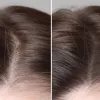
When regrowth starts in women, it often doesn’t look dramatic.
Common early regrowth features
fine, soft hairs
lighter or less pigmented strands
uneven distribution across the scalp
regrowth appearing at the hairline or part first
These signs are often misinterpreted as “weak” or “failed” regrowth. In reality, they indicate follicles cautiously returning to activity.
Why Aggressive Growth Strategies Often Backfire in Women
Many popular hair growth approaches emphasize:
strong stimulation
daily or excessive scalp massage
frequent routine changes
stacking multiple actives
Why this can slow female regrowth
Overstimulation can:
increase scalp inflammation
disrupt barrier repair
elevate local stress responses
For women, this often prolongs the recovery phase instead of accelerating it. Hair regrowth improves when the system feels safe—not pressured.
The Female Regrowth Timeline Is Longer—but More Recoverable
Because women’s hair loss is often non-scarring and systemic, true recovery is usually possible. But it requires patience.
What realistic recovery looks like
early stabilization before visible regrowth
delayed but progressive follicle restart
gradual improvement in thickness and density over cycles
Regrowth in women is rarely a single event. It is a process of re-allowance. For insights on hair regrowth vs density recovery, see our guide.
What Actually Supports Hair Regrowth in Women
Effective regrowth strategies for women focus on:
restoring conditions, not forcing results
gentle, consistent scalp care
supporting barrier and microbiome health
avoiding unnecessary stimulation
maintaining nutritional and lifestyle stability
The goal is not to push follicles to grow. The goal is to remove the reasons they stopped. Using supportive products, like Evavitae Root Fortifying Hair Essence, helps maintain a safe scalp environment during recovery.
Final Thoughts
Hair regrowth works differently for women because women’s bodies prioritize protection, balance, and recovery over speed.
When regrowth feels slow, uneven, or fragile, it doesn’t mean failure.
It means the system is rebuilding trust. And once that trust is restored, hair growth follows—quietly, gradually, and sustainably. For a full overview, see our hair regrowth cornerstone hub.