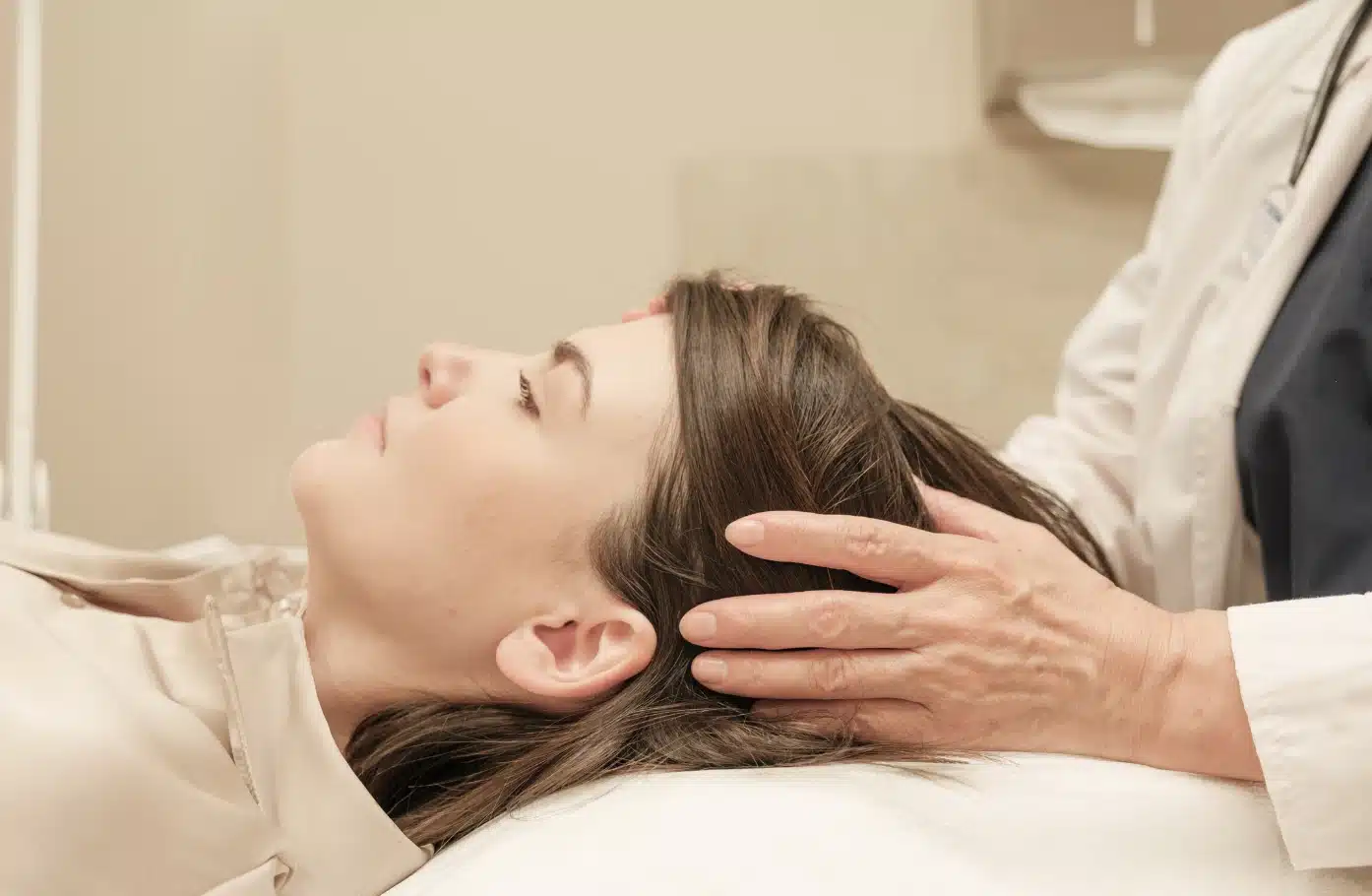
Scalp massage is one of the most commonly recommended hair regrowth practices.
It sounds gentle.
It feels proactive.
And it gives the sense that you’re “doing something” for growth.
But many women notice something confusing:
- massage seems helpful at first
- then shedding increases
- scalp becomes sore or sensitive
- regrowth feels stalled
This leads to the question few people answer clearly:
Does scalp massage actually help hair regrowth — or can it make things worse?
The answer is: both, depending on how and when it’s done.
Why Scalp Massage Is So Often Misunderstood
Scalp massage is usually described as a growth “stimulus.”
But that framing misses an important point:
Hair follicles don’t respond to stimulation alone.
They respond to how the stimulation is interpreted.
Massage can be read as:
- supportive input
- neutral contact
- or mechanical stress
The difference depends on intensity, frequency, and scalp condition.
When Scalp Massage Can Support Hair Regrowth
Scalp massage helps only when it reduces resistance, not when it adds pressure.
Situations where massage can help
Massage may be supportive when:
- the scalp is calm and non-reactive
- shedding has stabilized somewhat
- the barrier is intact
- massage is gentle and brief
In these conditions, massage can support circulation without triggering stress signals.
What helpful massage usually looks like
- light to moderate pressure
- short duration (minutes, not sessions)
- occasional or spaced use (not constant)
- leaves the scalp relaxed, not sore
Helpful massage feels calming — not “activating.”
When Scalp Massage Can Hurt Regrowth
Massage becomes harmful when it crosses from support into stress.
Situations where massage often backfires
Massage is more likely to hurt regrowth when:
- shedding is active or fluctuating
- the scalp feels sore, itchy, or tight
- there is inflammation or sensitivity
- massage is used daily or aggressively
In these states, follicles are already cautious.
Mechanical stress adds another reason to pause growth.
Why aggressive massage increases shedding
Excessive massage can:
- mechanically dislodge telogen hairs
- increase local inflammation
- disrupt barrier repair
- elevate local stress signaling
This shedding is often mistaken for “good circulation” or “purging,” but persistent worsening is a warning sign.
The Difference Between Circulation Support and Mechanical Stress
Massage is often justified as a way to “increase blood flow.”
But more blood flow is not always better.
What follicles actually need
Follicles benefit from:
- adequate circulation
- stable signaling
- low inflammatory noise
Forceful massage may increase blood flow briefly —
but it often increases inflammation for much longer.
Inflammation blocks regrowth more effectively than circulation promotes it.
Why Women Are More Sensitive to Massage Intensity
Women’s hair loss is frequently stress-mediated and systemic.
Why tolerance is lower in women
- hormonal fluctuations amplify stress responses
- postpartum or nutritional recovery reduces resilience
- the scalp barrier is often compromised during shedding phases
What feels “energizing” to one person may feel threatening to another.
Massage must match tolerance — not ideals.
How Often Should You Massage Your Scalp During Regrowth?
There is no universal schedule — but there are clear boundaries.
A safer general guideline
- early or unstable phases: avoid or keep massage minimal
- early regrowth phase: brief, gentle, infrequent
- later consolidation phase: optional, still gentle
Massage should never be something you feel you must do daily.
If you skip it and things feel better, that’s information.
Signs Scalp Massage Is Helping You
Massage is more likely supportive if:
- the scalp feels calmer afterward
- there is no soreness or lingering warmth
- shedding does not escalate over time
- tolerance improves rather than declines
These are green lights — but still don’t justify escalation.
Signs Scalp Massage Is Hurting Regrowth
Massage may be counterproductive if:
- the scalp feels tender or sore
- itching or burning increases
- shedding spikes after sessions
- regrowth appears, then disappears
In this case, stopping massage is not “giving up.”
It’s removing a stressor.
The Most Common Massage Mistakes
Treating massage as a daily requirement
Massage is optional, not mandatory.
Regrowth does not depend on it.
Using massage to fight anxiety
Massage driven by fear (“I need to do something”) is often too intense.
Anxiety translates into pressure — and follicles feel that.
Increasing intensity when results feel slow
This is when massage is most likely to backfire.
Slow progress is a sign to protect the environment, not attack it.
How to Think About Scalp Massage Correctly
Scalp massage is not a growth trigger.
It is a conditional support tool.
If conditions are right, it may help.
If conditions are wrong, it adds noise.
The absence of massage does not block regrowth.
But overstimulation can.
Final Thoughts
Scalp massage can be helpful — but it is never essential.
Hair regrowth depends far more on:
- scalp calm
- barrier health
- consistency over time
If massage supports those things, it can be included gently.
If it undermines them, removing it often speeds recovery.
The goal is not to stimulate harder.
It’s to not give follicles a reason to pull back.