
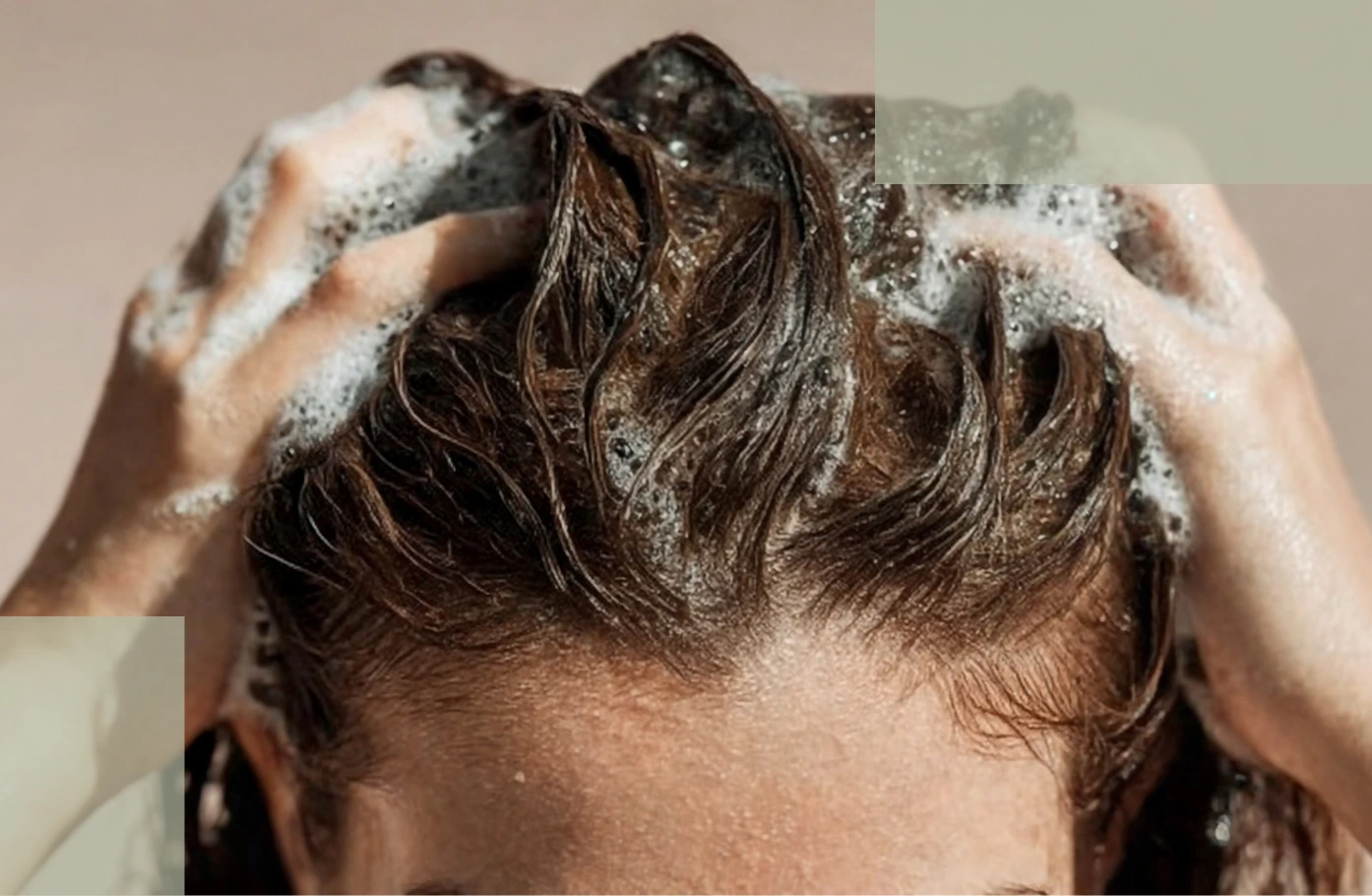
Postpartum hair loss is a classic form of telogen effluvium—your follicles are not damaged, they’re simply “paused” in a resting mode.
To bring them back into active growth, a stable, healthy scalp environment is essential.
That’s why:
Your daily scalp routine is not optional—it’s part of the recovery mechanism itself.
For a structured overview of how scalp care fits into postpartum recovery, see our Postpartum Scalp Care Guide.
In this article, we’ll look at why a good scalp routine can shorten recovery time from a biological point of view.
1. Postpartum Follicles Are in Telogen — and More Sensitive
After birth, estrogen and progesterone drop sharply. This shift pushes many follicles into the telogen (resting) phase.
Follicles in telogen are:
- Easier to shed
- More sensitive to mechanical and chemical stress
This means things like:
- Scratching, hard water, harsh surfactants
- Frequent tight hairstyles, chemical treatments
- Over-washing or under-washing
…can all make hairs that were about to fall out shed faster and in greater numbers.
📌 Core principle:
Telogen follicles need protection, not stimulation.
Gentle cleansing + reduced pulling = fewer “unnecessary” shed hairs.
2. Hormonal Changes Disrupt Sebum — Making Inflammation More Likely
Postpartum hormone shifts also affect the sebaceous glands:
- Some women become oilier
- Some become drier
- Some feel “oily, itchy, and flaky at the same time”
These changes can lead to:
- Blocked follicle openings
- Overgrowth of Malassezia yeast
- Local redness, itching, and burning
- Low-grade micro-inflammation around follicles
Micro-inflammation can:
- Prolong the telogen phase
- Delay the return to anagen
- Reduce the survival rate of new hairs
📌 So:
Your scalp routine is not “just washing your hair”. It’s:
Controlling inflammation, balancing sebum, and protecting the follicle’s micro-environment.
For a deeper framework of all scalp-related mechanisms, see the six core dimensions of postpartum scalp care.
3. Breastfeeding + Sleep Deprivation = A More Reactive Scalp
Breastfeeding-related hormones (such as prolactin) can:
- Make sebum production more unstable
- Heighten inflammatory responses in the skin
- Slow down barrier repair
Add sleep deprivation on top:
- Cortisol stays elevated
- Sebum often increases
- The scalp feels tighter, itchier, and more reactive
- Shedding appears heavier
📌 In this context, a consistent scalp routine helps your scalp stay:
- Clean
- Stable
- Less inflamed
…even while your body is tired and overextended—giving follicles a better chance to cycle back into growth.
4. When Nutrients Are Low, Follicles Depend More on the External Environment
Postpartum, your body prioritizes:
- Brain and heart function
- Core metabolism and immunity
- Milk production
Hair is always last in line.
When iron, vitamin D, and protein are low:
- Follicles don’t have enough energy to re-enter anagen quickly
- The transition out of telogen is slower
In this situation, the external environment (scalp cleanliness, inflammation levels, microcirculation) becomes even more important in determining whether follicles can “restart” smoothly.
📌 In other words:
When internal resources are limited, a good scalp routine can compensate and help prevent your recovery from stalling.
For how nutrition supports follicle energy, see nutrition & supplements for postpartum hair loss.
5. Stress Tightens the Scalp and Reduces Blood Flow
Stress raises cortisol, which can:
- Constrict tiny blood vessels in the scalp
- Lower oxygen supply to follicles
- Reduce pro-growth signaling
- Increase sensitivity and itch
You may feel:
- Stinging or burning when you wash your hair
- Pain when tying a ponytail
- A tight, “helmet-like” feeling on the scalp
These are common signs of stress-related scalp tension.
📌 A well-designed scalp routine can help by:
- Using massage to encourage microcirculation
- Keeping sebum and buildup under control
- Using soothing, barrier-supporting products to reduce inflammation
All of this makes it easier for follicles to transition back into anagen.
To understand how topical care and internal support work together, visit topical care + internal nutrition.
6. Conclusion: The Right Scalp Routine Is a Core Variable in Recovery Speed
Putting everything together, the importance of daily scalp care comes from five mechanisms:
Mechanism | How It Affects Recovery |
Follicles in telogen | More fragile; pulling or irritation makes shedding worse |
Hormonal sebum fluctuations | Instability → inflammation ↑ → delayed anagen |
Breastfeeding + poor sleep | A “tired” scalp that needs extra gentle care |
Nutrient depletion | Follicles depend more on a stable external environment |
High stress and cortisol | Reduced blood flow → slower regrowth |
📌 Final takeaway:
- Incorrect daily care can amplify shedding
- The right scalp routine can shorten recovery time and improve new hair survival
This is why dermatologists and hair specialists consistently emphasize two simple but powerful principles for postpartum hair:
- Do not over-stimulate or over-strip the scalp
- Stay consistent with a gentle, science-based routine
Your scalp routine is not cosmetic “extra credit”.
It is part of the biology of recovery.
For moms confused about timelines or worried about severity, our Postpartum Hair Loss hub provides clarity and reassurance.
For ingredient-level clarity, see our complete ingredient science guide.
The Evavitae Root Fortifying Hair Essence can be a supportive option for women seeking a gentle postpartum shampoo.