Postpartum hair loss is a reversible form of telogen effluvium. Your follicles are not damaged, but during this stage they are significantly more fragile, reactive, and sensitive to external stress.
This is why:
A proper scalp routine can shorten your recovery timeline — while the wrong routine can make shedding worse.
Based on scalp physiology, follicle biology, and postpartum sebum fluctuations, here are the six essential dimensions of scalp care.
Master these six, and you’ve mastered 70% of postpartum recovery.
1️⃣ Gentle Cleansing — Clean but Never Stripping
During the postpartum period, the scalp barrier is in a “stressed” state and becomes more prone to:
- Itchiness
- Redness
- Sudden oiliness
- Increased shedding after irritation
Your cleansing routine must therefore be gentle but effective.
To learn why gentle cleansing is foundational, see gentle cleansing for postpartum hair loss.
🔬 Key Biological Principles
- The postpartum scalp barrier becomes thinner and more reactive
- Amino-acid surfactants are the most suitable cleansers for sensitive scalps
- Strong detergents like SLS/SLES can disrupt the barrier and worsen inflammation
- Fragrance is a common trigger for sensitivity
- Low pH (5.0–5.5) supports a healthy scalp microbiome
- Hormone-driven sebum fluctuations require stable, regular cleansing
✅ Proper Technique
- Avoid scratching the scalp with nails
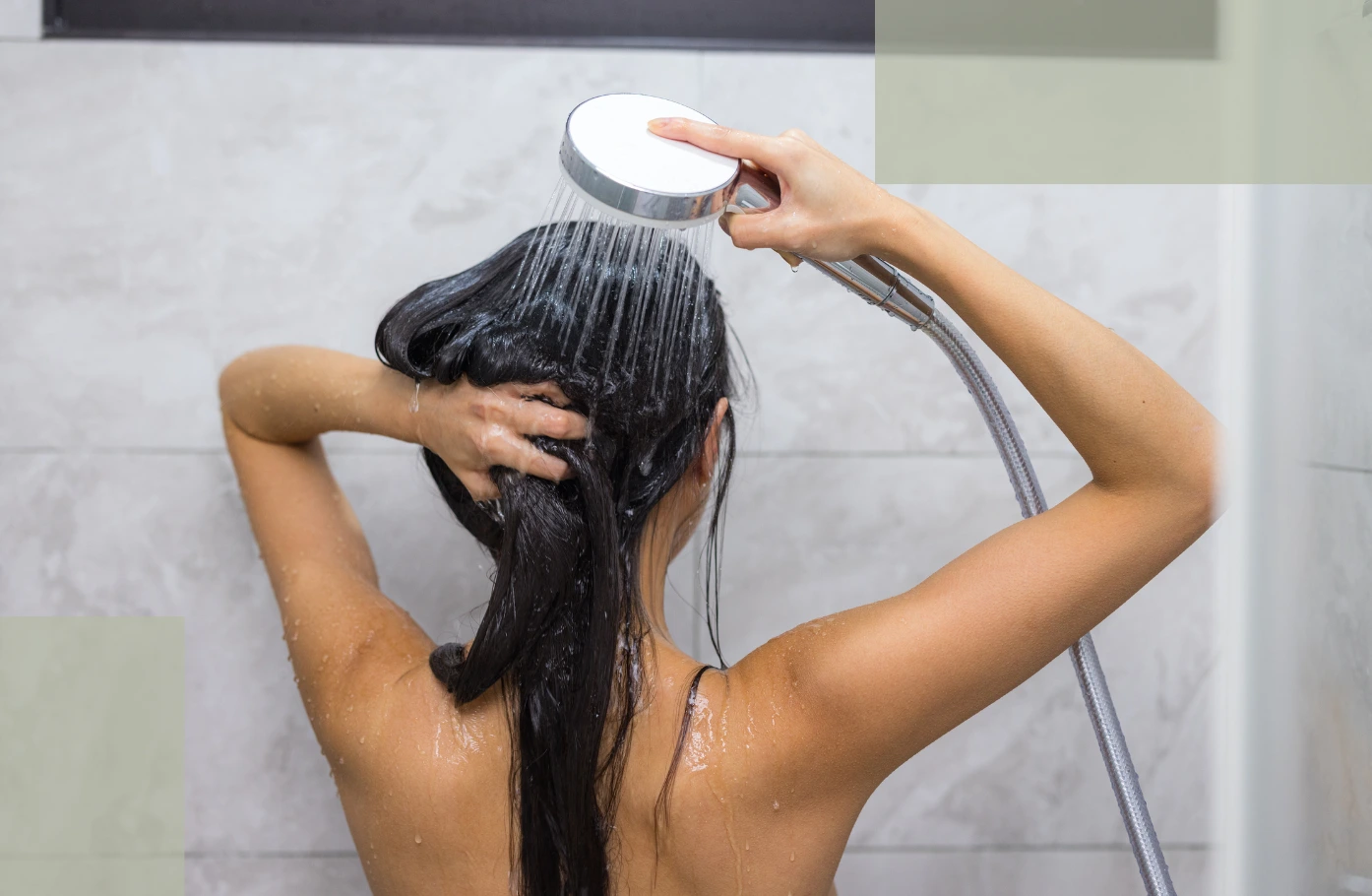
- Foam the shampoo in your hands before applying (reduces mechanical friction)
- Rinse thoroughly — residue is a major cause of inflammation
Gentle cleansing does not mean “not clean enough”.
It means “clean without damaging the ecosystem.”
2️⃣ Optimal Wash Frequency — Too Little or Too Much Both Backfire
A common misconception:
“I’m shedding more, so I should wash less.”
This is incorrect.
For details about finding the right rhythm, read wash frequency for postpartum hair loss.
🔬 The Science
- Postpartum sebum becomes unstable
- Washing too infrequently → clogged follicles → micro-inflammation
- Washing too often → barrier irritation and dryness
- The most stable rhythm for postpartum scalps: every 2–3 days
- For very oily scalps (common at 2–4 months postpartum): every 1–2 days
🎯 Core Principle
Your scalp needs balanced sebum, not “as dry as possible” nor “as oily as possible”.
Clean + gentle + consistent is the formula.
3️⃣ Scalp Massage — The Easiest Way to “Wake Up” Follicles
Scalp massage is one of the most effective, natural, and cost-free ways to support follicle recovery.
More on how massage supports follicle activation here:
scalp massage for resting postpartum follicles.
🔬 Scientific Mechanisms
- Boosts local microcirculation
- Improves oxygen delivery to follicles
- Provides “reactivation signals” to resting follicles
- Reduces cortisol and relaxes the nervous system
- Enhances penetration of topical nutrients
✅ Proper Method
- Use fingertips (never nails)
- Circular, gentle pressing motions
- 3–5 minutes per day
- Focus on the hairline and crown (areas with weaker circulation)
⭐ Bonus Tips
Using light oils (grape seed, batana, coconut, argan) before washing can:
- Reduce friction-induced shedding
- Soften the scalp
- Support microcirculation
- Nourish dry or irritated skin
4️⃣ Prevent Mechanical Damage — Breakage ≠ Shedding
Many moms think they are “shedding more”, but a portion is actually hair breakage, not follicle loss.
A detailed guide is available in avoiding mechanical damage after postpartum hair loss.
⚠️ Behaviors That Increase Breakage
- Brushing wet hair
- Tight hairstyles (bun, ponytail)
- Cotton pillowcases → friction
- Frequent heat styling
✅ How to Reduce Breakage
- Use a wide-tooth comb; detangle from ends → mid-lengths → roots
- Switch to a silk pillowcase
- Air-dry until 50% dry, then use low-heat blow-drying
- Use conditioners/masks to keep the hair shaft soft and flexible
📌 Breakage makes hair look thinner but is highly manageable with proper care.
5️⃣ Heat Management — The Most Overlooked Cause of Worsening Shedding
High heat irritates the postpartum scalp more than most people realize.
For a full breakdown, read gentle heat management for postpartum hair.
🔬 Scientific Principles
- Heat disrupts the scalp barrier
- Thermal stress triggers inflammation
- Hair keratin begins to degrade at 60–70°C
- Postpartum scalps have lower heat tolerance
✅ Correct Drying Method
- Press hair with a towel — do not rub
- Use medium or low heat
- Keep the dryer at least 15–20 cm from the scalp
- Start by drying the roots (to prevent prolonged humidity)
- Minimize hot tools for 6–12 months postpartum
6️⃣ Scalp Environment Management — Oil, Inflammation, Microbiome, pH
Postpartum women commonly experience:
- Sudden increase in dandruff
- Recurring seborrheic dermatitis
- Red bumps
- Oily and itchy scalp
- pH imbalance → stinging, redness
For how to stabilize these issues, see scalp environment management.
These issues are closely linked to:
- Hormonal fluctuations
- Stress
- Sleep deprivation
- Incorrect haircare habits
The Four Pillars of Scalp Environment Management
① Oil Control (but not over-stripping)
Sebum should be balanced — not excessive, not eliminated.
② Microbiome Support
Imbalance of Malassezia can cause flakes, itch, and irritation.
③ Inflammation Control
Choose soothing actives:
- Aloe vera
- Niacinamide
- Brassica extracts
- Botanical polyphenols
④ Hydration & pH Balance
A stable pH is essential for barrier repair and sensitivity control.
🚫 Avoid
- Fragrance, alcohol, harsh surfactants
- Applying conditioner on the scalp
- Dirty brushes, pillowcases, hats
- Using heavy masks on the scalp (use only on mid-lengths and ends)
Conclusion: Proper Scalp Care = The Accelerator of Postpartum Recovery
A complete Scalp Routine Framework includes:
- Gentle cleansing
- Optimal wash frequency
- Scalp massage
- Preventing mechanical damage
- Proper heat management
- Maintaining a healthy scalp environment
Stick to this routine for:
- 1 month → noticeably less shedding
- 3 months → clear new-growth (baby hair)
- 6 months → fuller density and improved volume
Your follicles never lose their ability to grow.
They simply need a stable, healthy environment to re-enter the anagen phase.
If you’d like a full explanation of what “normal postpartum shedding” looks like, this Postpartum Hair Loss guide can help.
Many moms prefer using the Evavitae Root Fortifying Hair Essence because it keeps the scalp fresh without harsh ingredients.