
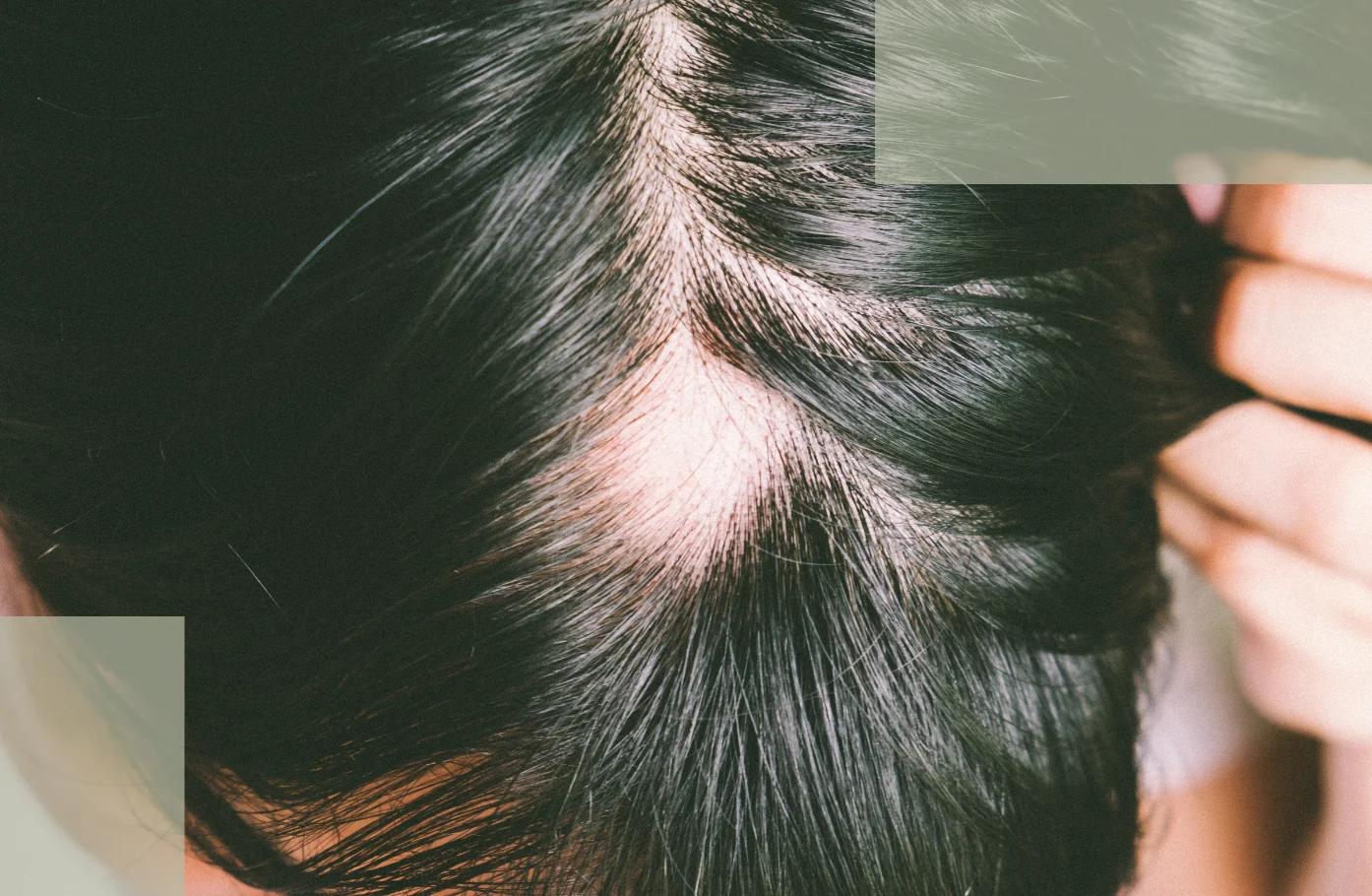
In postpartum recovery, “scalp environment management” is one of the most underestimated yet most decisive steps.
Many mothers focus on:
- Eating well
- Choosing the right shampoo
- Adjusting wash frequency
…but overlook a critical truth:
👉 Whether your follicles can move from the telogen (resting) phase back into the growth phase largely depends on how stable your scalp environment is.
To understand how daily care fits into this bigger picture, begin with our Postpartum Scalp Care Guide.
This “environment” includes:
- Oil balance
- Microbiome balance
- pH levels
- Inflammation levels
- Hydration & barrier integrity
When this environment becomes unstable, even the best nutrients or products cannot work efficiently—and postpartum recovery slows dramatically.
This article explains:
- Why postpartum scalp ecology becomes unstable
- How inflammation develops
- How microbiome imbalance affects shedding
- How to create a scalp environment ideal for regrowth
- Daily habits that silently sabotage recovery
1. Why the Postpartum Scalp Environment Becomes Unstable (Physiological Reasons)
The first 0–12 months postpartum is the most unstable period for scalp health.
The reasons are multi-factorial:
1) Hormonal fluctuations → oil production becomes unpredictable
The rapid drop in estrogen and progesterone causes:
- Sudden excess oil production
- Or extreme dryness
- Or mixed issues (oily roots + dry ends)
- Fluctuating scalp cycles
👉 Unstable oil = unstable microbiome.
Gentle cleansing is essential here—weak barriers worsen instability. Learn more in why gentle cleansing is foundational for postpartum recovery.
2) Immune system “reset” → higher inflammation sensitivity
Pregnancy suppresses the immune system.
Postpartum, immunity rebounds sharply, leading to:
- Increased sensitivity
- Red bumps
- Contact dermatitis
- Lower inflammation tolerance
Even mild triggers can cause the scalp to “flare.”
3) Sleep deprivation + stress → elevated cortisol
Cortisol (the stress hormone):
- Shifts oil production
- Slows down barrier repair
- Increases inflammation
This leads many mothers to experience:
- Both oily and dry scalp
- Both itchy and painful sensations
- Highly inconsistent scalp behavior
Supporting circulation and relaxation through daily massage is especially helpful—see how scalp massage helps wake up resting follicles.
4) Reduced washing → build-up & fungal overgrowth
Many mothers wash less often due to shedding anxiety.
But reduced washing leads to:
- Sebum accumulation
- Malassezia (yeast) overgrowth
- Seborrheic dermatitis flares
- Micro-inflammation
- Longer telogen phase → more shedding
📌 Inflammation + build-up = the #1 reason recovery becomes “stuck.”
Not sure how often to wash? See the misunderstood but critical balance of wash frequency.
2. What Happens When the Scalp Environment Becomes Unstable?
You may experience:
- Sudden dandruff flare-ups
- Excess oil
- Dryness or stinging
- Burning sensation
- Small bumps
- Tender, painful scalp
- Seborrheic dermatitis
- Micro-inflammation
The most important outcome:
👉 Inflammation keeps follicles stuck in the telogen phase longer.
Meaning:
- You’re not only “shedding more,”
- You’re “growing slower.”
📌 An unstable scalp environment = even the best nutrients cannot promote growth effectively.
3. The Four Pillars of Scalp Environment Management
This framework is widely supported by dermatology and trichology research.
① Oil Balance — avoiding clogging while protecting the barrier
Sebum is not the enemy. Excess sebum is.
Too much oil can:
- Clog follicles
- Feed Malassezia
- Increase inflammation
- Extend the telogen phase
Best practices:
- Cleanse every 2–3 days
- If oily, cleanse every 1–2 days
- Use gentle, low-irritation surfactants
- Never scratch with fingernails
② Microbiome Balance — a healthy scalp is not bacteria-free, but bacteria-balanced
Microbiome imbalance may look like:
- Flaky patches
- Oily yet itchy scalp
- Pimples or bumps
- Burning or stinging sensations
To stabilize the microbiome:
- Avoid harsh detergents
- Avoid artificial fragrance
- Choose soothing, microbiome-friendly ingredients (niacinamide, aloe, ginseng)
- Keep pillowcases, brushes, towels clean
③ Inflammation Control — giving follicles a chance to re-enter anagen (growth phase)
Inflammation is the most underestimated enemy in postpartum shedding.
Avoid:
- Blow-drying on hot settings
- Hot tools above 150°C
- Heat close to the scalp
- Blow-drying soaking-wet hair
For heat-sensitive and inflamed scalps, see gentle heat management for postpartum hair to protect the scalp barrier and reduce flare-ups.
④ Barrier & Hydration Support — strengthening the foundation
A stable barrier:
Reduces redness
Lowers sensitivity
Improves microbiome function
Supports smoother transition into growth
Ingredients that help:
Aloe vera
Niacinamide
Ginseng
Lightweight plant oils
If you want a complete, structured routine that covers all six scalp stabilizing dimensions, you can explore the full scalp environment management guide.
4. Daily Habits for a Stable Scalp Environment
✓ Use gentle, non-stripping cleansers
✓ Maintain a wash rhythm (not too much, not too little)
✓ Avoid scratching
✓ Keep scalp dry & ventilated
✓ Clean pillowcases, brushes, towels
✓ Reduce heat exposure
✓ Avoid tight hairstyles
✓ Support hydration with lightweight, soothing care
These habits prevent the “flare-suppress-flare” cycle many mothers struggle with.
5. Common Scalp Environment Mistakes (Strongly Avoid)
❌ Washing too infrequently
❌ Washing too aggressively
❌ Hot air directly on the scalp
❌ Scratching with nails
❌ Fragrance-heavy shampoos
❌ Damp pillowcases
❌ Tight ponytails
❌ Conditioner applied to the scalp
Each of these can slow postpartum recovery by 2–6 months.
To reduce accidental fiber damage (which can mimic shedding), review how to prevent mechanical breakage.
6. Timeline of Visible Improvements
With consistent scalp environment management:
After 2 weeks
- Less itch
- Calmer scalp
- Reduced tenderness
After 4–6 weeks
- More balanced oil production
- Lower inflammation
- Less flare-ups
After 8–12 weeks
- New hair grows more easily
- Visual fullness improves
After 3–6 months
- Follicle cycles stabilize
- Shedding decreases significantly
A growth-friendly scalp environment isn’t complicated—
the challenge is consistency.
Conclusion: Scalp Environment Management = The Foundation of Postpartum Recovery
A stable, healthy scalp environment:
- Reduces inflammation
- Balances microbiome
- Stabilizes oil production
- Helps follicles re-enter the growth phase
- Improves new-hair survival
- Speeds up recovery
This is not optional—it is the foundation of postpartum regrowth.
Once your scalp environment stabilizes, your recovery becomes faster, easier, and more predictable.
You can explore more expert-backed insights inside our dedicated Postpartum Hair Loss section.
A gentle wash like the Evavitae Root Fortifying Hair Essence may feel more comfortable on inflamed or flaky postpartum scalps.