Among all nutrients influencing postpartum hair restoration, B-complex vitamins are one of the most misunderstood yet most essential groups.
If you want to understand how B vitamins work together with daily scalp habits, you can also explore our postpartum scalp care guide.
Postpartum is a phase of:
• high energy demand
• elevated stress hormones
• sleep disruption
• hormonal fluctuations
• increased nutritional consumption (especially breastfeeding)
And B vitamins directly support:
• energy metabolism
• nervous-system balance
• cortisol regulation
• red blood cell production
• follicle energy and growth activity
• keratin formation
This article explains:
• Why do B vitamins matter so much for postpartum hair loss?
• What does each B vitamin do?
• What symptoms indicate deficiency?
• How should you supplement through diet or B-complex formulas?
1. What Are B-Complex Vitamins, and Why Does Postpartum Demand Increase?
B vitamins are not a single vitamin; they are eight nutrients working together:
• B1 (Thiamine)
• B2 (Riboflavin)
• B3 (Niacinamide)
• B5 (Pantothenic Acid / Panthenol)
• B6
• B7 (Biotin)
• B9 (Folate)
• B12
They collectively regulate:
• cellular energy production
• nervous-system stability
• cortisol and stress response
• red blood cell formation
• keratin structure
• metabolic pathways essential for hair growth
Why does postpartum require higher B-vitamin intake?
1) Breastfeeding increases metabolic needs
Milk production consumes large amounts of B vitamins.
2) Stress hormones rise (cortisol spike)
Low B vitamins → higher cortisol → prolonged shedding.
3) Sleep disruption is common
B vitamins stabilize neurotransmitters that support deeper sleep.
4) Follicles need energy to re-enter anagen (growth phase)
B vitamins act as the “energy switch” that helps follicles restart after the telogen phase.
📌 Summary: The more exhausted, stressed, anxious, or overwhelmed you feel postpartum, the more your body needs B vitamins.
2. How Do B Vitamins Affect Hair? (Core Mechanisms)
B-complex vitamins are essential components of the hair-growth system.
1) Boost energy metabolism — power for follicle growth
Hair follicles are one of the most energy-demanding tissues.
If energy is low, follicles cannot enter anagen.
B1, B2, B3, B5, B6 help:
• activate cellular energy
• improve follicular ATP supply
• shorten the telogen phase
2) Reduce stress hormones (cortisol regulation)
Postpartum hair loss is closely linked to stress.
High cortisol → follicles remain in resting mode → prolonged shedding.
B-complex helps:
• regulate cortisol
• improve stress resilience
• stabilize mood, reduce irritability and anxiety
Many mothers report:
“After taking B vitamins, I still shed, but I’m calmer, sleep better, and feel more stable.”
This is the foundation for hair to recover.
3) Support red blood cell formation → improved follicle oxygenation
Especially B6, B9, and B12.
If you have low ferritin or borderline anemia, B vitamins become even more crucial.
This is strongly connected to the role of iron, which you can learn more about here: iron & ferritin’s impact on postpartum shedding.
4) Support keratin structure — stronger, thicker strands
Biotin (B7) gets the most attention, but all B vitamins participate in:
• protein metabolism
• amino-acid utilization
• keratin formation
Deficiency may cause:
• thinning hair
• slow regrowth
• breakage and weak ends
• slow visual volume recovery
5) Stabilize the nervous system (sleep better → shed less)
B1, B6, and B12 strongly influence:
• sleep depth
• mood stability
• anxiety and tension levels
Better sleep → lower cortisol → follicles enter growth sooner.
3. What Each B Vitamin Does for Hair (Professional Breakdown)
(You can expand these into individual future blogs.)
B1 (Thiamine) — The Energy Ignition
• initiates ATP production
• improves fatigue and sluggish metabolism
B2 (Riboflavin) — Antioxidant & Metabolic Support
• supports fat metabolism
• aids keratin formation
• reduces inflammation
B3 (Niacinamide) — Scalp Barrier & Microbiome Support
• strengthens the skin barrier
• stabilizes scalp flora
• reduces irritation and redness
B5 (Pantothenic Acid / Panthenol) — Moisture & Hair Elasticity
• improves hydration
• reduces breakage
• enhances elasticity
B6 — Sebum Balance + Red Blood Cell Formation
• regulates oil production
• helps ease seborrheic dermatitis
• accelerates hemoglobin production
B7 (Biotin) — Protein Metabolism & Keratin Structure
Best for:
• those with confirmed deficiency
• brittle, breakage-prone hair
If you’re not deficient, extra biotin offers limited benefits.
B9 (Folate)
• essential for DNA synthesis
• works with B12 in red blood cell formation
• low levels → weak follicle oxygen supply
B12 — Nervous System + Blood Formation Dual Support
Deficiency may cause:
• anxiety, palpitations
• fatigue
• slow follicle recovery
4. Symptoms of Postpartum B-Vitamin Deficiency
(You can turn this into a checklist section.)
✔ Persistent fatigue
✔ Poor sleep, light sleep
✔ Anxiety or irritability
✔ Fluctuating scalp oil
✔ Thin, weak, breakage-prone hair
✔ Dull skin, mouth ulcers
✔ Brittle nails
✔ Slow recovery postpartum
Underlying mechanisms:
📌 low energy + high cortisol + reduced red blood cell production
5. How Should Postpartum Women Supplement B Vitamins?
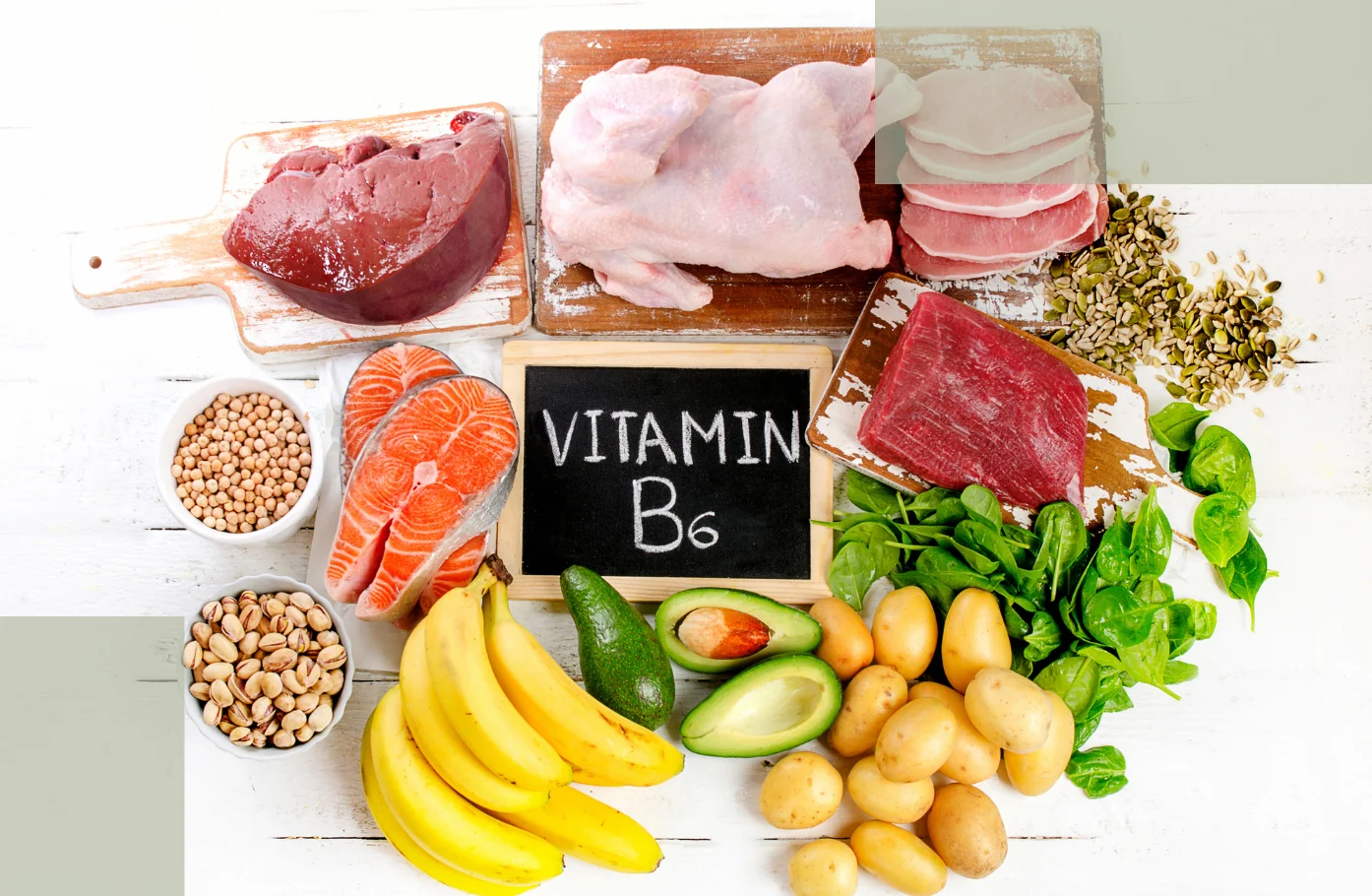
1) Diet first (gentlest and safest)
Top B-vitamin food sources:
• whole grains
• eggs
• leafy greens
• milk & yogurt
• beef
• salmon
• nuts
• lentils and beans
2) Supplements (safe in breastfeeding with proper formulas)
When choosing:
• select a full B-complex
• avoid high-dose B6
• avoid unnecessary herbal blends
• niacinamide doses should be moderate
Breastfeeding-safe, but follow medical guidance.
3) Combine with iron, vitamin D, and protein
They work synergistically:
• B vitamins + iron = improved oxygen delivery
• B vitamins + vitamin D = better scalp environment (learn more: vitamin D as the hair-cycle conductor)
• B vitamins + protein = stronger keratin structure (explained here: high-quality protein for postpartum regrowth)
Omega-3 also supports the anti-inflammatory environment: omega-3’s anti-inflammatory role.
6. Core Role of B-Complex in Postpartum Hair Recovery: The “Energy & Stress Regulator”
In one sentence:
📌 B vitamins don’t instantly grow new hair; they give follicles the energy and hormonal stability to restart.
They improve recovery through:
• lowering cortisol
• boosting metabolic energy
• improving sleep
• supporting blood formation
• strengthening new hair structure
When you feel exhausted, anxious, sleep-deprived, and stuck in prolonged shedding, B-complex is one of the most important things to evaluate.
Conclusion: B Vitamins Are the “Energy Core” in Postpartum Hair Recovery
B vitamins affect:
• nervous system
• stress regulation
• metabolic energy
• red blood cells
• new-hair strength
And postpartum is the period when women are most likely to become deficient.
If shedding continues beyond 6 months, B-complex should be evaluated.
📌 Topicals help “wake up” follicles — B vitamins help them “stand up and restart.”
For mothers seeking clarity and reassurance, our Postpartum Hair Loss offers a detailed, easy-to-understand overview.
Many new mothers find that switching to a low-irritation formula such as the Evavitae Root Fortifying Hair Essence helps reduce scalp discomfort.