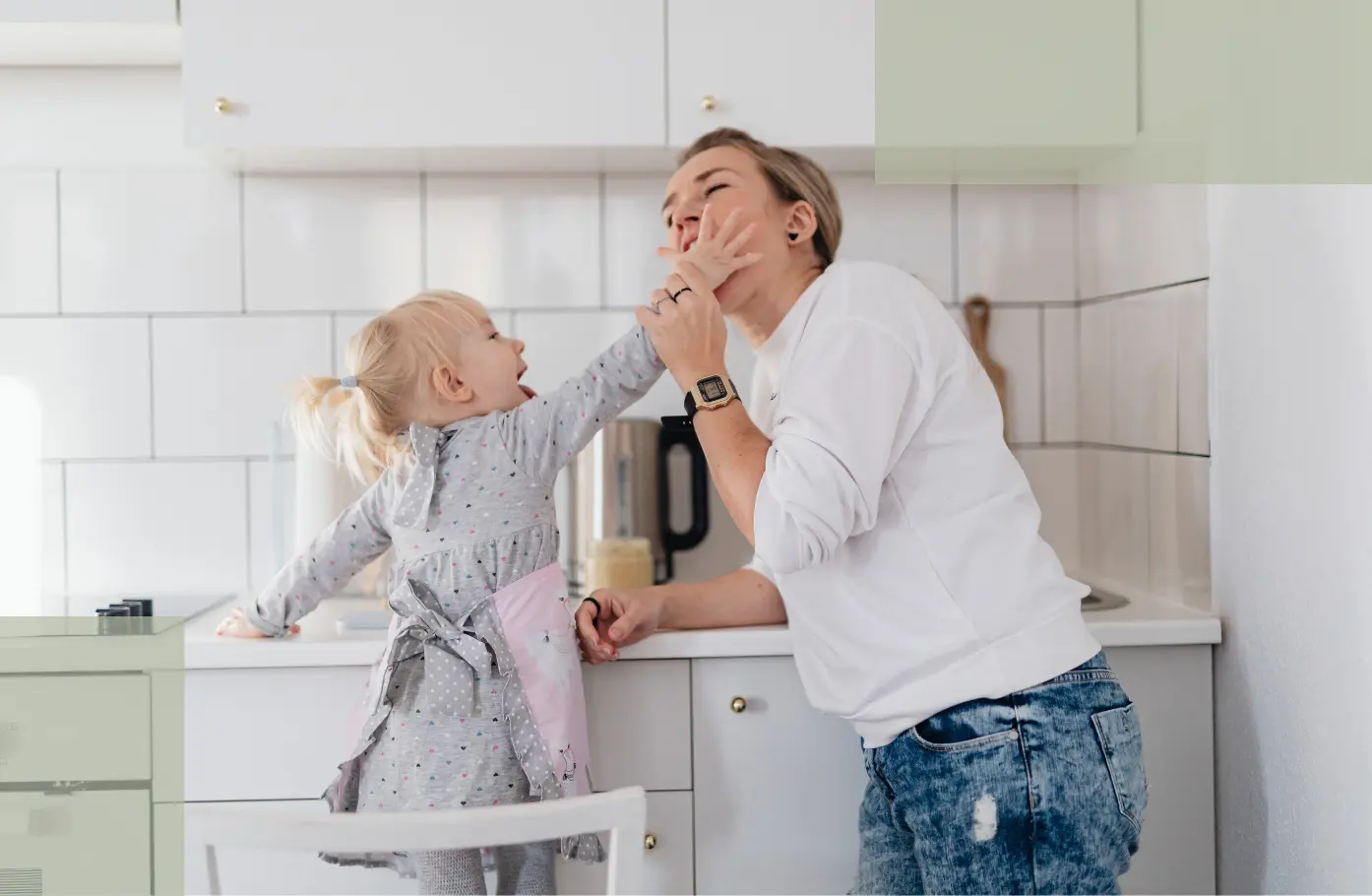
Postpartum hair loss is not an isolated event.
It affects the way you live, how you see yourself, your emotional energy, and your expectations of motherhood.
Many mothers think they are anxious “because of the shedding,” but what truly overwhelms you is this:
👉 the collision between hair loss and the demands of motherhood — the way it disrupts your rhythm, drains your energy, and squeezes out your ability to care for yourself.
For a deeper overview of the emotional landscape of new motherhood, you can explore the Postpartum Mind Hub.
This guide explores:
- why postpartum shedding makes you feel “buried” by life
- why it’s harder to cope with than other changes
- and how to find balance and a new sense of pace within your maternal identity
I. When Postpartum Rhythms Collapse, Hair-Care Becomes Almost Impossible
You may be living through:
- waking every 2–3 hours at night
- not having 30 uninterrupted minutes for yourself
- squeezing in a shower like it’s a luxury
- eating whatever you can grab with one hand
- physical fatigue from recovery and carrying the baby
- chronic sleep disruption
In this state, when shedding suddenly appears, it’s not that you lack patience —
it’s that:
👉 your entire rhythm has been rewritten, and the time you used to have for basic self-care is almost gone.
This leads to a deep sense of helplessness:
- wanting to care for your hair but having no time
- wanting to fix your diet but being too busy
- wanting to rest but never resting enough
- wanting to commit to a routine but constantly being interrupted
- wanting to stay calm but being physically exhausted
All of this makes hair loss feel more severe and more out of control.
This emotional load is often intensified by postpartum hormonal sensitivity, which makes every stressor feel heavier than before.
II. When Baby Comes First, You Naturally Fall to Last
After becoming a mother, your priorities shift almost instantly:
Baby → Home → Work → You (last)
Hair loss gets pushed to the end of the list, which causes feelings like:
- “I don’t even have time to deal with losing my hair.”
- “I should take care of myself… but I can’t right now.”
- “Why can’t I even manage the basics?”
You’re not neglecting yourself.
You’re not “unmotivated.”
📌 Motherhood simply takes up every corner of your life.
You’re caring for everyone — but no one is caring for you.
This makes shedding emotionally heavier than it already is.
These small losses of routine gradually create behavioral changes that you might not even notice at first.
III. Hair Loss + Maternal Identity Shift = A Hit to Self-Image
One of the hardest psychological transitions after birth is this:
“I feel farther and farther from who I used to be.”
Hair loss sharpens that sensation:
- pre-pregnancy healthy hair → now thinning hairline
- polished professional appearance → now visible fatigue
- former confidence → now vulnerability
- from “a girl” to “a mother”
Inside, you may be thinking:
“Am I ever going to look like myself again?”
“Will I ever feel the way I used to feel?”
Hair loss is not the root cause — but it intensifies the identity gap.
This is exactly the type of identity disruption described in Postpartum Hair Loss & Self-Image.
IV. The Hidden Impact on Intimacy and Your Relationship
Many mothers never say this out loud, but they wonder:
- “Am I still attractive?”
- “Does my partner notice how much I’ve changed?”
- “What if he thinks I’m no longer beautiful?”
- “I don’t want him to see how much hair I’m losing.”
Motherhood already leaves little space to feel sensual or confident.
Hair loss chips away at the small amount of confidence that remains.
You’re not alone — this emotional dip is extremely common.
The emotional strain on intimacy is explained further here.
V. The Pressure of the “Perfect Mother” Makes Shedding Much Harder
Modern culture has unspoken, unrealistic expectations:
- bounce back quickly
- get your pre-baby body back
- stay energetic
- maintain emotional stability
- keep your hair thick
- look like you “never gave birth”
- be the “perfect mom”
When hair loss enters the picture, it creates:
- “I’m not doing well enough.”
- “Why am I recovering slower than others?”
- “What am I doing wrong?”
- “Am I failing as a mother?”
These thoughts are part of maternal role pressure, not evidence that you’re inadequate.
For many mothers, this pressure is described in detail in The Perfect Mom Expectation.
And when combined with public comparison, it becomes similar to the social pressure discussed here.
VI. Hair Loss Magnifies the Feeling That Time and Life Are No Longer Yours
The sentence heard most often from new mothers:
“I have no time.”
Hair loss intensifies this awareness:
- my time isn’t mine
- my body isn’t mine
- my life doesn’t move according to my control
- I can’t decide when I recover
- I can’t decide whether my hair sheds
This comprehensive loss of control is the true emotional burden behind postpartum shedding.
This feeling is part of the deeper “loss-of-control” cycle described here.
For some mothers, the emotional weight can snowball into PPD-related fear and hypervigilance, as explained here.
VII. How to Rebuild Rhythm and Balance in Your Maternal Identity
1. Set “tiny but achievable” goals
Instead of large routines, choose:
✔ wash hair every 2–3 days
✔ 2–3 minutes of scalp massage daily
✔ one protein-rich snack
✔ one weekly hair mask
✔ one deep-breathing session before bed
Small goals = consistency → success → calm.
2. Release yourself from comparison
No comparison with:
- perfect moms online
- friends or sisters
- your pre-pregnancy self
Every mother’s hormones, sleep, nutrition, and recovery pattern are different.
Shedding severity varies widely too.
Comparison only deepens emotional distress.
3. Accept that your body is rebuilding — and you don’t need to control everything
You are:
- nourishing a new life
- healing
- absorbing stress
- adapting to a new identity
- rebuilding rhythms
- carrying emotional and physical load
Hair loss is a by-product — not a failure.
4. Allow yourself to move “You” higher on the priority list
Motherhood is not self-erasure.
It’s learning to include yourself again — in a new way.
You can gently remind yourself:
“Caring for myself is caring for my baby.”
“I deserve softness.”
“I am recovering, slowly but surely.”
🌿 Conclusion: Hair Loss Doesn’t Define You — and Motherhood Won’t Swallow You
Your hair will return.
Your rhythm will return.
Your strength will return.
You are learning a new form of balance:
the gentle middle ground between caring for others and caring for yourself.
You are not being crushed by life — you are adapting.
You are not losing yourself — you are becoming a deeper, fuller, stronger version of you.
We explain the complete mechanism—from hormone fluctuations to follicle recovery—inside our Postpartum Hair Loss education page.
The emotional weight is real, and understanding it is part of breaking the stress–shedding cycle.
Postpartum scalps often tolerate simplified formulas better; the Evavitae Root Fortifying Hair Essence was created with that in mind.