
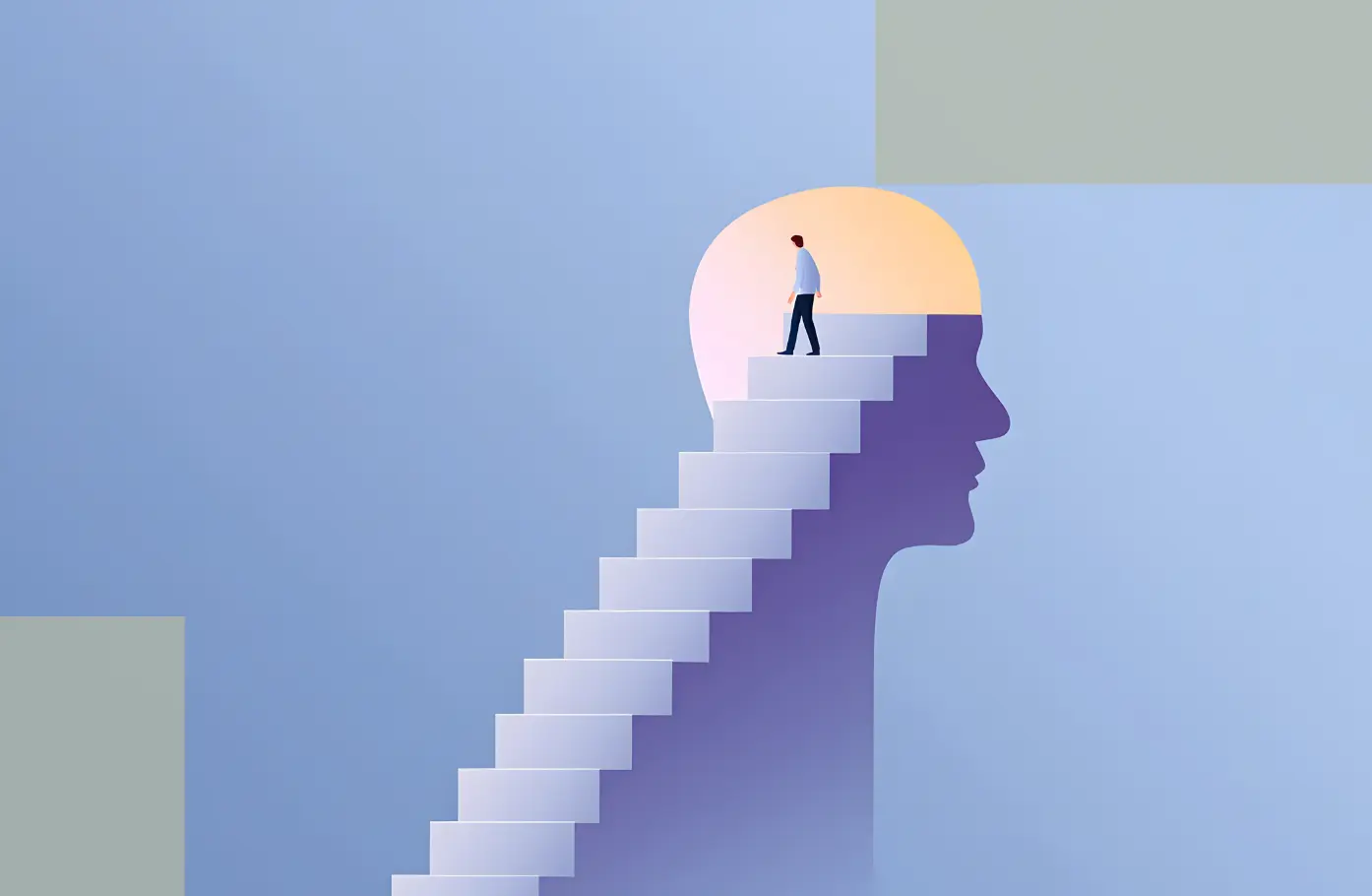
Postpartum hair loss brings fear, anxiety, self-doubt, and a deep sense of losing control.
But every mother has the inner capacity to rebuild confidence, rhythm, and emotional strength.
Positive Psychology Recovery is not about “forcing yourself to stay positive.”
It is the gentle process of understanding what’s happening in your body, reducing fear through knowledge, and slowly finding hope, control, and your own power again.
For a wider emotional framework that explains why postpartum sensitivity happens, you can explore the Postpartum Mind Hub.
This guide explores:
- the psychological “progress signs” during recovery
- how anxiety gradually turns into reassurance and confidence
- how to rebuild inner strength through small, sustainable steps
You are not just losing hair.
You are learning how to rise again.
I. The Power of Knowledge:
Understanding the Mechanism → Anxiety Drops → Recovery Accelerates
“The unknown is what frightens us the most.”
During the shedding peak (3–6 months postpartum), many mothers panic — not because of the hair itself, but because they don’t know:
- how long it will last
- whether it will grow back
- whether they’re shedding “too much”
- whether something is wrong with their health
But once you understand:
✔ shedding is a normal physiological reset
✔ the growth cycle will restart
✔ baby hairs appear around 3 months
✔ density returns over 6–12 months
your mind shifts from:
Crisis Mode → Recovery Mode
Knowledge is not cold or clinical.
It is stability, safety, reassurance — the foundation of hope.
Knowledge isn’t cold. It is grounding, calming, and emotionally stabilizing — especially when identity feels shaken, as described in Postpartum Hair Loss & Self-Image.
II. Community Support:
When You Share Your Story, Recovery Becomes Lighter and Faster
Postpartum hair loss feels incredibly lonely.
But when you hear another mother say:
“I went through this too.”
“I shed even more than you.”
“My baby hairs came in at 3 months.”
“You’re normal — really.”
Your entire nervous system relaxes.
Psychology research shows:
Knowing “I’m not the only one” can reduce anxiety by 40–60%.
Connecting with other mothers brings:
- emotional validation
- a sense of normalcy
- real recovery experiences
- confidence in the process
- fewer unnecessary, harmful experiments
It also reduces internalized emotional distress, something deeply explored in The Hidden Pain Behind Postpartum Hair Loss.
This is why communities — including those supported by Evavitae — offer:
🌿 sharing spaces
🌿 recovery stories
🌿 gentle guidance
🌿 emotional companionship
When someone walks with you…
You’ve already completed half the healing.
III. Lifestyle Improvements:
Regaining Control in Small Steps → Emotional Recovery Begins
During the shedding peak, many mothers feel:
“I control nothing.”
But when you start changing tiny, manageable pieces of your routine — something powerful happens.
Examples:
✔ drinking 500ml more water
✔ going to bed 30 minutes earlier
✔ choosing a higher-protein breakfast
✔ setting a fixed wash-day schedule
✔ doing a 2–3 minute scalp massage
✔ taking supplements consistently
These small actions create what psychologists call:
Micro-Wins.
When you feel: “I can do something,” your anxiety automatically begins to settle.
Small steps → small wins → small confidence
This is one of the most effective paths out of shedding anxiety.
As you regain control, your emotional reactivity decreases.
This matters especially because postpartum hormonal sensitivity can magnify emotions, as discussed in Postpartum Hormonal Sensitivity.
IV. Rebuilding Self-Care:
When You Care for Yourself, Your Body and Emotions Heal Together
One of the most common postpartum experiences is:
“I don’t have time to take care of myself.”
But when you slowly bring self-care back into your life:
- gentle haircare
- scalp massages
- mindful wash routines
- basic supplementation
- putting sleep first
- giving yourself 10 minutes to breathe
You start noticing:
When you take care of yourself, your mood, energy, sleep, and recovery improve simultaneously.
This is the Self-Compassion Loop:
The kinder you are to yourself, the more willing your body is to heal.
This shift also helps reduce behavioral stress reactions often seen during postpartum shedding, a topic explored further in how shedding shapes daily habits.
V. Seeing Baby Hairs:
The Most Powerful Emotional Turning Point
Every mother says the same thing:
“The moment I saw baby hairs, I finally exhaled.”
Baby hairs are:
- soft, short regrowth
- most visible at the hairline and temples
- signs that growth phase has restarted
- typically seen around months 2–4
Baby hairs are not just a biological marker.
They are an emotional breakthrough:
✔ “This isn’t a disaster — it’s a cycle.”
✔ “I will recover.”
✔ Anxiety drops suddenly
✔ Confidence rises instantly
Baby hairs are tiny — but their psychological impact is enormous.
It directly counters the terrifying sense of losing control discussed in The Fear of Losing Control.
VI. Positive Expectation:
The More You See Hope, the More You Stay Consistent
Postpartum hair recovery follows a predictable timeline:
- 3 months: new baby hairs
- 6 months: reduced shedding
- 9–12 months: density returning
When you reframe shedding as a healing cycle rather than a decline,
you naturally begin to:
✔ stay consistent
✔ avoid panic
✔ stop obsessing over every wash
✔ avoid harsh or random products
Positive expectation moves you from:
Panic Cycle → Recovery Cycle
This also interrupts the anxiety-shedding loop described in The Stress–Hair Loss Loop.
VII. Professional Support:
Medical + Brand + Community = A Lower Psychological Burden
You recover faster when you know:
- a doctor can check your iron or thyroid
- science explains why you’re shedding
- you have a gentle, effective haircare system
- the products you use are safe and stable
- a community supports your emotions
- you’re not alone throughout the process
Professional support doesn’t mean “fixing everything instantly.”
It means you no longer carry the emotional weight alone.
This is especially important for mothers who feel postpartum anxiety intensifying into depressive symptoms, something explained in the PPD psychological amplifier article.
Postpartum recovery doesn’t require you to “be stronger.”
It requires:
✨ understanding
✨ companionship
✨ stability
✨ reassurance
✨ gentle guidance
You don’t need pressure.
You need support.
Final Message
You are not failing.
You are recovering.
Whether you’re in:
- the panic phase
- the shedding peak
- the hopeful stage
- or already seeing regrowth
please remember:
You are not trapped by hair loss.
You are walking through a temporary chapter.
You are becoming stronger, wiser, and more resilient.
Your hair will recover.
Your confidence will recover.
Your emotional strength will return.
This isn’t a battle you must win — It’s a journey you are learning to navigate.
And Evavitae will walk every step with you.
Our Postpartum Hair Loss page covers everything from nutrient deficiencies to stress loops and thyroid considerations.
To keep the scalp clean while avoiding irritation, the Evavitae Root Fortifying Hair Essence offers a mild approach.