
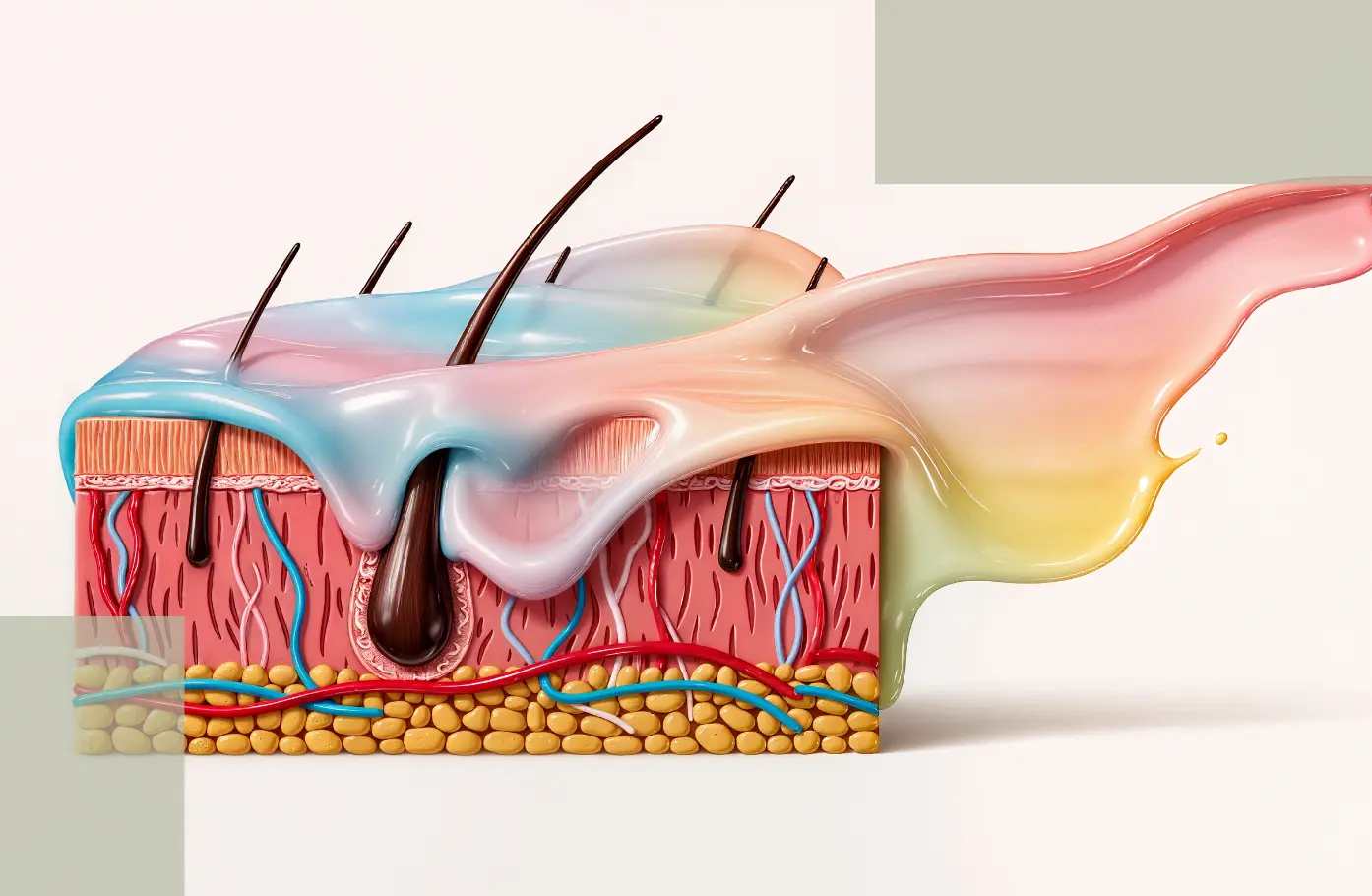
During periods of stress hair loss, many people find themselves asking the same question over and over:
“Have my hair follicles already been damaged?”
But from a medical perspective, the vast majority of stress-related hair loss is not follicle damage — it is something else:
the hair growth cycle has been prematurely interrupted.
This is precisely why stress hair loss is most commonly classified as Telogen Effluvium — a mechanism explained in the full overview of stress hair loss and the detailed stress hair loss mechanism guide.
A Fundamental — Yet Crucial — Fact to Understand
Hair is not constantly growing.
Each strand of hair repeatedly goes through a complete growth cycle.
Whether this cycle proceeds smoothly is what ultimately determines shedding and regrowth.
For a deeper look at how stress influences this cycle biologically, see the physiology behind stress hair loss.
What Does a Normal Hair Growth Cycle Look Like?
Under stable conditions, each hair follicle progresses through four stages:
1️⃣ Anagen (Growth Phase)
• Lasts 2–6 years
• Hair follicle cells divide rapidly
• About 85–90% of scalp hair remains in this phase
📌 This phase is the true source of visible hair density.
2️⃣ Catagen (Transition Phase)
• Lasts 2–3 weeks
• Growth gradually slows
• The follicle prepares to rest
3️⃣ Telogen (Resting Phase)
• Lasts approximately 2–3 months
• Hair stops growing
• The follicle prepares for a new growth cycle
4️⃣ Exogen (Shedding Phase)
• Old hair naturally falls out
• New hair begins to replace it
In healthy conditions, this process happens asynchronously, which is why we shed small amounts daily while overall density remains stable.
Where Does Stress Disrupt the Process?
— “Synchronous Entry Into Telogen”
The key problem with stress hair loss is not a single hair failing — it’s that:
large numbers of follicles are pushed into Telogen at the same time.
This typically occurs under:
• Prolonged psychological tension
• Ongoing sleep deprivation
• A body state dominated by stress and elevated cortisol
This systemic side effect of cortisol is explained further here: why cortisol presses the ‘pause button’ on hair growth.
Hair follicles that should have remained in Anagen are systematically dismissed early.
📌 The visible result is:
• Widespread shedding
• Even thinning
• No distinct patches or classic recession patterns
These visible patterns align with the typical signs of stress hair loss.
Why Does Shedding Always Appear With a Delay?
This is one of the easiest aspects of stress hair loss to misinterpret.
Many people recall it this way:
“That stressful period already passed — why am I shedding now?”
The explanation is straightforward:
• Entering Telogen does not cause immediate hair loss
• Telogen completes its full 2–3 month duration
• Only afterward does Exogen (shedding) occur
A common timeline looks like this:
Stress event
→ 2–3 months later noticeable shedding begins
📌 Hair loss reflects past stress, not a current failure.
You can see this full timeline explained in how long stress hair loss lasts.
After the Cycle Is Interrupted, Are Follicles Actually Damaged?
This is the most frightening concern for many people.
The answer is:
👉 In stress hair loss, most follicles remain structurally intact.
For three key reasons:
• Hair follicle structure is preserved
• Hair follicle stem cells are still present
• The growth phase is paused — not canceled
Medically, this is classified as:
Non-scarring alopecia
📌 This is why, as long as new stressors are not repeatedly added, follicles retain the ability to restart growth.
Why Does Recovery Feel Uneven — Better One Week, Worse the Next?
Because recovery is not a single “restart” — it is a staggered return to individual timelines.
Different follicles:
• Entered Telogen at different times
• Exit Telogen at different speeds
So you may observe:
• An overall downward trend in shedding
• Occasional fluctuations
• Regrowth and shedding happening simultaneously
📌 This reflects the cycle re-staggering itself — not recovery failure.
This unevenness can also be intensified when other mechanisms — such as microcirculation or inflammation — play a role. For more context, see:
• reduced microcirculation mechanism
• inflammation + immune signaling mechanism
Why Isn’t Aggressive “Growth Stimulation” Suitable for Stress Hair Loss?
When follicles are in Telogen and the overall system has not regained stability:
• Strong stimulation
• High-frequency interventions
• Aggressive “forcing growth”
Can feel to follicles like:
“Being pushed to work while the warning alarm is still active.”
The result is often:
• Increased inflammation risk
• More follicles repeatedly pushed back into Telogen
• Further disruption of recovery rhythm
📌 At this stage, the priority is allowing follicles to safely complete their resting cycle.
Supportive care should be gentle — such as dermatologist-tested formulas like Evavitae Root Fortifying Hair Essence.
Where Does Real Recovery Usually Show Up First?
Many people focus exclusively on:
“Do I see new hairs yet?”
But earlier and more reliable signals include:
• A gradual reduction in total daily shedding
• Less emotional burden during washing
• Smaller day-to-day fluctuations
📌 These signs indicate follicles are collectively completing Telogen.
Visible regrowth typically follows later — once this phase stabilizes.
A Crucial Cognitive Correction
Stress hair loss does not mean hair follicles are broken.
It means the follicles were forced to “clock out” early.
True recovery does not come from shouting them awake — but from helping them trust that it is genuinely safe to return to work.
Final Thoughts
When stress hair loss is viewed through the lens of the hair growth cycle, one fact becomes clear:
👉 You do not need to “fight to get your hair back.”
What you truly need is to avoid giving follicles more reasons to be interrupted again.
Once stress signals fade and biological rhythm is restored, hair returning to the growth phase becomes — simply a matter of time.