
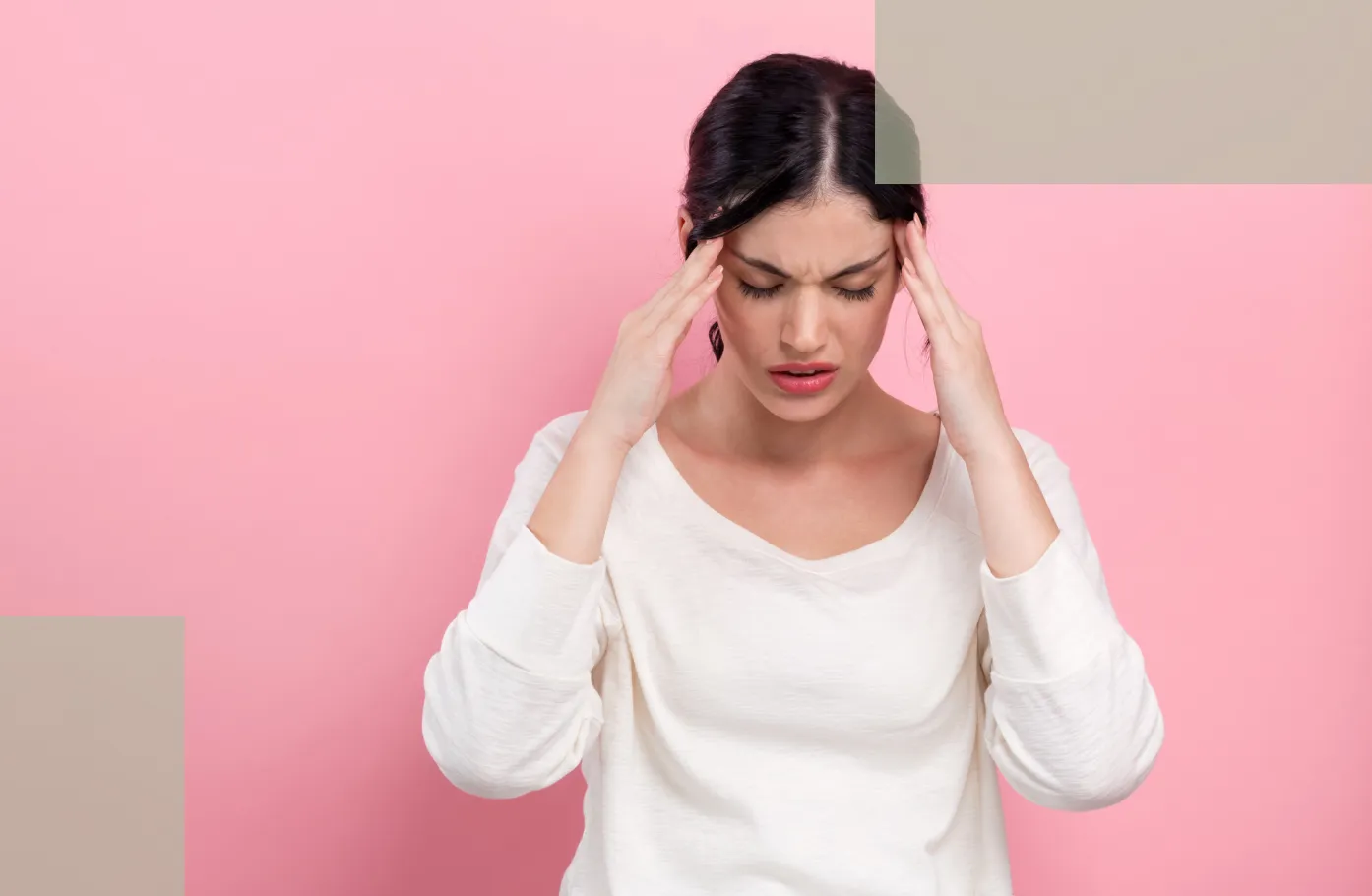
In the early stages of stress-related hair loss, many people think the same thing:
“I was under a lot of pressure — this is probably temporary.”
“It should stop once things calm down.”
For many, the real problem doesn’t start with the first wave of shedding.
It starts later.
👉 The moment you become aware that you are losing hair.
From that point on, shedding can quietly turn into a new, persistent source of stress — one that is often far more damaging to recovery than the original trigger.
For a system-level overview of how stress-related hair loss develops and recovers, see stress-related hair loss fundamentals.
An uncomfortable but essential truth
In stress-related hair loss, what delays recovery most is often not the original stressful event, but the ongoing psychological response to hair shedding itself.
Many people are no longer under intense external pressure.
Instead, the body is continuously reacting to one internal signal:
“I am losing hair.”
And the nervous system treats that signal as ongoing threat.
How hair loss gradually becomes a new stress loop
This transformation rarely happens all at once.
It unfolds in a sequence.
Step 1: You begin to notice the shedding
It might be:
- hair collecting in the shower drain
- strands on the pillow
- shadows on the floor
- a part line that suddenly looks wider
At this stage, the thought is subtle:
“Something feels off.”
This is often the moment the stress system re-engages.
Step 2: Awareness escalates into monitoring
Not long after, noticing turns into:
- counting hairs after every wash
- remembering how many fell last time
- mentally preparing for each shampoo
- frequent mirror or phone-camera checks
📌 From the nervous system’s perspective, high-frequency monitoring = “situation is serious”.
And serious situations require vigilance.
This monitoring paradox is explored further in why obsessing over progress slows stress hair loss recovery.
Step 3: Searching, comparing, and self-blame begin at the same time
This stage is both common — and destructive.
You may find yourself:
- Googling “how much hair loss is normal”
- comparing your timeline to strangers online
- questioning everything you do
- wondering whether you caused this
Now shedding gains meaning:
“Is something wrong with me?”
“Am I worse than others?”
📌 Meaning amplifies biological stress signals far more than facts alone.
Step 4: An invisible stress feedback loop forms
The loop looks like this:
Stress event → hair loss
Hair loss → anxiety
Anxiety → nervous system vigilance
Vigilance → more follicles pushed into resting phase
→ increased shedding
Many people don’t realize that at this point:
👉 They are no longer just recovering from stress — they are repeatedly re-activating the stress response.
Why this “secondary stress” hits hair follicles harder
Because it has three defining characteristics:
1. It is continuous
Unlike a one-time stressful event, hair shedding is visible daily.
2. It is high-frequency
Every wash, mirror glance, or stray strand re-triggers it.
3. It targets the body itself
The threat feels internal:
“Something is wrong with me.”
📌 For the brain, internal threats are harder to resolve than external ones.
This internalized threat is closely related to lack of safety as a hidden psychological driver in stress-related hair loss.
This explains a very common confusion
“The original stress is over — so why is my hair loss getting worse or lasting longer?”
Because the original stress may have ended, but hair shedding took its place in the threat hierarchy.
The stress source changed — the alarm did not turn off.
Why even mild ongoing anxiety can delay recovery
There is a harsh but accurate biological rule:
As long as threat is perceived,
repair and long-term growth are not prioritized.
When hair loss stays at the center of attention, the nervous system keeps sending one message:
“The problem is ongoing. Stay alert.”
So even if you:
- switch to gentle hair care
- improve your sleep
- regulate your routine
the system may still hesitate to approve growth.
📌 Not because you’re doing something wrong — but because the alarm hasn’t been fully deactivated.
Does this mean you must “not care at all” to recover?
No. And this is another common misunderstanding.
Suppressing concern or forcing indifference is still effort.
👉 The goal isn’t ignoring hair loss.
It’s demoting it from the nervous system’s priority list.
From:
“Core safety issue”
Back to:
“Background information”
How this stress loop actually begins to break
Not through control — but through de-escalation.
Specifically in three areas:
1. Reducing checking frequency
Not never checking — just not constantly checking.
2. Reducing meaning-making
Replacing:
“This means something is wrong”
with:
“This is part of a biological process”
3. Softening immediate emotional reactions
Not suppressing discomfort — but avoiding immediate catastrophic conclusions.
📌 Every time the reaction does not escalate, neural noise decreases.
This shift away from control-driven recovery is discussed in why the need for control can slow stress hair loss recovery.
A reliable sign that recovery has truly begun
You notice that:
- you sometimes forget about your hair
- washing no longer causes anticipatory anxiety
- losing a few hairs no longer feels like proof of failure
- your attention gradually returns to daily life
📌 Many people recover not when they try harder — but when hair loss stops organizing their entire day.
This moment is often the true marker of psychological recovery, described in the true sign of psychological recovery — letting go of the grip.
A critical cognitive correction (please remember this)
In stress-related hair loss, what must end is not just the shedding.
It’s the mental association:
“Hair loss = danger.”
Only when that association loosens does the nervous system lower its guard.
And only then can follicles re-enter long-term growth.
Final note
If you are currently experiencing any of the following:
- hair loss dominates your thoughts
- small changes trigger strong reactions
- you feel exhausted but unable to stop monitoring
please understand this:
👉 You are not overthinking.
You are responding normally to a bodily signal under uncertainty.
Recovery does not begin by proving that nothing is wrong.
It begins when the body slowly learns:
“This signal no longer requires constant vigilance.”
When vigilance ends, hair growth quietly resumes — on its own timeline.
These themes are part of the broader Mind & Myths hub for stress hair loss recovery.
For a gentle, low-pressure support option that fits this psychological recovery phase, see Evavitae Root Fortifying Hair Essence.