
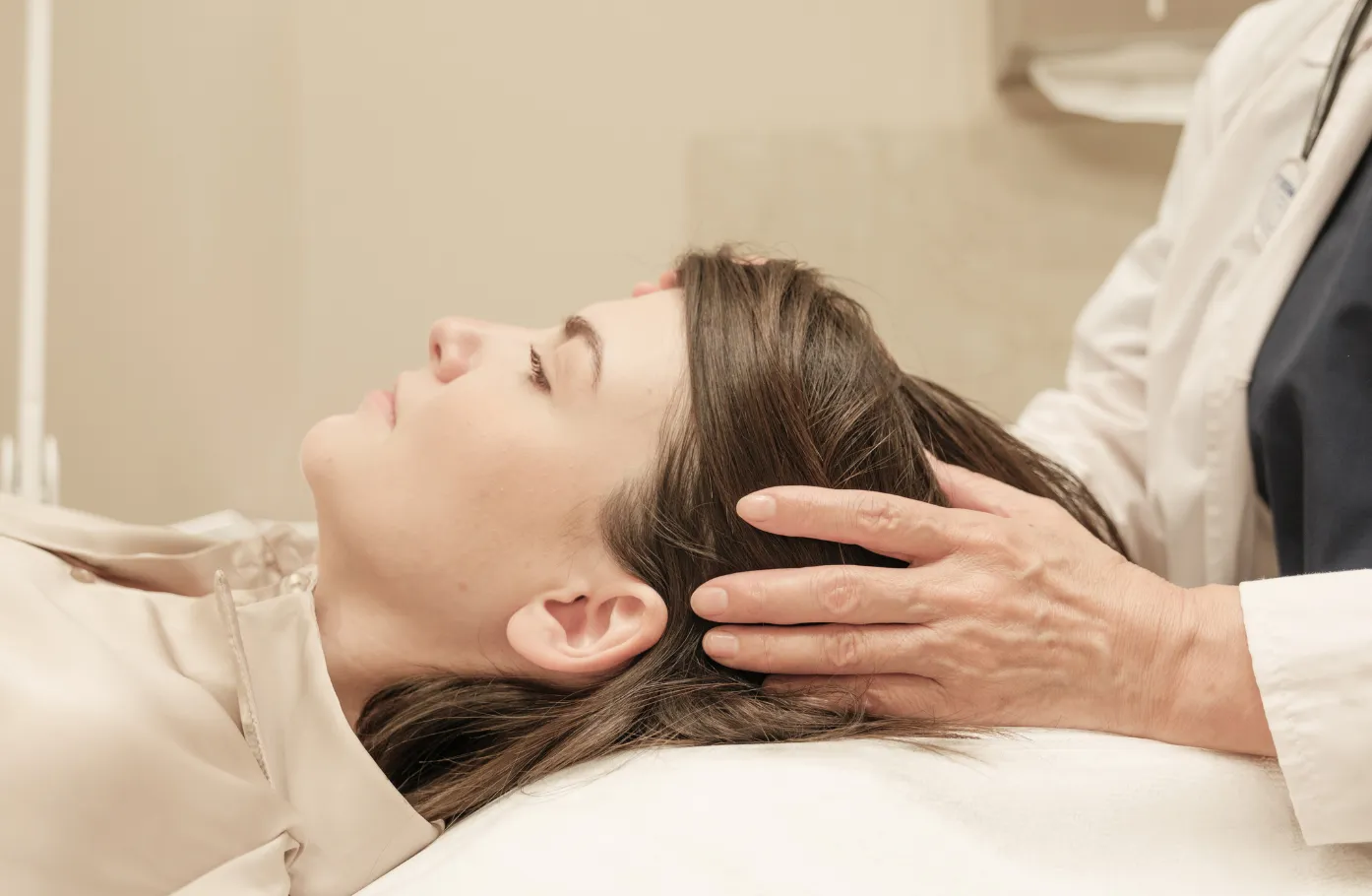
If your scalp has long been dealing with issues like:
- getting oily very easily
- frequent itching, redness, or tightness
- dandruff or recurring inflammation
- strong sensitivity to hair-care products
and you’re also experiencing hair loss, you may wonder:
“Isn’t this a hormone issue?”
“Why should my scalp matter?”
The reality is this:
In hormonal hair loss, the scalp is never a bystander.
For women with oily or chronically inflamed scalps, the scalp itself becomes a persistent risk-amplifying environment.
Why Scalp Condition Matters in Hormonal Hair Loss
Many people assume:
- hormonal hair loss = a problem in the bloodstream
- scalp issues = surface-level care
But for hair follicles, what truly matters is this:
👉 Hormonal signals are ultimately received inside the scalp–follicle micro-environment.
If that environment is consistently marked by:
- excess oil
- weakened barrier function
- low-grade inflammation
the same hormonal signals are more likely to be:
amplified, prolonged, and repeatedly triggered — especially when multiple underlying hormonal and systemic causes overlap.
Excess Oil Is a Signal Amplifier, Not a Neutral Trait
When the scalp produces excess sebum, it’s often accompanied by:
- overactive sebaceous glands
- increased sebum breakdown byproducts
- easier disruption of the scalp microbiome
These changes create two critical effects:
- local inflammation rises
- follicles become more reactive to androgen signals
In other words:
Oil doesn’t directly “cause” hair loss.
It creates an environment where follicles are more easily influenced by hormones.
This amplification is particularly strong in women who also carry metabolic signal-amplifying backgrounds, such as PCOS or insulin resistance.
How Recurrent Inflammation Quietly Shortens the Growth Phase
Scalp inflammation doesn’t always look dramatic.
For many women, it’s:
- mild but persistent
- recurring and self-resolving
- easy to ignore
But for follicles, even low-grade chronic inflammation can:
- disrupt growth-phase signaling
- push follicles prematurely into the resting phase
- reduce the quality of new regrowth
Hair loss then appears as:
- ongoing shedding
- slow density recovery
- rapid worsening after minor triggers
This is why inflammation-prone scalps often experience longer-lasting and harder-to-recover hair loss during perimenopause, when estrogen buffering declines.
Why This Group Is Especially “Targeted”
Risk rises sharply when oily or inflamed scalp conditions overlap with:
- hormonal transition periods (postpartum, perimenopause)
- higher genetic sensitivity
- chronic stress or sleep disruption
At that point, the scalp functions like a volume amplifier.
Follicles aren’t suddenly damaged — they’re continuously nudged toward instability.
This risk becomes even higher in women with family history and widening-part thinning, where follicle sensitivity thresholds are already lower.
Common Mistakes That Make Things Worse
Mistake 1: “The oilier it is, the harder I should cleanse”
Over-cleansing further damages the barrier and often drives sebaceous glands to become even more active.
Mistake 2: Focusing only on dandruff or itch relief
Symptom relief doesn’t equal risk reduction if overall scalp stability isn’t addressed.
Mistake 3: Constantly switching to stronger products
For sensitive scalps, repeated experimentation is itself an inflammatory trigger — especially during hormonal transition phases like post-contraceptive withdrawal, when follicles are already unstable.
What Oily / Inflammation-Prone Scalp Hair Loss Really Needs
Not:
- extreme oil control
- instant visible results
- aggressive suppression
But instead:
- gradual restoration of the scalp barrier
- reduction of baseline inflammatory tone
- returning follicles to a low-noise environment
This also means minimizing systemic amplifiers — especially chronic stress and sleep disruption, which can maintain inflammation even when topical symptoms appear mild.
Daily care should therefore focus on supportive, non-disruptive routines that protect barrier function rather than challenge it — for example, using a gentle cleanser like Evavitae Root Fortifying Hair Essence as part of long-term stabilization.
If You Recognize Yourself Here, Remember This
The scalp isn’t an accessory to hair loss.
It’s the stage where hair loss happens.
When that stage remains chaotic, even good recovery signals struggle to reach follicles.
Understanding this alone puts you on the right path toward stabilizing hair loss.
In the next article, we’ll explore the final high-risk group: chronic stress combined with sleep disruption — because some hair loss doesn’t begin in the scalp at all, but in the nervous system.