In hormonal hair loss, heat is almost never treated as a risk factor.
Many people say:
- “I don’t feel any burning.”
- “There’s no redness or itching.”
- “It’s just normal hot water or blow-drying.”
But during perimenopause, hormonal fluctuation, and sebum imbalance,
the scalp’s tolerance threshold for heat quietly drops.
This is why some people notice that —
without changing anything obvious —
their shedding suddenly becomes more unstable at a certain stage.
Key Conclusion First: Heat Is Amplified During Hormonal Fluctuation
The “heat” discussed here does not mean:
- Obvious burns
- Sharp pain
It refers to repeated, low-grade thermal stimulation, such as:
- Washing hair with consistently hot water
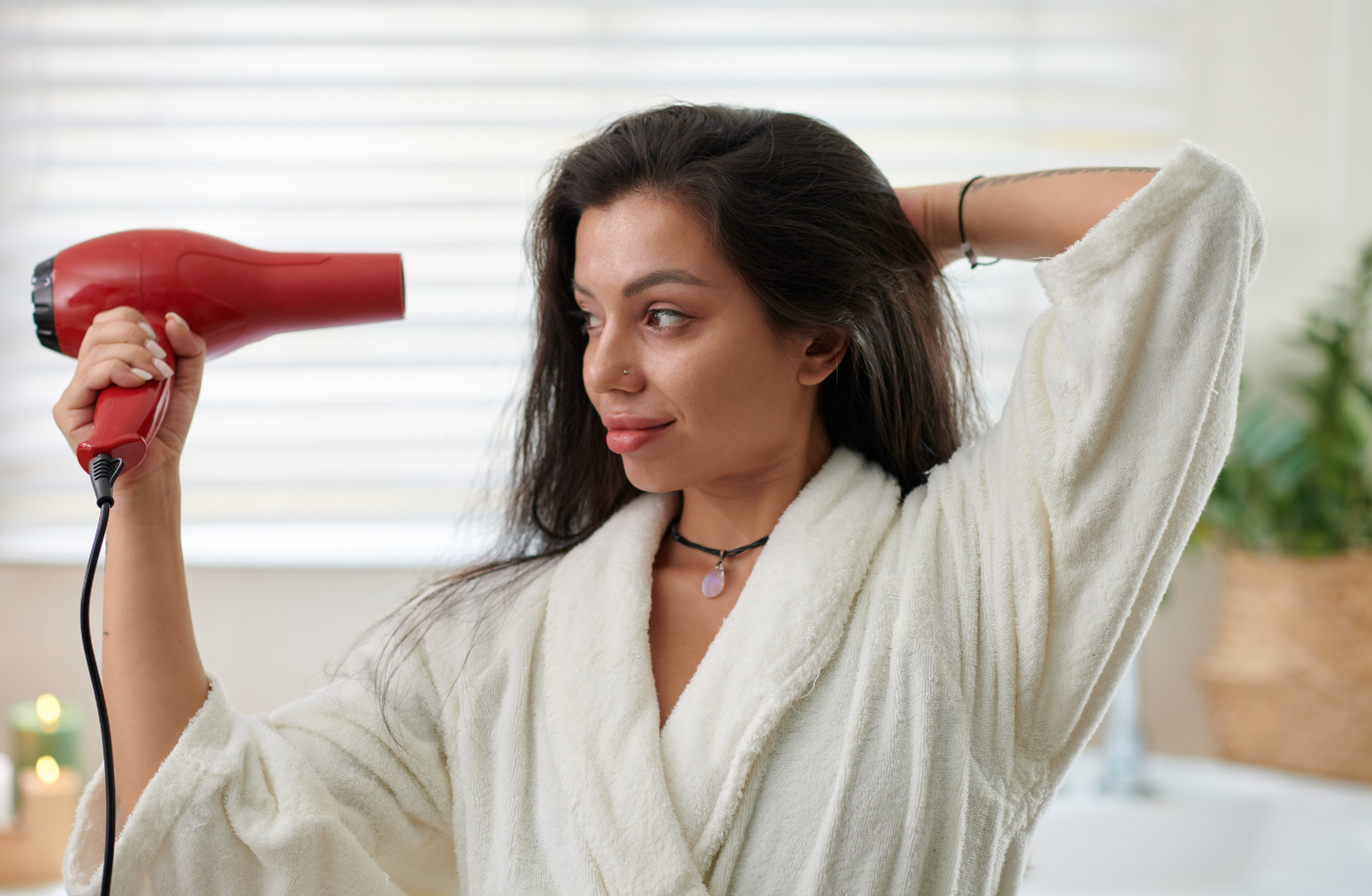
- Blow-drying at high heat from close range
- Prolonged warmth from hats or poor ventilation
- Emotional hot flashes layered on top of external heat
When hormones are stable, the system can usually buffer these inputs.
During hormonal fluctuation, the same heat consumes far more recovery resources — a dynamic often overlooked in hormonal hair-loss scalp care.
Why Perimenopause and Sebum-Fluctuation Phases Are Especially Heat-Sensitive
Vascular and Neural Reactivity Is Amplified
Hormonal shifts affect:
- Vasodilation and vasoconstriction control
- Sensory nerve response thresholds
This leads to:
- Easier congestion
- Slower return to baseline
- Longer-lasting “after-effects” following heat exposure
Even if discomfort is not immediately felt,
the local scalp environment has already changed.
Heat Amplifies the Link Between Sebum and Inflammation
During sebum fluctuation:
- Oil production is already unstable
- Inflammatory thresholds are lower
Heat stimulation:
- Promotes sebum secretion
- Accelerates the release of inflammatory mediators
Together, they create a persistent but invisible stimulation background —
one that hair follicles are particularly sensitive to.
This is why long-term recovery depends on scalp environment management that reduces both sebum and inflammation, rather than addressing heat as an isolated variable.
Heat Extends the Pre-Recovery Stress Window
Hair follicles do not switch instantly from rest to growth.
When thermal stimulation is repeated:
- The system is more likely to remain in a guarded state
- Signals that permit recovery are repeatedly delayed
You may not see obvious problems — but the recovery window keeps being pushed further away.
This delay often overlaps with other underestimated stressors, such as mechanical damage that causes false worsening in hormonal hair loss.
Why “I Don’t Feel Heat” Does Not Mean “It’s Safe”
This is one of the most overlooked aspects of heat management.
In hormonal hair loss:
- Sensation does not equal stimulation intensity
- Lack of discomfort does not mean lack of cost
Especially during:
- Perimenopause
- Chronic sebum imbalance
- Stress-related hair loss overlap
Neural perception itself may already be distorted.
As a result, heat-related stress often accumulates silently — similar to how strong cleansing backfires during oily phases and hormonal fluctuation without immediate warning signs.
Common Heat Sources That Are Easy to Miss
Many people only think of hot water.
In reality, the most common sources include:
- High-heat blow-drying at close distance
- Long periods in poorly ventilated, warm environments
- Wrapping hair tightly right after washing
- Emotional hot flashes combined with ambient heat
None of these are harmful once.
Their cumulative effect over time, however, is very real — especially when washing patterns are already strained, such as when washing less worsens sebum fluctuation.
What Heat Management Is Actually Aiming For
The goal is not to eliminate heat completely.
It is to:
- Reduce exposure duration
- Shorten residual stimulation time
- Avoid layered amplification
In other words:
- Not chasing “cold”
- But allowing the system to return to stability quickly
This is also why supportive daily routines — including gentle, low-interference steps like scalp massage used as condition preparation rather than stimulation — must be paired with careful heat control.
A Practical Self-Assessment Standard
Observe how long it takes for your scalp to stabilize after heat exposure.
If you notice:
- A lingering heavy or congested feeling after hot showers
- Faster oil collapse after blow-drying
- Larger shedding fluctuations during hot weather
Then it suggests:
Your system’s buffering capacity for heat has already declined.
At this stage, daily product choices that prioritize tolerance — such as Evavitae Root Fortifying Hair Essence — are designed to support recovery without adding thermal or sensory load.
Why Heat Management Is So Critical in Hormonal Hair Loss
Because heat simultaneously affects:
- Blood vessels
- Nervous system
- Inflammation
- Sebum production
It functions as a multi-channel amplifier.
When ignored long term, it can quietly offset part of all other gentle-care efforts.
Final Summary
During perimenopause and sebum-fluctuation phases:
- Heat may not feel uncomfortable
- But it makes recovery harder for the system
Smart care does not chase stronger stimulation.
It reduces underestimated sources of energy drain.
Next, we return to the foundation of scalp routine:
Scalp Environment Management: Why Reducing Seborrhea and Inflammation Forms the Recovery Base