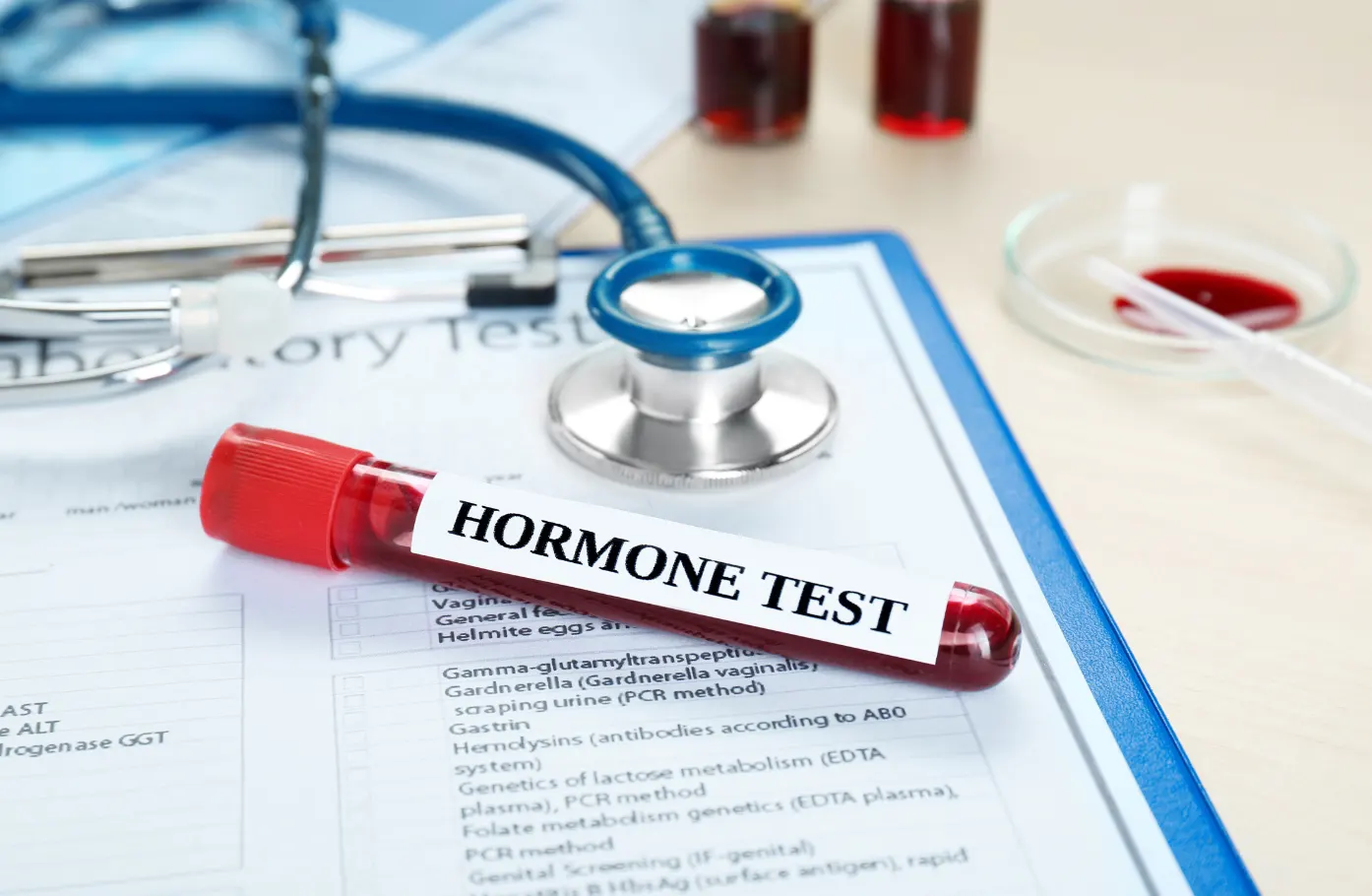
The Most Common—and Most Costly—Misjudgment
Among all judgments related to hormonal hair loss, there is one sentence that appears most often—and most easily pushes people off the right path too early:
“I’ve checked my hormones. Everything is normal.”
From there, the conclusion seems logical:
- “So this probably isn’t hormonal.”
- “Maybe I’m overthinking it.”
- “I’ll just treat it like regular hair loss.”
But in a large number of real cases, this exact judgment is what sends people in the wrong direction.
A Conclusion That Must Be Made Clear First
Hormonal hair loss does not equal abnormal hormone levels
This is the core of the misjudgment.
Hormonal hair loss does not mean:
- hormones must be high
- hormones must be chaotic
- lab results must be abnormal
What it actually means is:
the way hair follicles respond to hormonal signals has changed.
And this change is very often invisible in standard hormone panels.
What Are We Actually Testing When We “Check Hormones”?
Routine hormone tests usually reflect:
- a single point in time
- hormone levels in the bloodstream
- circulating, systemic values
In other words, they answer one narrow question:
“At this moment, roughly where are my blood hormone levels?”
But hormonal hair loss happens at a very different level:
- locally, at the follicle
- within tissue
- through long-term, repeated signal responses
These two things are not the same.
This is why checking hormones alone is often not enough.
Why Hair Can Still Fall Even When Hormones Are “Normal”
Because in hormonal hair loss, the most important variables are often these.
Changes in Follicular Sensitivity to Hormones
Even when hormone levels are within range:
- follicles may respond more strongly to DHT
- the growth phase can be interrupted more easily
- the resting phase may be prolonged
This is a local sensitivity issue, not a systemic hormone disorder.
Hormonal Fluctuation Matters More Than Absolute Numbers
Hormone tests are usually:
- one-time
- static
- snapshot-based
Hormonal hair loss, however, is shaped by whether hormones remain in a state of:
- repeated fluctuation
- unstable rhythm
- long-term variability
These fluctuations may:
- not show clearly on test day
- yet affect follicles repeatedly over time
The Way Follicles “Interpret” Signals Has Changed
The same hormone level:
- in a stable system → causes no problem
- in a high-stress or inflammatory background → may be amplified
This is how you get situations where:
“Lab values look fine, but the body is already triggering protective responses.”
This is also why blaming everything on DHT alone is an oversimplification.
Why This Misjudgment Is So Widespread
Because it matches our intuitive expectations of medical testing:
- if there’s a problem, it should show up
- if nothing shows up, there must be no problem
But hormonal hair loss is not:
- a single abnormal value
- a point-based issue
It is a change in how the system regulates itself over time.
And problems like that are not well captured by a single blood draw.
Where This Misjudgment Often Leads People
Once the “hormonal pathway” is dismissed, it’s very easy to move toward:
- more aggressive topical stimulation
- excessive oil removal or exfoliation
- frequent product switching
- focusing only on “growth strength”
These approaches are, ironically, the ones most likely to backfire in hormonal hair loss.
This is especially true when people assume less oil is always better
or believe stronger growth ingredients automatically mean better results.
Because what the system truly needs is not stronger stimulation,
but:
- stability
- noise reduction
- recovery of tolerance
So Do Hormone Tests Still Matter?
Yes—but not as a basis for dismissal.
They are better used to:
- rule out clear pathological abnormalities
- help understand the overall context
- serve as reference points, not final verdicts
The correct interpretation is:
“Normal hormone levels do not mean hormones are uninvolved.”
A More Reliable Way to Think About the Diagnosis
Instead of asking:
“Are my hormones normal?”
Try asking:
- Is my hair loss strongly tied to life stages or physiological transitions?
- Does it fluctuate with cycles, stress, or sleep changes?
- Does it show long-term waves rather than a one-time event?
- Has my tolerance for stimulation decreased?
If the answers lean toward yes, then even with “normal” hormone tests, hormonal hair loss remains a highly plausible explanation.
This is also why many people feel stuck asking why they’re still shedding after weeks of treatment.
One Thing You May Need to Correct
If you ever used the phrase “my hormones are normal” to dismiss your own symptoms, instincts, or lived experience— please know this:
You didn’t misunderstand your body.
We are simply too accustomed to reducing complex system problems to a single lab report.
Final Takeaway
In hormonal hair loss:
- hormone tests are not verdicts
- they are limited reference tools
What truly defines the condition is never a single number.
It is how hair follicles respond repeatedly within a long-term environment.
This understanding sits within the broader Mind & Myths framework.
For many people, reducing stimulation and maintaining consistency — including gentle supportive scalp care— supports that long-term environment.
Next, we’ll continue by unpacking one of the most oversimplified—and most demonized—factors of all: