
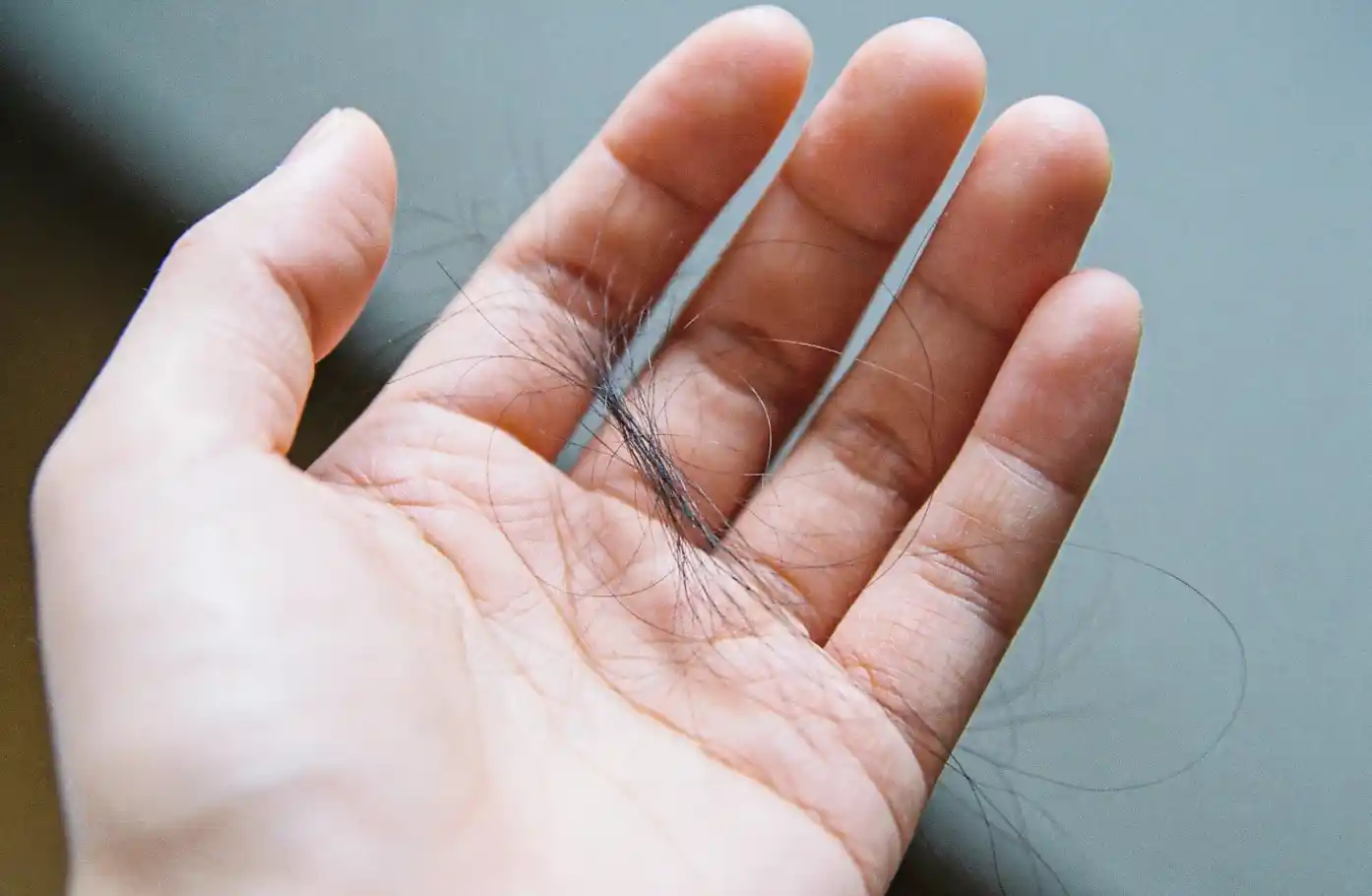
Many people see this line on their lab reports:
“Hemoglobin is normal.”
Naturally, they conclude:
“My iron must be fine; hair loss isn’t related to iron.”
But in reality, a significant number of people with ongoing hair loss aren’t anemic.
The real issue is often low ferritin levels over time. For hair follicles, there is a big difference between the two. You can read more about the overall context in our Nutritional Deficiency Hub.
1. Clarifying a Key Concept: Ferritin ≠ Hemoglobin
This is the first step in understanding this mechanism.
Hemoglobin: Responsible for current oxygen transport — the “actively used iron.”
Ferritin: Represents the body’s iron storage — the “reserve that can be deployed.”
The body’s strategy is:
As long as hemoglobin is normal → survival is prioritized
Even if iron stores decline → hemoglobin is maintained
This means that even when iron reserves are tight, you may appear normal.
But for hair follicles, the problem has already begun, as explained in our article on why your hair remains fine and weak even when you’re taking supplements.
2. Why Hair Follicles Are Especially Sensitive to Ferritin
Hair growth is inherently:
Highly metabolically active
Rapidly dividing
Energy-intensive
Iron plays key roles in:
Cellular energy metabolism
DNA synthesis and cell division
Maintaining normal hair follicle growth
When iron stores are low, the body makes a clear judgment:
“These irons cannot be used freely.”
So hair follicles aren’t completely deprived of iron, but they aren’t allowed to use it as a priority. You can review the connection to Mechanism 2: Protein and new hair quality for context.
3. What Does “Growth Permission” Mean for Hair Follicles?
Think of ferritin as a key. It determines whether hair follicles are allowed to enter and maintain the growth phase.
When ferritin is low, the body:
Reduces the proportion of follicles entering the growth phase
Shortens the duration of ongoing growth
Redirects resources to higher-priority systems
The result:
Hair shedding continues
New hair grows slowly
Growth cycles never fully “activate”
This is why many people notice that hair continues to fall despite normal hemoglobin — deeper explanation here.
4. Why This Type of Hair Loss Is Often Chronic and Recurrent
Ferritin decline usually occurs gradually over a long period. Common causes include:
Long-term insufficient intake
Heavy or prolonged menstrual bleeding
Pregnancy / postpartum
Chronic stress or inflammation
Reduced absorption efficiency
During this process, the body maintains surface stability while gradually limiting non-essential functions. Hair is continuously affected during this phase, as outlined in Mechanism 1: Energy and initial hair shedding.
5. Why Hair Doesn’t Immediately Improve After Iron Supplementation
This is a common point of confusion.
The body needs to re-establish “trust”
After prolonged low iron stores, the body won’t immediately change its strategy. It needs to confirm: continuous intake, no sudden interruption, no need to remain in a protective mode.Iron utilization depends heavily on overall status
Iron absorption and usage are influenced by total energy sufficiency, inflammation, gut health, and interactions with other nutrients.
If these conditions aren’t simultaneously improved, iron availability may not reach levels sufficient to support growth. You can learn more about how supplements interact with hair follicle activation in our previous discussion.
6. Why Ferritin-Related Hair Loss Is Often Misjudged
Because it typically presents as:
No obvious anemia symptoms
Lab results that “look okay”
Hair loss that is gradual, ongoing, and recurrent
Thin, soft new hair with unstable cycles
As a result, the problem is often attributed to hair care, stress, age, or hair texture. But the real limiting factor lies at the storage level — ferritin. You can see how this connects to protein deficiency and weak new hair.
7. Low Ferritin ≠ Permanent Hair Loss
Ferritin-related hair loss is essentially a system-level restriction, not follicle damage. As long as follicles are intact and growth cycles haven’t been permanently disrupted, this state can be reversed.
It requires stability, continuity, and a systemic recovery environment — not urgency or anxiety. For general maintenance, don’t forget to use supportive products like Evavitae Root Fortifying Hair Essence.
8. Where This Mechanism Fits in the Recovery Pathway
In nutrient-deficiency hair loss, ferritin occupies a special position:
Low energy → growth paused
Low protein → growth quality limited
Low ferritin → growth cannot initiate
Ferritin doesn’t determine whether raw materials exist, but whether the follicle is allowed to use them. See Mechanisms Hub for the full pathway.
Summary
Persistent hair shedding is sometimes not because you aren’t doing enough, but because the “gate” hasn’t opened yet.
If you have:
Stopped prolonged dieting
Gradually restored energy
Started supplementing nutrients
Yet hair shedding continues and new growth is slow, ferritin may be the overlooked threshold.
The next article will explore:
Why deficiencies in zinc, selenium, copper, and other trace elements make the scalp environment and growth signals unstable — the next layer of fine regulation after growth permission. You can preview the trace element discussion here.