
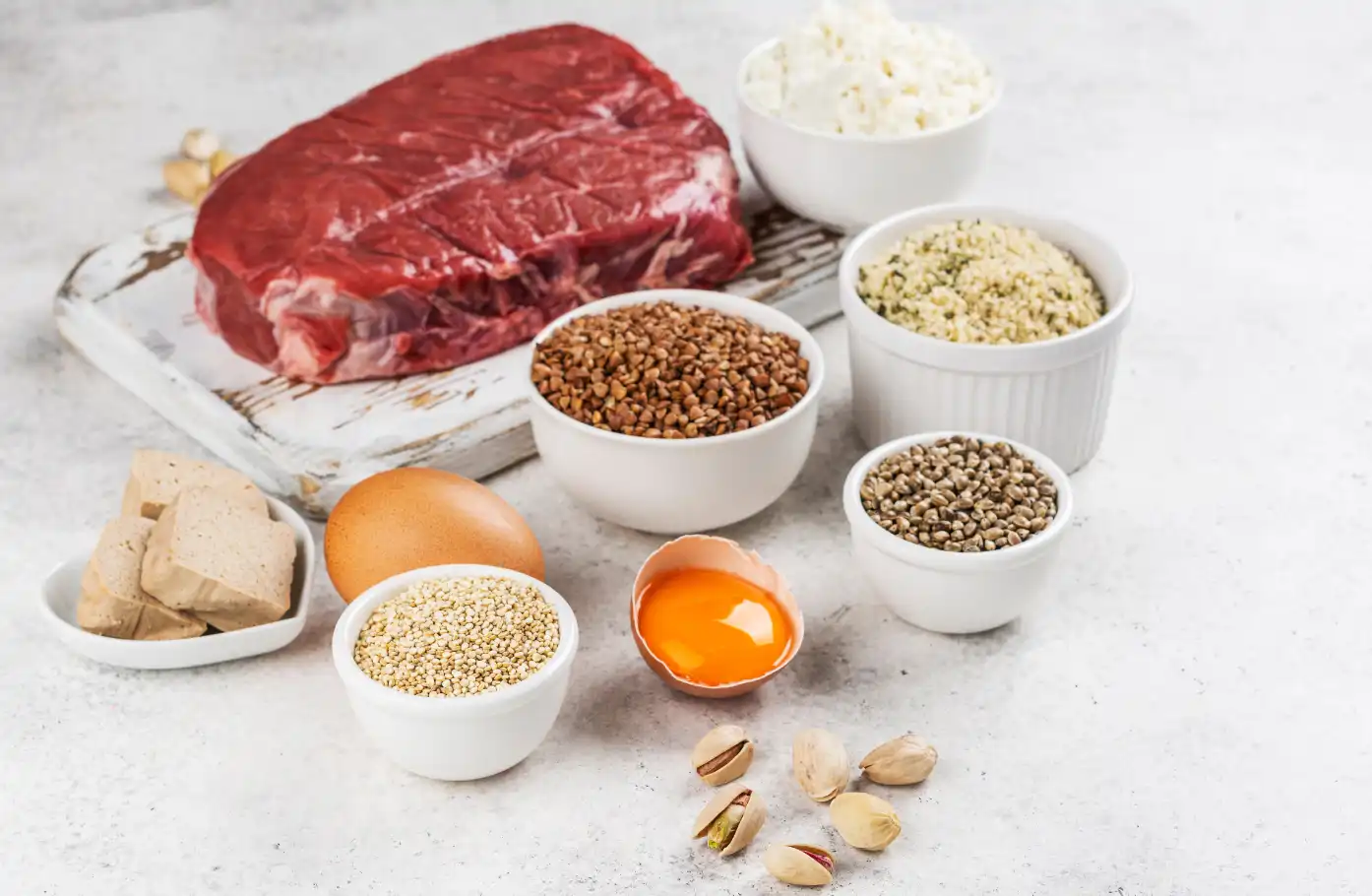
In discussions about nutrient-deficiency–related hair loss, “red meat” and “animal-based foods” are often highly controversial topics.
Some people immediately respond:
- “I don’t eat red meat and I’m very healthy.”
- “Being vegetarian does not equal malnutrition.”
- “Isn’t this just labeling a certain diet as problematic?”
These reactions are understandable. Because the purpose of this article is not to tell you what you should or should not eat, but to explain something more fundamental: when a certain category of foods is absent for a long time, what kind of structural nutritional risks might the body face?
Understanding risk is not the same as rejecting a choice. Learn more about the overall concept in our Nutritional Deficiency Hair Loss Hub and the Causes & Risks hub.
I. First, the conclusion
Not eating red meat ≠ automatically deficient in iron or B12, but it does change the distribution of risk. This is the most important point.
- Many people avoid red meat and remain in good condition
- Others eat very little red meat and never develop obvious problems
The issue is not “Is the way you eat right or wrong?” The issue is: “When this eating pattern continues long-term, where is the body more likely to develop gaps?”
II. Why red meat is often mentioned in discussions about iron and B12
In a typical diet, red meat has two key characteristics:
- It provides heme iron
- The absorption pathway is relatively direct
- Less affected by plant-based inhibitors
- Higher utilization efficiency among iron sources
- It is one of the main natural sources of vitamin B12
- B12 exists almost exclusively in animal-based foods
- Plant-based diets require deliberate planning for adequate sources
This does not mean: “If you don’t eat red meat, you will definitely be deficient.” It means: when red meat is absent, reliance on alternative sources increases significantly. Learn more in Picky Eating & Protein Deficiency.
III. Why iron- or B12-related hair loss is often “hard to notice”
Because deficiencies in these nutrients are usually slow and progressive. Common characteristics include:
- Anemia does not necessarily appear immediately
- Daily life can still be maintained
- Reduced energy may be mild or overlooked
- Hair loss tends to be persistent, recurrent, and slow to recover
In these situations, hair is often one of the earliest visible long-term indicators.
IV. Why people who avoid red meat often show “low ferritin but normal hemoglobin”
This is a very typical and frequently misunderstood situation. The reasons include:
- The body prioritizes maintaining hemoglobin (survival first)
- Even when iron stores decline, surface markers remain “normal”
- Non-essential systems (such as hair follicles) are restricted earlier
As a result, tests may show “no anemia,” while hair growth cycles remain continuously affected. This is why, throughout the Mechanism series, we repeatedly emphasize: Ferritin and hemoglobin are not the same thing.
V. Vitamin B12: Why it often appears together with “hair loss + fatigue + slow recovery”
The roles of B12 in the body include:
- Supporting cell division and renewal
- Participating in nervous system and metabolic pathways
- Influencing long-term tissue repair efficiency
When B12-related support is insufficient, what you may notice is not a single “classic symptom,” but rather:
- Slow new hair growth
- Finer hair strands
- A prolonged recovery timeline
- A persistent feeling that “nothing seems to improve”
These patterns occur more frequently in people who avoid animal-based foods long-term without systematically planning alternative sources. Related discussion on nutrient demands during life stages can be found here.
VI. Why “feeling fine” does not completely rule out risk
In the early stages of nutritional insufficiency, the body is very skilled at maintaining surface stability through redistribution and restriction. You may not immediately experience:
- Obvious weakness
- Inability to function
- Acute discomfort
However, long-term growth systems (such as hair) are often affected earlier in these conditions. This is not because the body is “fragile,” but because it makes rational decisions based on priority.
VII. Viewing these risks from a neutral perspective
A more rational way to approach this is:
- Dietary choices themselves are not right or wrong
- Every choice shifts certain risk points
- Understanding risk allows earlier recognition
- It is not meant to invalidate any lifestyle
In other words: you don’t need to change your choice, but you do need to understand what additional demands it places on the body.
VIII. Where this risk fits within nutrient-deficiency hair loss
When we connect the Causes & Risks structure:
- Dieting / extreme restriction → insufficient total intake (see example)
- Picky eating / protein deficiency → structural imbalance (read more)
- Long-term avoidance of red meat / animal-based foods → increased iron and B12 risk
- Combined with stress and absorption issues → hair loss is amplified (see absorption factors)
It is not the only cause, but for many people, it is a long-overlooked background factor.
Summary
Understanding risk does not mean rejecting choice. If you:
- Have avoided red meat or animal-based foods long-term
- Are experiencing slow recovery, fine new hair, or recurring hair shedding
- Find your hair loss difficult to explain
Then understanding the role of iron and B12 simply helps you see what is happening in the body more clearly. For long-term supportive care, consider Evavitae Root Fortifying Hair Essence.
This article is not telling you: “You must eat a certain way.” It is reminding you that when certain sources are absent long-term, hair follicles are often among the first systems to sense the change.
In the next article, we will explore a risk factor that is highly relevant to women yet often overlooked: Postpartum, adolescence, preconception / breastfeeding: why nutrient demands suddenly increase. Because some gaps are not caused by eating “wrong,” but by the body temporarily requiring far more resources than usual.