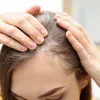

— Why People Who “Look Very Healthy” Are Sometimes More Prone to Hair Shedding (Especially Relevant for Women)
Within nutrient deficiency–related hair loss, one group often realizes the problem the latest:
- Regularly exercising
- Low body fat or lean physique
- Highly disciplined lifestyle
- Diet that appears adequate
For context on nutrient deficiency–related hair loss, see Nutritional Deficiency Hub and Causes & Risks Hub. Supportive care products can be found here.
I. What Is “Low Energy Availability”?
Low energy availability (LEA) refers to whether, after subtracting energy used for exercise, sufficient energy remains for all physiological functions. When high training volume persists without adequate energy compensation:
“Basic operation is maintained, but non-essential systems begin to be restricted,” with hair being among the first affected. See also High Training Volume / LEA Feature.
II. Why Is Exercise-Related Hair Loss Underestimated?
Individuals may appear healthy—fit, alert, not underweight—making nutrient deficiency seem unlikely. However, low energy availability affects long-term repair and growth, not daily performance, so hair often pays the price first.
III. Why Are Women More Easily Affected?
Women are more sensitive to energy borderline states due to:
- Higher baseline energy demands (hormonal systems)
- Lower body fat sensitivity
- Continuous energy/nutrient output from menstruation
- Earlier physiological responses to energy deficiency
Symptoms may include hair shedding, menstrual irregularities, or slower recovery. Related articles: Iron Gaps in Women, Chronic Blood Loss & Iron Deficiency.
IV. Why Does This Hair Loss Appear Gradually?
The body maintains training performance and body weight early on, while internally shortening hair follicle growth, reducing new hair production, and redirecting resources toward recovery.
V. Why Harder Training Can Make Hair Loss More Obvious
Exercise involves high energy expenditure, micro-damage, and repair demands. If energy is insufficient:
- Repair priorities are reordered
- Growth processes are postponed
- Hair follicles exit the growth phase sooner
VI. Why Supplementation Often Has Limited Effect
Under low energy availability, supplementation alone cannot offset chronic energy deficits. Nutrients prioritize:
- Exercise recovery
- Stress-response systems
Long-term growth, such as hair, is delayed. See also Poor Gut Absorption and Low Protein Intake.
VII. Typical Features of Exercise-Associated Hair Loss
- Persistent shedding rather than explosive loss
- Slow, fine new hair growth
- High sensitivity to changes in training volume
- In women, may coincide with menstrual or recovery issues
VIII. Understanding LEA — Correcting Perspective
Exercise and discipline are not problems. The issue is chronic high consumption without adequate energy compensation, which downgrades non-essential systems like hair.
Summary
Hair loss does not necessarily indicate poor health. For those training intensely and long-term, gradually worsening shedding may reflect low energy availability rather than error or deficiency.
What’s Next
The next article covers another high-incidence female factor in the elevated consumption category: Chronic Blood Loss & Iron Deficiency, a common underlying cause in women where multiple small consumption sources accumulate risk over time.