
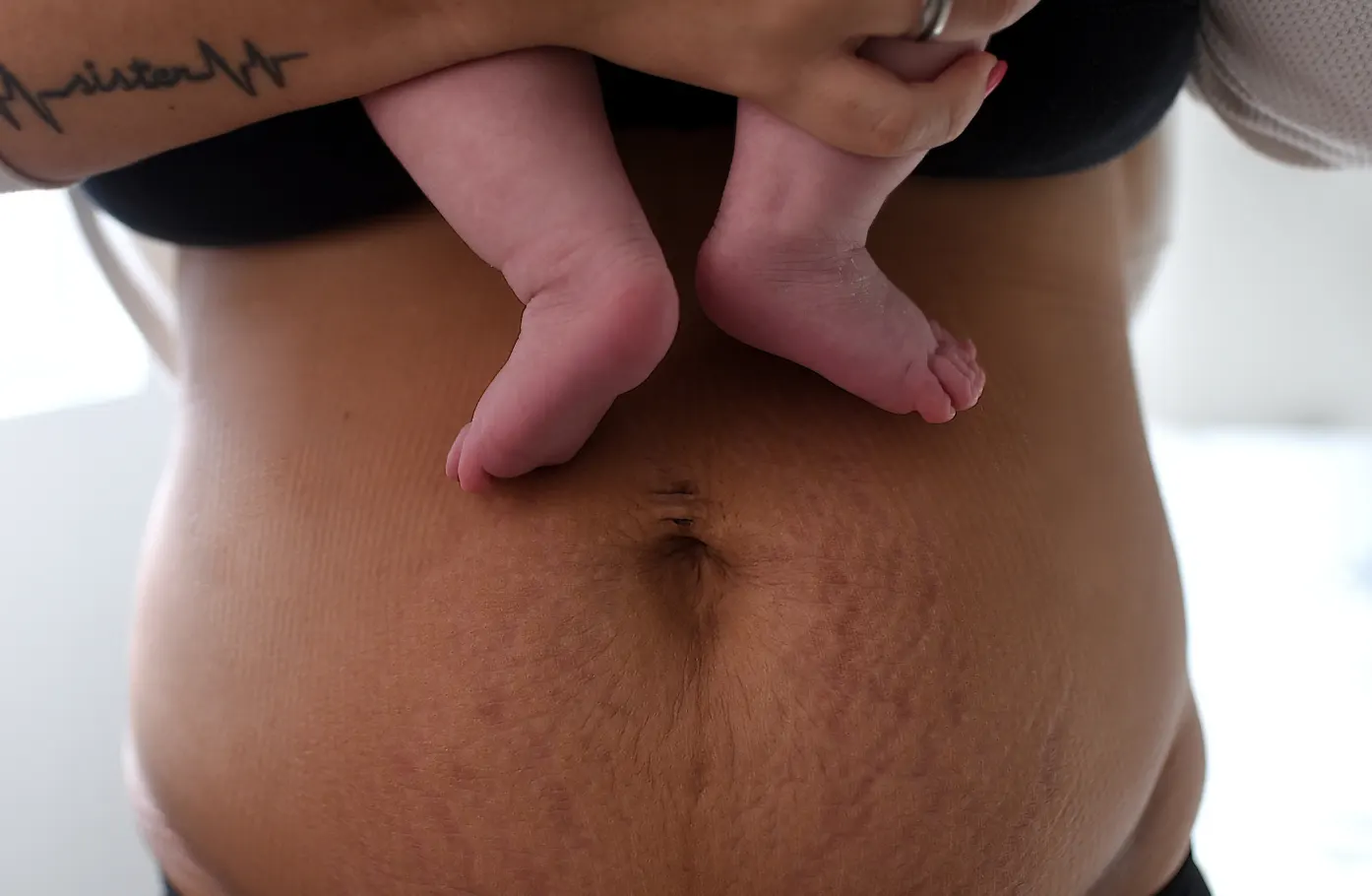
Among people experiencing nutrient deficiency–related hair loss, postpartum and breastfeeding women represent a highly specific group that is often oversimplified.
You have probably heard phrases like:
• “Postpartum hair loss is normal.”
• “It will be fine after a few months.”
• “Just wait it out.”
But in reality, many women experience hair shedding that does not stop after a few months — instead becoming persistent, recurrent, and slow to recover.
The real question is not whether postpartum hair loss occurs, but why some women recover smoothly while others remain stalled before recovery begins.
This pattern fits clearly within the Causes & Risks framework of nutrient deficiency–related hair loss.
I. A Key Premise
Postpartum hair loss ≠ purely a “hormone issue”
Hormonal shifts do contribute to postpartum shedding.
However, if hormones were the only factor:
• Shedding would appear in a relatively concentrated window
• It would naturally ease afterward
• It would not persist or recur long-term
When shedding continues well beyond the expected timeframe, or recovery remains unusually slow, hormones alone can no longer explain the pattern.
II. What Really Happens Postpartum / During Breastfeeding?
Physiologically, postpartum is not an ending — it is the start of another high-demand phase.
During this period, the body must simultaneously:
• Repair depletion from pregnancy and delivery
• Support milk production (if breastfeeding)
• Maintain metabolic and immune stability
• Function under chronic sleep fragmentation
This explains why nutrient demands suddenly increase during postpartum and breastfeeding, even when diet appears unchanged.
Even when food intake looks “normal,” total demand has risen sharply.
III. Why “Eating Well” Is Often Still Not Enough
The issue is rarely food quality alone.
The real equation is whether intake can continuously support:
Repair + Output + Ongoing Consumption
In postpartum and breastfeeding women:
• Energy requirements rise
• Protein and micronutrient consumption increase
• Iron stores are often not fully replenished
• Sleep-related recovery windows are severely compressed
This often creates a state that is not clinically deficient — but chronically just-below-adequate.
Hair is one of the first systems to reflect this borderline state, a concept explored further in why nutrient deficiency–related hair loss is not just about eating poorly.
IV. Why Protein and Iron Are Especially Critical Postpartum
Protein and iron are central to:
• Tissue repair
• Metabolic support
• Hair shaft construction
In many women:
• Pregnancy and delivery have already drawn down reserves
• Menstrual cycles gradually resume ongoing iron loss
• Breastfeeding increases nutrient output
If protein intake remains marginal — a pattern common in busy mothers — this aligns closely with low protein intake as an overlooked cause of nutrient deficiency–related hair loss.
At the same time, women with heavy or resumed menstrual flow may experience compounded risk, as seen in heavy menstrual bleeding and iron deficiency-related hair shedding.
V. Why Fragmented Sleep Actively Delays Recovery
Postpartum sleep is rarely just “shorter.”
It is often:
• Fragmented
• Lacking deep recovery phases
• Disruptive to repair signaling
Sleep is the body’s primary window for:
• Tissue repair
• Resource reallocation
• Growth signal confirmation
When this window is repeatedly interrupted, even improved nutrition may not immediately translate into hair recovery.
This interaction mirrors how high stress combined with sleep deprivation amplifies nutrient gaps into hair loss.
VI. Why Some Women Become “Stuck” in Postpartum Hair Loss
In reality, postpartum shedding often overlays multiple pre-existing or concurrent risk factors:
• Prior history of dieting or fat loss
• Chronically low protein intake
• Heavy menstrual flow or low iron reserves
• Average or suboptimal digestive efficiency
• Persistent stress and sleep deprivation
When these factors combine, postpartum becomes not a single cause — but a trigger that amplifies existing nutrient gaps, especially in women already identified as high-risk groups for nutrient deficiency–related hair loss.
VII. Why Recovery Feels Slow and Recurrent
Because the body is not simply trying to “stop shedding.”
It must:
• Rebuild nutrient reserves
• Confirm systemic safety
• Reprioritize long-term growth
During this recalibration:
• Shedding may fluctuate
• New growth appears slowly
• Density recovery feels uneven
This is not failure — it is a system gradually rebalancing under constrained conditions.
At this stage, supportive scalp care such as Evavitae Root Fortifying Hair Essence is positioned to help maintain follicle stability while internal recovery catches up, rather than forcing stimulation.
VIII. Reducing Self-Blame Through the Right Framework
Persistent postpartum hair shedding does not indicate neglect or poor self-care.
It reflects a period of:
• High consumption
• High output
• Low recovery bandwidth
Understanding this prevents:
• Over-focusing on hair care routines
• Blindly escalating supplementation
• Unnecessary self-blame
Instead, hair changes are interpreted within the broader nutrient deficiency–related hair loss framework.
Summary
Persistent postpartum hair shedding is rarely due to a lack of effort.
More often, it reflects recovery conditions that are not yet fully restored.
If:
• Shedding extends beyond the expected period
• Diet appears adequate
• Recovery remains slow or unstable
Then postpartum and breastfeeding should be understood not as isolated causes, but as stages that readily magnify existing nutrient gaps.
This understanding changes both expectations and strategy — and often, that shift alone reduces anxiety around recovery.