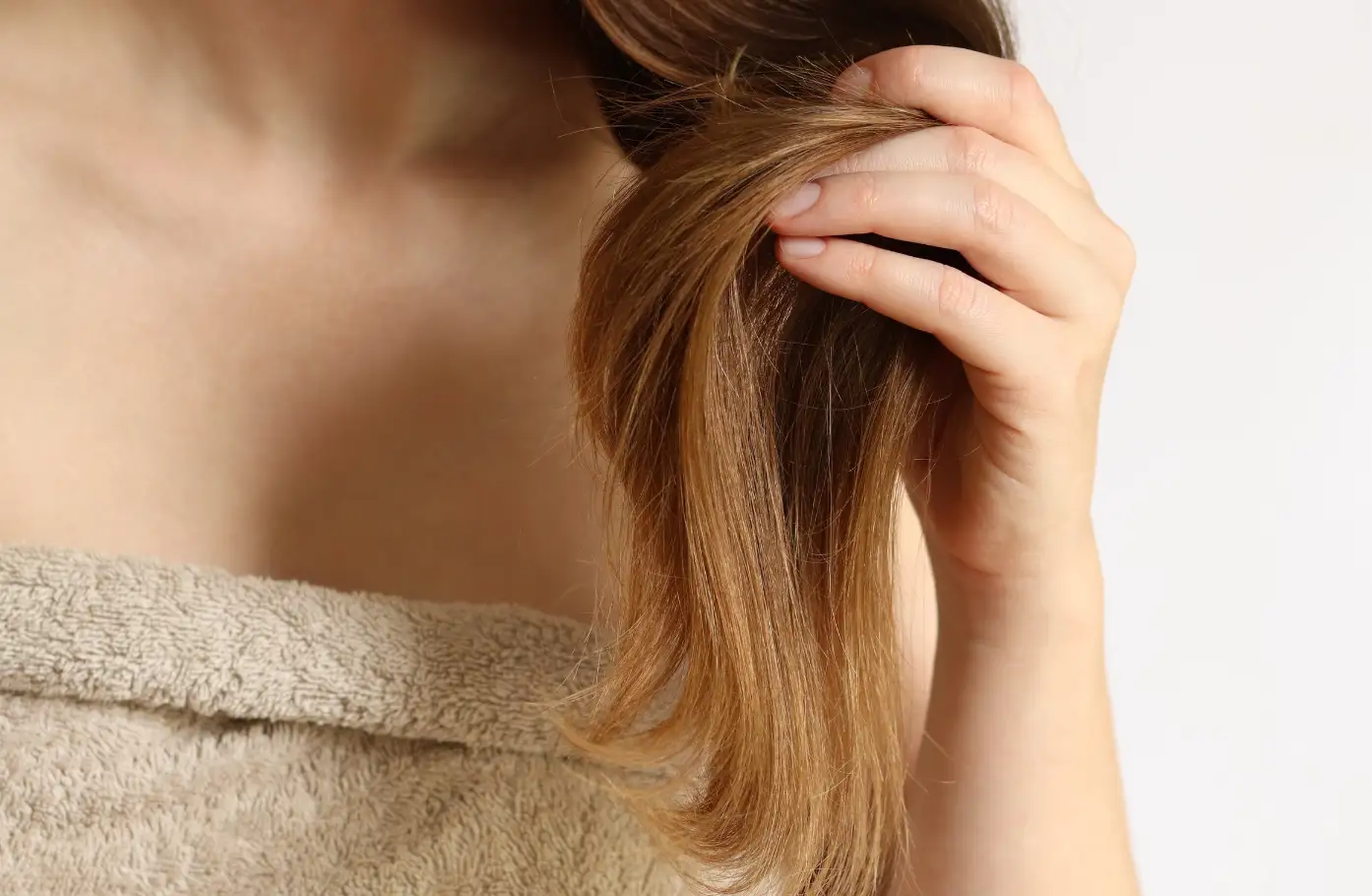
In nutrient-deficiency hair loss, heat itself is not the “culprit,” but it can make already fragile hair pay a higher price.
Many people struggling with hair loss often worry:
Will blow-drying worsen hair loss?
Are curling irons or straighteners “damaging my follicles”?
Should I completely avoid all heat tools?
All these questions point to the same core confusion: Why does hair seem especially “sensitive to heat” during nutrient deficiency?
This article clarifies one key point: heat management is not about whether to use heat, but about when and how to use it safely (Scalp Care & Routine).
1. Key Takeaway: Heat Usually Damages the Hair Shaft, Not the Follicle
This is crucial but often misunderstood. Within typical styling temperatures —
Hair dryers
Curling irons
Straighteners
…primarily affect the hair shaft, not the deep follicle (Evavitae Root Fortifying Hair Essence).
In other words, heat does not directly make follicles “stop growing hair,” but it can significantly affect whether the hair you already have stays healthy.
During nutrient sufficiency, this impact may be minor. During nutrient deficiency, the effect is amplified.
2. Why Hair Is More Prone to Heat “Breakthrough” When Nutrients Are Low
During nutrient deficiency, the hair shaft undergoes several key structural changes:
Lower quality keratin synthesis (Hair Fiber Repair)
Reduced surface lipid protection
Poorer water retention
These combined changes lower the hair’s heat tolerance, making the same temperature and duration more likely to cause:
Surface protein denaturation
Rapid moisture loss
Reduced elasticity and resilience
The result isn’t immediate shedding, but hair becomes more prone to breakage, flattening, and appearing thinner.
3. Why Heat Damage Is Especially “Visible” During Nutrient Deficiency
Heat damage can create anxiety because it reduces visual density faster than follicles can recover.
When combined with:
Early-stage nutrient supplementation (Overview of Internal Support)
Follicles not yet fully stabilized
Already thin, soft hair
…heat damage manifests as:
Dry, split ends
Hair lying flat against the scalp
Overall hair looking much thinner
This is easily misinterpreted as:
“Is my hair loss getting worse?”
4. Which Heat-Related Behaviors Have the Highest Cost During Nutrient Deficiency?
Not all heat exposure carries the same risk. During nutrient-deficiency hair loss, the most damaging practices include:
4.1 High Temperature + Close Contact
Dryer nozzle close to the scalp
Curling iron touching the roots
This increases both hair shaft damage and scalp irritation (Safety & Sensitive Scalp).
4.2 High Temperature + Pulling (Heat + Mechanical Stress)
Pulling hair while blow-drying
Forcing hair into style with heat tools
When hair is thin, heat significantly reduces tensile strength (Avoiding Mechanical Damage).
4.3 Frequent, Consecutive Use
Daily high-heat blow-drying
Repeated heating on the same area
During weakened repair capacity, repeated exposure quickly causes irreversible hair shaft damage (Six-Dimension Framework).
5. Core Goal of Heat Management: Reduce “Energy Shock,” Not Eliminate Heat
Heat management during nutrient-deficiency hair loss does not mean:
Completely abandoning the dryer
Permanently avoiding styling
It’s about downgrading heat from a destructive factor to a controllable variable, usually through:
Lower temperature
Greater distance
Shorter duration
When heat no longer delivers “high-energy shocks,” hair no longer pays repeatedly for styling (Hair Washing Frequency).
6. Why Heat Management Boosts Recovery Confidence
Similar to mechanical damage, once heat damage is controlled, many notice:
Improved hair end condition
Hair feels more supported
Thinning no longer rapidly amplifies visually
This does not mean follicles immediately recover, but it prevents continuous loss while waiting for recovery (Scalp Massage).
This “damage control” mindset is critical for consistently maintaining nutrition and gentle care.
7. Put Heat Back in Its Proper Place
During nutrient-deficiency hair loss, heat should not be an outlet for anxiety or a mandatory daily step.
It is just a tool. When you realize:
“Reducing heat-related damage when resources are low is already giving hair a recovery path,”
…you are doing something highly supportive for the system. Heat management is not a step backward; it creates a recovery space where hair is not repeatedly “burned” (Scalp Environment Management).