In nutritional deficiency–related hair loss, protein almost never steals the spotlight—yet it is often the real reason recovery gets stuck (Nutritional Deficiency Hair Loss, Scalp Care & Routine).
Many people focus on:
Testing and supplementing iron (Iron & Ferritin)
Micronutrients like zinc, vitamin D, and B12 (Zinc, Vitamin D, B12 & Folate)
Careful scalp routine (Evavitae Root Fortifying Hair Essence)
But one basic question is often overlooked: Does the body actually have enough raw material to manufacture hair?
1. Hair Is Not “Nourished”—It Is Manufactured
Hair is a highly structured biological product:
Composed primarily of keratin
Built from a continuous supply of amino acids
Dependent on stable, long-term material input
Without sufficient protein:
Hair follicles are not “failing”—they simply lack materials
Even adequate iron is prioritized for other systems (Overview of Internal Support)
A stable environment cannot translate into real growth
2. Why Protein Deficiency Causes Mild but Persistent Hair Loss
When protein intake is chronically low:
Vital organs are prioritized
“Non-essential tissues” like hair receive reduced resources
Result:
Hair doesn’t fall out aggressively, yet keeps shedding
Hair grows but never catches up
This is a hallmark of protein insufficiency (How to Care for Nutrient Deficiency–Related Hair Loss).
3. Why Iron Alone May Not Help
Iron supports oxygen and energy delivery, but building hair requires structural material.
Follicles may receive energy but cannot convert it into hair structure
Lab values improve, but hair quality lags (Supplement Combination Guide)
4. Who Is Likely to Underestimate Protein Needs
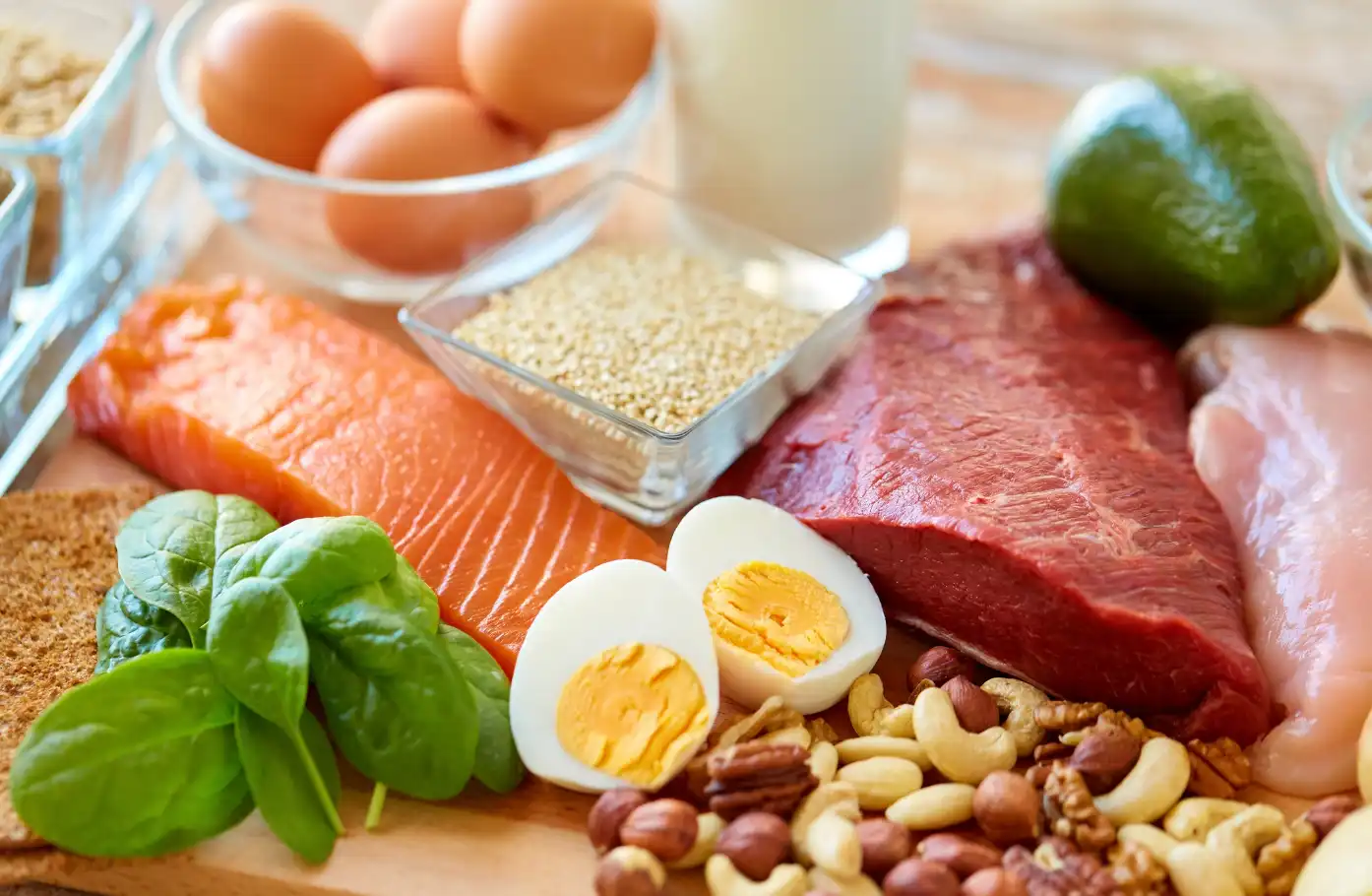
Long-term calorie restriction or dieting → overall intake insufficient
Semi-vegetarian or vegetarian diets → limited amino acid profiles
High-stress or high-activity states → increased protein requirements
5. Protein Deficiency Affects Hair Quality More Than Quantity
First compromise is quality, not quantity
Signs include finer new hair, reduced structural support, and increased breakage (Hair Fiber Repair Ingredients)
Hair may feel off even if it is growing
6. Protein’s Role in Recovery
Protein is the foundational condition determining whether other nutrients can become hair:
Supports iron use for hair structure
Converts improved scalp environment into real density
It does not stop shedding overnight or directly stimulate rapid growth.
7. Why Improvement Appears Gradually
Hair growth naturally lags behind nutritional changes
Structural improvements first appear in new hair
Early indicators: hair feels more resilient, breakage decreases (Scalp Massage)
8. Putting Protein Back Where It Belongs
Protein is not an “advanced option”—it is the base condition for all other recovery efforts.
If you are already:
Supplementing iron
Addressing micronutrients
Stabilizing scalp care
Yet recovery still feels incomplete, ask:
Does your body have enough raw material to turn conditions into hair? (Scalp Environment & Barrier Repair)
Hair is manufactured strand by strand, not nurtured into existence.