
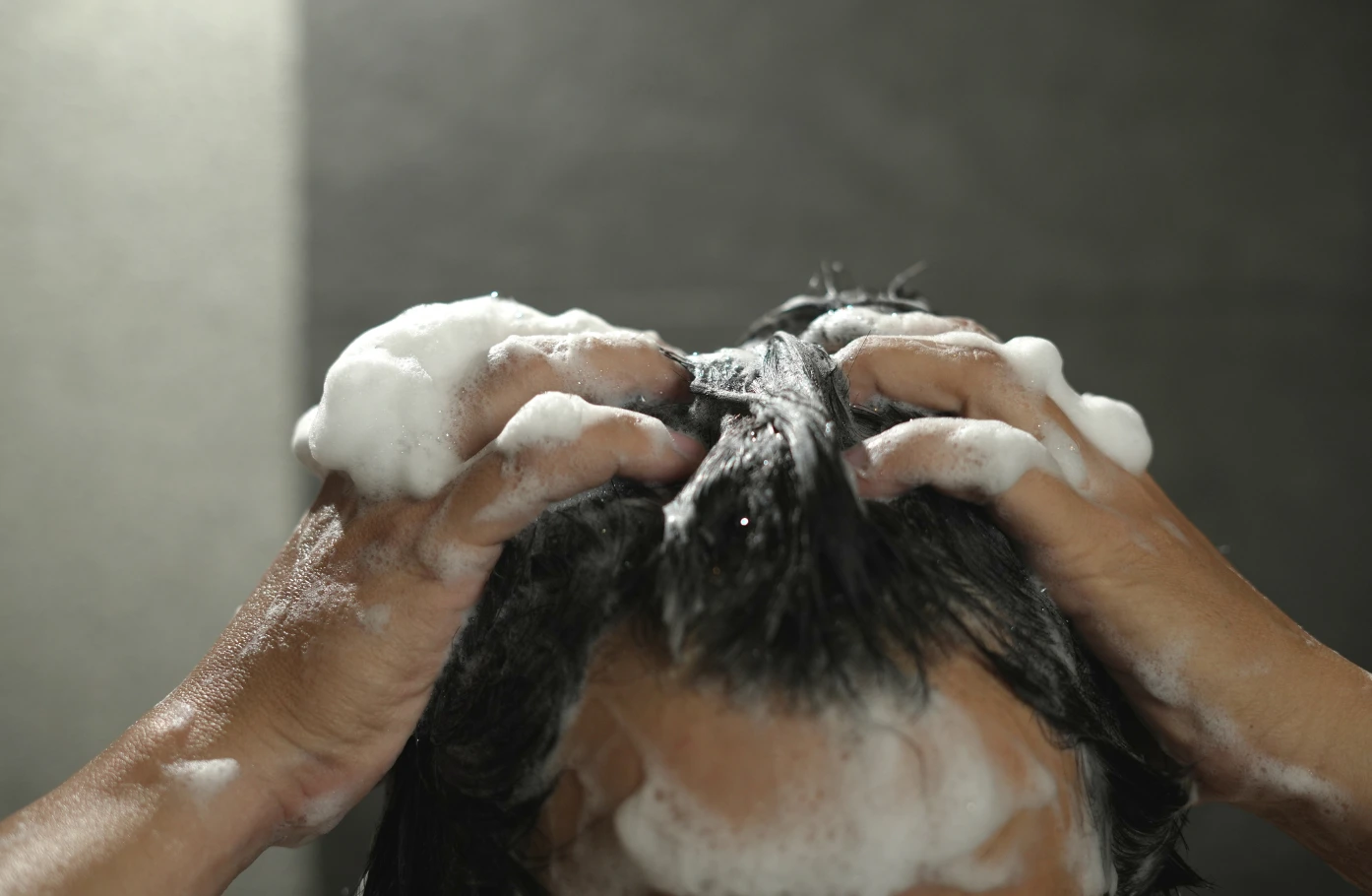
Many people, at the peak of hair shedding, silently make a decision:
“I’ll skip washing if I can.”
Not out of laziness, but out of fear.
Fear of seeing hair in the drain.
Fear of handfuls of hair falling out.
Fear that “one wash = one shedding event.”
As a result, shampooing becomes less of a care routine and more of a psychological test.
For insight into the psychological side of hair loss, see The Psychological Side of Nutritional Deficiency Hair Loss.
The problem? This avoidance often worsens the scalp environment.
1. Why “Less Washing” Seems Reasonable
Your eyes “confirm” it daily:
Wash → see more hair fall
Don’t wash → looks like less hair fall
The natural conclusion:
“Shampooing = hair loss.”
But this mixes time-aggregation effects with causation.
2. A Key Distinction: Shampooing Doesn’t Cause Hair Loss, It Reveals It
Shampooing only does one thing:
Brings hair already in the shedding phase to your attention.
If you skip washing, these hairs don’t magically stay on your head—they fall:
On pillows
On clothing
In unnoticed places
Not seeing them doesn’t mean they aren’t shedding.
3. What Happens to Your Scalp When You Reduce Washing Out of Fear
Here lies the core problem:
① Accumulation of oil, sweat, and dead skin
Infrequent washing leads to:
Clogged pores
Increased micro-inflammation
Poorer scalp environment
Fragile hair follicles now sit in an even less friendly environment.
② Increased scalp discomfort amplifies shedding anxiety
Oiliness, tightness, or itchiness constantly remind you:
“Something’s wrong with my scalp.”
This increases stress, which itself amplifies nutritional deficiency–related hair loss.
③ You unintentionally turn care into punishment
When shampoo becomes a “dangerous act,” the body perceives:
“This area is unsafe.”
Long-term avoidance and tension make it harder for the system to relax.
4. Why Scalp Environment Is Critical in Early Recovery
In the early stages of nutritional recovery:
Hair follicles are fragile
Inflammation isn’t fully resolved
Scalp barrier needs stabilization
A clean, stable, minimally irritated scalp is the fundamental support condition—not avoiding contact.
For gentle scalp support, see Evavitae Root Fortifying Hair Essence.
5. A Common Misconception: “Wait Until It Stops Falling, Then Wash”
This is where many get stuck.
Reality: It’s not about waiting until shedding stops.
It’s about washing in a stable way, so the scalp has the chance to reduce shedding.
Care isn’t about avoiding visible hair loss—it’s about creating conditions for recovery.
6. How to Wash Without Falling to the Other Extreme
No specific product recommendations—just three non-anxiety principles:
① Consistency > Frequency
Find a rhythm you can maintain long-term without fear.
② Gentle > Deep Clean
Focus on reducing irritation, not washing as “thoroughly as possible.”
③ Focus on Scalp Feel, Not Drain Count
Comfort and stability of the scalp are more meaningful than the number of hairs in the sink.
For why people fear washing too much, see Misreading Body Signals.
7. The Key Takeaway
Hair loss can force you to avoid taking care of yourself.
Remember: Shampooing is not harmful—fear is.
When you stop treating shampooing as a judgment and see it as part of routine care, your scalp can gradually return to a more recovery-friendly state.
For more context on early hair recovery and misconceptions, see Common Misconceptions About Nutritional Deficiency Hair Loss.