During postpartum recovery, many mothers attribute every single hair they see on the floor, pillow, or in the shower to “hormones.”
But in reality, part of what you’re seeing is not hair falling from the root — it’s mid-shaft breakage.
In other words:
- Some hairs are shedding from the follicle (true postpartum shedding)
- Some hairs are snapping along the length of the strand (mechanical damage)
Breakage looks just as scary as shedding:
- A handful of short broken hairs after washing
- Frizz and flyaways after towel-drying
- A brush full of short, snapped strands
The difference is:
👉 Breakage is not a follicle problem — it’s a hair fiber problem
👉 It can be significantly improved with the right care
👉 Reducing breakage dramatically improves visible density and speeds up how “recovered” your hair looks
For the foundation of a healthier scalp environment, see our Postpartum Scalp Care guide.
In this guide, we’ll walk through:
- Why postpartum hair is more prone to mechanical damage
- Everyday habits that silently cause breakage
- How to avoid these stressors
- How to make your hair shaft stronger and more resilient
1. Why Is Postpartum Hair More Likely to Break? (The Biology Behind It)
Postpartum hair fibers are more fragile than usual for several reasons:
① Hormone decline → Less moisture in the hair shaft
During pregnancy, higher estrogen makes hair look shinier, fuller, and more hydrated.
After birth, estrogen drops sharply and you may notice:
- Drier lengths
- Less elasticity
- Hair that snaps instead of stretches
② Sleep deprivation + chronic stress → Weakened hair structure
Long-term stress raises cortisol, and studies suggest that:
- Elevated cortisol can damage hair shaft proteins
- This leads to more split ends, roughness, and breakage
③ Nutrients are prioritized for survival and breastfeeding → Hair becomes more brittle
The body gives priority to:
- Brain
- Heart and metabolism
- Immune function
- Breast milk production
Hair is pushed to the bottom of the priority list — especially when:
- Iron is low
- Zinc is low
- Protein intake is insufficient
All of this contributes to weaker, more breakage-prone strands.
📌 Postpartum breakage is not “just cosmetic” — it reflects structural changes in the hair fiber.
To understand how cleansing influences fiber protection, see why gentle cleansing matters postpartum.
2. Everyday Habits That Cause Mechanical Damage (Most People Don’t Realize)
Many common routines quietly damage fragile postpartum hair. The most important culprits include:
1) Brushing wet hair (the most damaging habit)
When hair is wet:
- The keratin structure swells
- The cuticle is more open and vulnerable
- Elasticity changes, making breakage up to 3x more likely
📌 Every stroke on soaking wet hair increases the risk of snapping the shaft.
2) Tight hairstyles (ponytails, buns, top knots)
Constant tension from:
- High ponytails
- Tight buns
- Strong elastics
Can lead to:
- Breakage around the hairline
- Short, frizzy baby hairs that never seem to grow
- Traction alopecia over time
Postpartum hairlines are already sensitive — aggressive pulling is like adding fuel to the fire.
3) Friction damage (pillows, towels, rough fabrics)
Cotton pillowcases and vigorous towel-drying can:
- Create static
- Roughen the cuticle
- Lift and chip away at cuticle layers
- Cause split ends → then mid-shaft breakage
4) High-heat styling (straighteners, curling irons)
Keratin begins to suffer structural damage from around 60–70°C (140–160°F).
Most heat tools operate at 120–200°C (250–400°F).
For already fragile postpartum hair, this means:
- Breakage
- A burnt smell after styling
- Frizzy, dull, and rough lengths
- Thinner, frayed ends
For safer heat habits, see gentle heat management.
5) Over-brushing and rough detangling
Brushing:
- Too often
- Too fast
- With too much force
Adds cumulative mechanical wear to the fiber.
With fewer anagen (growing) hairs and more telogen (resting) hairs during the postpartum period, the hair you do have is more vulnerable to damage.
To reduce stress on follicles during washing, read optimal postpartum wash frequency.
3. How to Reduce Mechanical Damage: Evidence-Based Strategies
These are the exact methods dermatologists and trichologists recommend to cut down breakage.
① Use a wide-tooth comb (non-negotiable)
A wide-tooth comb can reduce mechanical stress by 70–90% compared to dense brushes.
Correct technique:
- Start at the ends of your hair
- Gently detangle the bottom section
- Move gradually up to the mid-lengths
- Only then comb from roots to ends
📌 Never drag a comb from root to tip in one go — this forces knots down the shaft and tears the hair.
② Avoid brushing wet hair (or protect it first)
If you must detangle when wet:
- Apply a small amount of lightweight oil (grape seed, argan, batana, coconut, or avocado) or a gentle detangling product
- Use a very wide-tooth comb
- Detangle slowly and gently
This reduces friction and protects the cuticle.
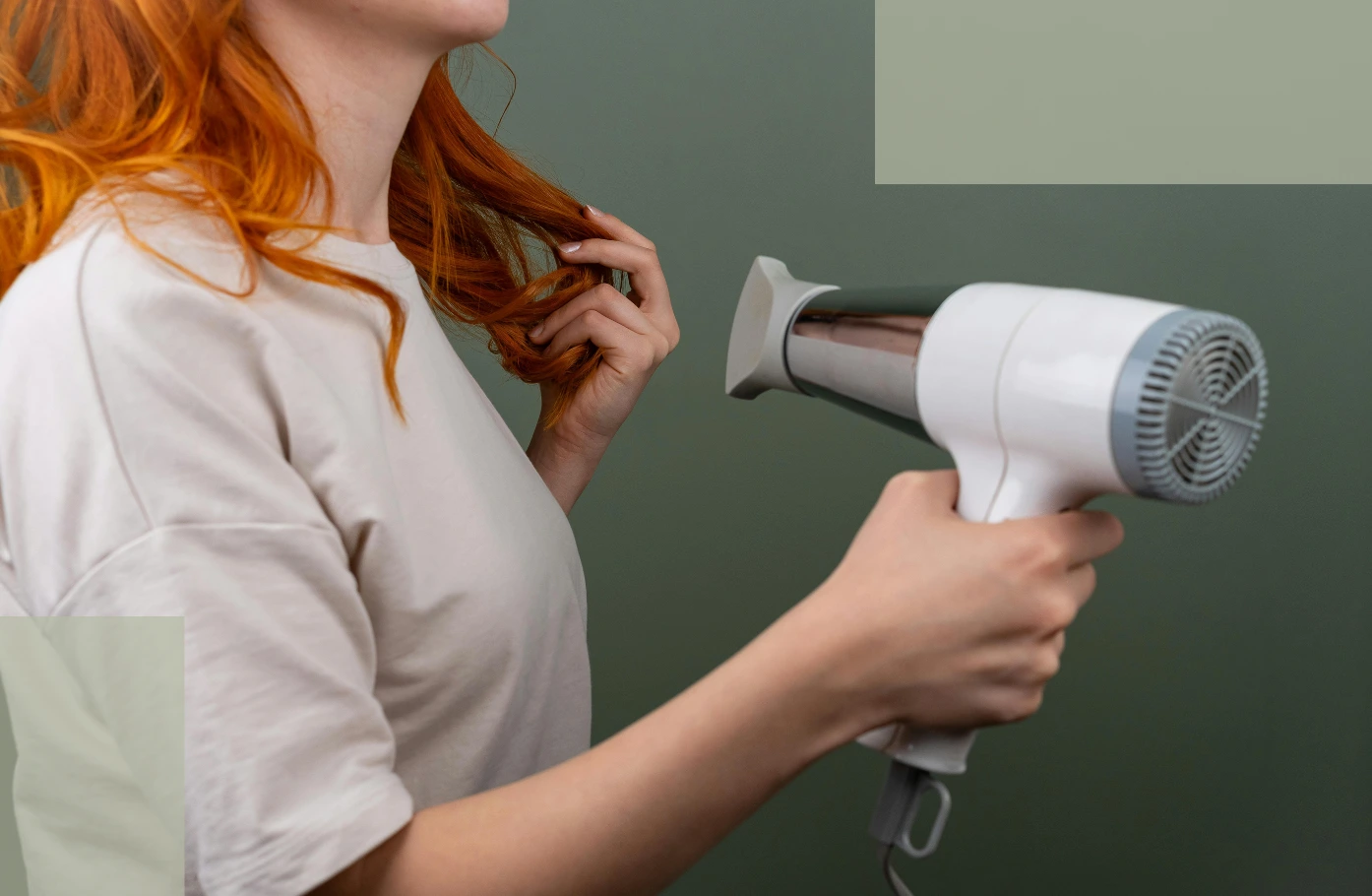
③ Let hair air-dry to 50% before blow-drying
Ideal drying sequence:
- Gently press (do not rub) with a towel to absorb excess water
- Allow hair to air-dry until about 50% dry
- Use a medium or low heat setting on your dryer
- Keep the dryer 15–20 cm (6–8 inches) away from the scalp
📌 Very wet hair is heavier and pulls on the follicles, increasing the risk of breakage near the roots.
④ Switch to a silk or satin pillowcase
This small change has a big impact.
Benefits:
- Less friction overnight
- Reduced tangling and static
- Less moisture loss from the hair fiber
- Fewer rough, broken hairs around the hairline
Silk pillowcases are widely recommended as a simple, high-impact tool to reduce breakage.
⑤ Avoid tight hairstyles — especially during the first 6–12 months postpartum
Tight styles can worsen:
- Hairline breakage
- Traction on already weakened follicles
- “Baby hairs” that never seem to grow longer
Instead, opt for:
- Low, loose ponytails
- Soft scrunchies or silk hair ties
- Loose braids
⑥ Use conditioner or hair masks to strengthen the hair shaft
Stronger hair breaks less easily.
Look for formulas with:
- Plant oils (coconut, argan, avocado, batana)
- Hydrolyzed proteins (e.g., keratin, barley, wheat, soy)
- Fatty alcohols (like cetearyl alcohol) for softness and slip
- Cuticle-supporting ingredients like panthenol or niacinamide
These help:
- Smooth the cuticle
- Reduce friction
- Improve elasticity
- Strengthen the fiber from the outside
📌 The smoother the hair shaft, the less it tangles — and the less it snaps.
For improving blood flow and reducing tension that contributes to breakage, see scalp massage to support postpartum follicles.
4. Why Breakage “Looks” Just Like Hair Loss
From the outside, breakage and shedding look very similar:
- Lots of short hairs in your brush
- Tiny fragments in the shower
- Thinner ends and less fullness
- Overall hair looking “worn out”
This easily leads to the feeling:
“I’m still losing so much hair — nothing is working.”
But in many cases:
👉 You are not losing more follicles
👉 You are losing length and volume through ongoing breakage
👉 Controlling breakage dramatically improves visual density, even before regrowth fully catches up
For many postpartum women, slow recovery has less to do with follicle damage and more to do with continuous fiber damage.
To stabilize the scalp environment for healthier regrowth, visit scalp environment management.
5. What Changes Can You Expect If You Protect Your Hair from Mechanical Damage?
If you follow the strategies above consistently for 4–8 weeks, you’ll usually notice:
- Ends look more even and less frayed
- Fewer short broken hairs in your brush and shower
- Hair feels smoother and less rough
- Hairline appears neater with fewer snapped strands
- Overall volume looks slightly fuller
After around 3 months, many mothers report:
👉 “My shedding looks much better”
In reality, a big part of that improvement comes from:
- Less breakage
- Less “false shedding”
- Better preservation of the hair you already have
Summary: Avoiding Mechanical Damage = Reducing “False Shedding” and Speeding Up Visible Recovery
Mechanical damage is one of the most overlooked reasons why postpartum hair looks like it’s still falling out heavily.
With small, simple changes, you can significantly reduce breakage and support faster visual recovery:
- Use a wide-tooth comb
- Avoid brushing soaking wet hair
- Skip tight hairstyles
- Choose silk or satin pillowcases
- Dry hair gently with low heat
- Nourish the hair shaft with conditioner or masks
Reducing breakage means reducing non-follicle hair loss —
and this is one of the easiest, most effective ways to make your postpartum hair look fuller, stronger, and more resilient while your follicles quietly move back into the growth phase.
For moms who want both science and practical recovery steps, this Postpartum Hair Loss hub is the best place to start.
For women seeking cleaner formulas during postpartum recovery, the Evavitae Root Fortifying Hair Essence offers a soft, non-irritating option.