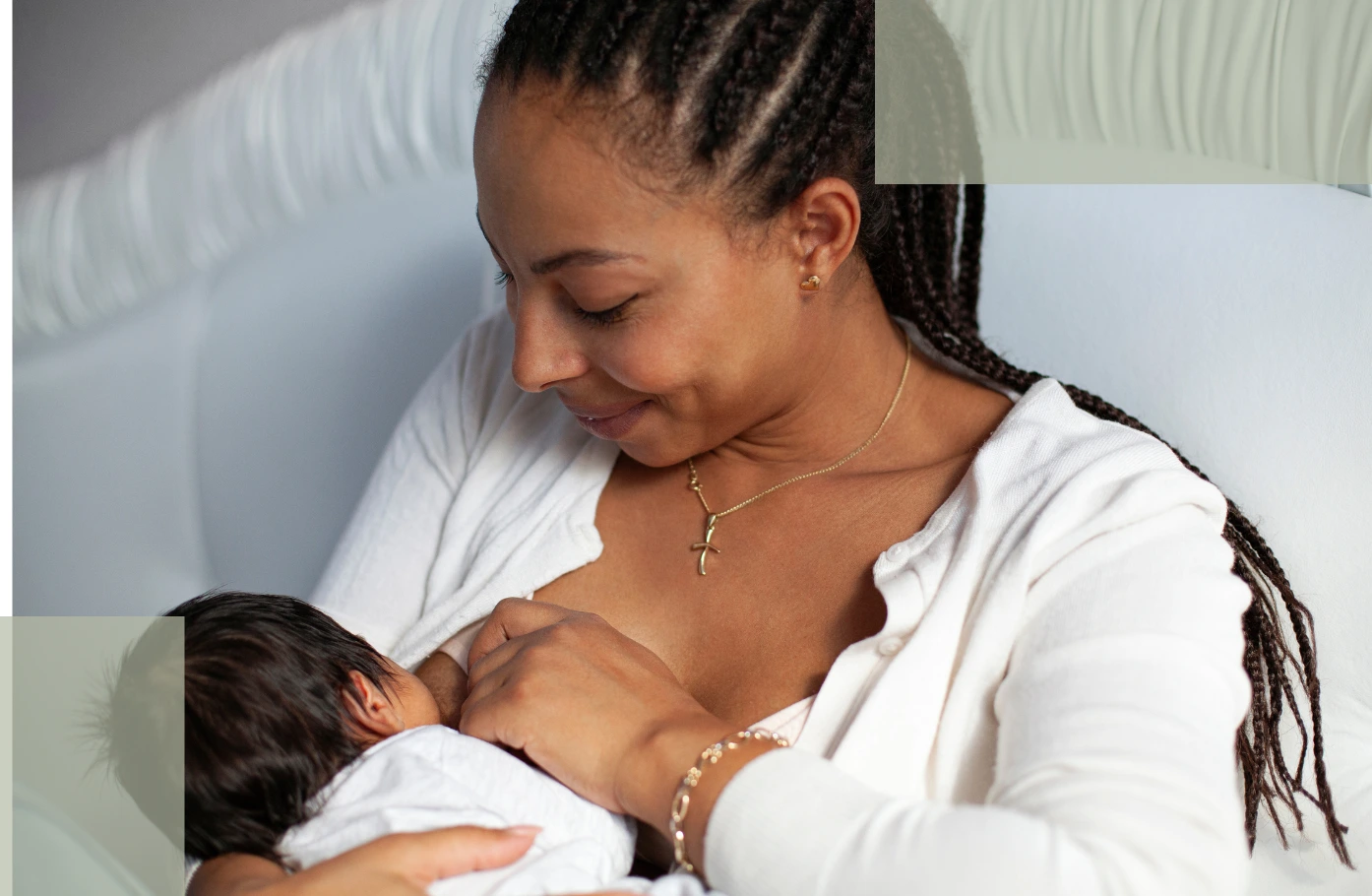
Many new mothers ask:
“Am I losing hair because I’m breastfeeding?”
“Will my shedding stop once I wean?”
“Does breastfeeding make postpartum hair loss worse?”
The answer:
Breastfeeding does not directly cause hair loss—but it is one of the strongest amplifying factors that can make postpartum shedding more intense and much slower to recover.
For an overview of ALL major contributors, see postpartum hair loss causes and risks.
Breastfeeding influences:
- Nutrient usage
- Hormonal balance
- Metabolic demand
- Sleep quality
- Stress load
These factors make already fragile postpartum follicles more vulnerable, leading to:
- More shedding
- Longer shedding
- Slower recovery
- Longer-lasting telogen phase
This article explains the real relationship between breastfeeding and postpartum hair loss—and why it is often misunderstood.
1. Breastfeeding Does NOT Directly Cause Hair Loss—but It Amplifies Existing Postpartum Shedding
First, the fundamentals:
📌 Breastfeeding is NOT the direct cause of postpartum hair loss.
📌 Postpartum hair loss is caused by estrogen dropping, which pushes follicles into the resting (telogen) phase.
For more on hormonal mechanisms, see postpartum hormonal fluctuations.
However, breastfeeding affects several body systems that determine how fast follicles can recover.
This leads to:
- More shedding
- Longer shedding duration
- Finer and slower-growing new hairs
- Recovery extending from 6 months to 9–18 months
So breastfeeding is not “the cause”—
It is the amplifier.
2. Why Does Breastfeeding Intensify Postpartum Hair Loss?
(4 Major Scientific Mechanisms)
1) Breastfeeding increases nutrient demand
This is the most common—and most important—factor.
Breast milk requires large amounts of:
- Protein
- Iron
- Zinc
- B vitamins
- Vitamin D
- Omega-3 fatty acids
- Calories (energy)
These are the same nutrients essential for hair growth.
To understand how deficiencies worsen shedding, see nutritional deficiencies linked to postpartum hair loss.
Because the body prioritizes milk production over hair growth, follicles receive less energy and fewer building blocks, leading to:
- Faster ferritin depletion
- Slower new growth
- Longer shedding
- Finer, fragile new hairs
Especially when Ferritin < 30 ng/mL, shedding becomes noticeably worse.
2) Breastfeeding delays hormonal recovery
Breastfeeding maintains higher levels of prolactin, which slows the normalization of:
- Estrogen
- Progesterone
- Thyroid hormones
All of these regulate the follicle growth cycle.
This is why many mothers notice:
“My hair only started improving after I weaned.”
Thyroid shifts are extremely common postpartum—learn more in postpartum thyroid dysfunction.
3) Breastfeeding disrupts sleep (one of the strongest aggravators)
Because breastfeeding often includes:
- Night feedings
- Multiple wakings
- Fragmented sleep
Sleep disruption increases:
- Cortisol (stress hormone)
- Scalp inflammation
- Delays in the anagen (growth) phase
Higher cortisol means:
📌 Non-breastfeeding mothers: recovery in 6–12 months
📌 Breastfeeding mothers with poor sleep: 9–18 months
Sleep is one of the most critical conditions for follicle repair—and one of the hardest to maintain while breastfeeding.
For how sleep and cortisol worsen shedding, see stress and sleep deprivation.
4) Breastfeeding increases metabolic load
During breastfeeding, the body needs:
- More energy
- Faster metabolic turnover
- Stronger blood sugar regulation
When these systems are overstretched, follicles may experience:
- Energy instability
- Slower growth
- Finer new hairs
- Delayed exit from the telogen phase
Leading many mothers to say:
“I shed the most while breastfeeding, and it finally improved after weaning.”
Metabolic recovery also interacts with delivery method—explained here:
delivery method & metabolic recovery.
3. Why Does Breastfeeding-Era Hair Loss Look “More Severe”?
✔ 1. Shedding lasts longer
Telogen phase is extended to:
📌 9–12 months
or even
📌 12–18 months
✔ 2. The amount of shedding is higher
Follicles recover slower than nutrients and hormones change → more shedding overall.
✔ 3. New hair grows in slower and finer
Follicle regeneration is delayed due to nutrient and hormonal demand.
✔ 4. The part-line looks wider and crown thinning more noticeable
A common sign of “energy-deficient follicles.”
4. How Do You Know If Breastfeeding Is Amplifying Your Hair Loss?
Signs that strongly point to breastfeeding-related amplification:
✔ You shed far more than non-breastfeeding mothers
✔ New hair grows in soft, thin, and slow
✔ You’re still shedding heavily 6–9 months postpartum
✔ You wake up more than twice per night
✔ You feel hungry frequently / energy crashes
✔ You feel fatigued easily
✔ You improved noticeably after weaning
These are classic patterns.
Scalp instability can worsen shedding—learn more in scalp health & postpartum hair loss.
Genetic sensitivity can also make shedding appear more severe—see genetic predisposition and postpartum hair loss.
5. Does Hair Improve After Weaning?
In most cases:
📌 Yes—significantly.
After weaning:
- Prolactin decreases
- Estrogen gradually increases
- Sleep improves
- Nutrient loss decreases
- Follicles re-enter the growth phase
Typical recovery timeline:
📌 Noticeable improvement within 3–6 months
📌 Full recovery within 6–12 months
But recovery will be slower if combined with:
- Low ferritin
- Thyroid imbalance
- High stress
- Genetic predisposition
- Scalp inflammation
Immune changes also play a role—explained in postpartum immune reset.
6. How to Prevent Breastfeeding from “Amplifying” Postpartum Hair Loss
(Gentle, non-promotional, evidence-informed advice)
1) Prioritize iron (most important)
Aim for ferritin 40–60 ng/mL for optimal hair growth.
2) Increase high-quality protein
Hair follicles need:
- Eggs
- Fish
- Beef (iron + protein)
- Lentils
- Greek yogurt
3) Support with Vitamin D + Omega-3
These help:
- Reduce inflammation
- Balance hormones
- Improve follicle energy metabolism
4) Protect the scalp barrier
During breastfeeding the scalp becomes more sensitive.
Choose:
- Gentle, fragrance-free formulas
- Mild cleansing
- Reduced heavy silicones
- Avoiding irritation and overwashing
5) Improve sleep fragmentation as much as possible
Examples:
- Share night duties with a partner
- Reduce late-day caffeine
- Take short daytime naps
- Use simple calming routines
Even 30–60 extra minutes of quality sleep can stabilize shedding.
Summary: Breastfeeding Is NOT the Cause—But It Is the Most Overlooked Amplifier
Keep in mind:
✔ The root cause of postpartum shedding is estrogen dropping
✔ Breastfeeding does NOT cause hair loss
✔ But breastfeeding extends the recovery timeline
✔ Through nutrient demand, delayed hormonal balance, poor sleep, and metabolic load
✔ It is fully reversible—especially after weaning
✔ Most breastfeeding-related shedding improves within 3–6 months after weaning
You’re not “losing hair because you breastfeed.”
Your follicles are simply moving through a longer, energy-consuming recovery phase—and that is normal, temporary, and treatable.
For moms confused about timelines or worried about severity, our Postpartum Hair Loss hub provides clarity and reassurance.
The Evavitae Root Fortifying Hair Essence can be a supportive option for women seeking a gentle postpartum shampoo.