
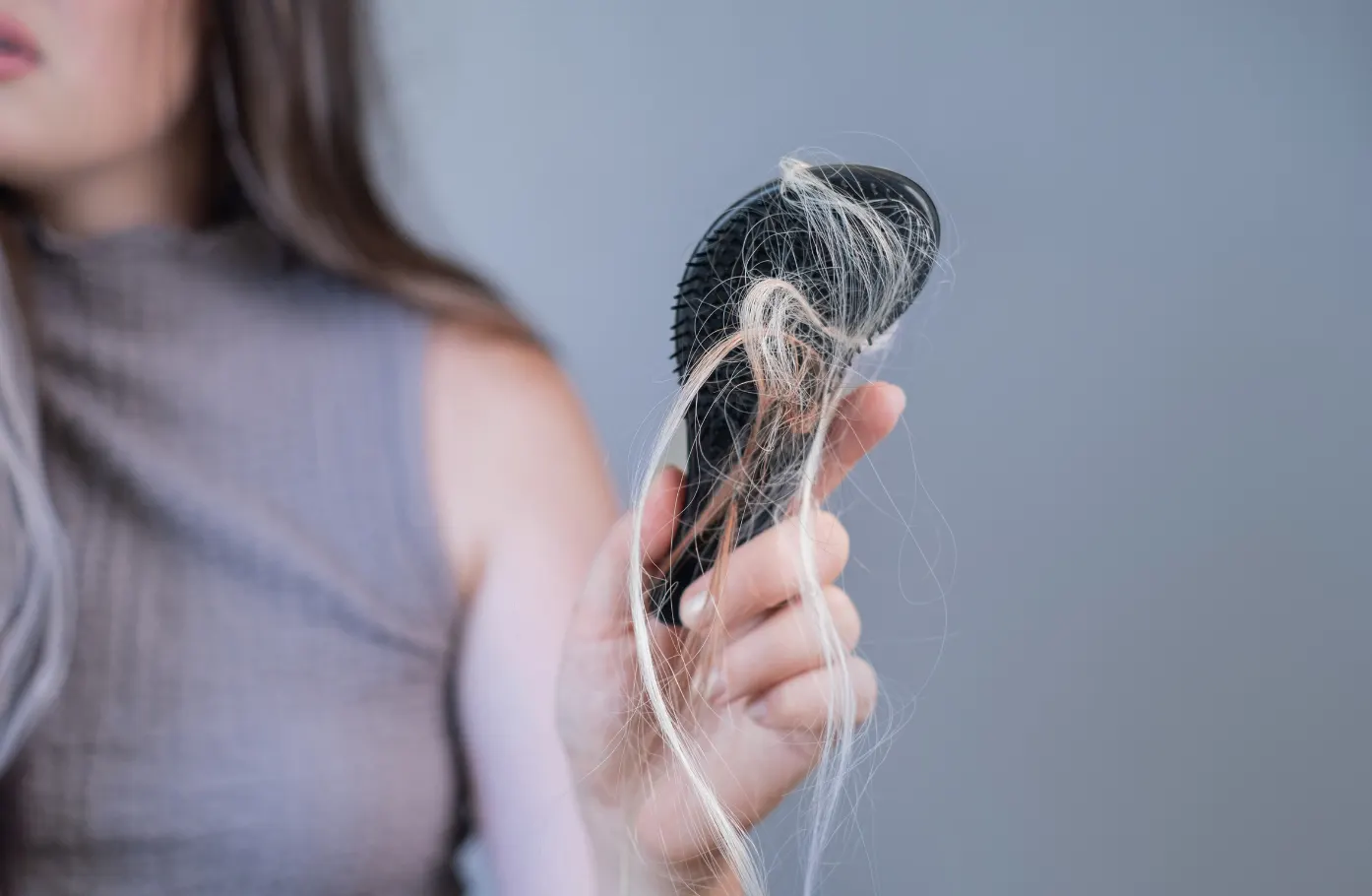
In hormonally related hair loss, the most discouraging part is often not doing nothing.
It’s doing a lot — and feeling less stable with every effort.
You may have experienced moments like these:
- the more diligently you care for your scalp, the more sensitive it becomes
- the stronger the ingredients, the more the shedding fluctuates
- the more tests you run, the more confused you feel
- the more supplements you take, the more exhausted your body feels
So you start asking yourself:
“Did I do something wrong?”
“Am I still not trying hard enough?”
But very often, the truth is the opposite.
A Crucial Conclusion to State First
In hormonal hair loss, the biggest risk is not lack of intervention — it’s intervening in the wrong direction
Hormonal hair loss is not a system that moves forward through force.
At its core, it involves:
- fluctuating hormonal signals
- reduced system tolerance
- follicles entering a protective pause
In this context, many actions that look proactive are actually introducing constant new variables.
And what this system struggles with most is exactly that: variables.
Why “Self-Rescue” Behaviors So Easily Become Aggravating Factors
Because these behaviors usually share three characteristics.
They Fight Symptoms Instead of Working With the System
For example:
- fighting oiliness
- fighting shedding
- fighting changes in the hair part
But in hormonal hair loss, many of these signs are outcomes of system regulation — not isolated problems.
When you directly attack surface symptoms, the system is often forced to maintain balance in more extreme ways.
This is especially common when people believe less oil is always better.
They Constantly Interrupt Stability Just as It Begins
Recovery in hormonal hair loss relies on:
- long-term consistency
- gradual rebuilding of tolerance
- slow re-stabilization of rhythm
Yet many “self-rescue” actions involve:
- frequent switching
- stacking stimulation
- constantly escalating effort
The result is that just as the system begins to settle, it’s pulled back into response mode again.
This pattern often appears when people assume stronger growth ingredients are always better.
They Depend Heavily on Short-Term Feedback
Sensations like tingling, heat, itching, or instant “freshness” can easily create the impression:
“This time, I finally got it right.”
But in hormonal hair loss, short-term feedback often reflects stress responses, not recovery signals.
Why These Misconceptions Feel So Reasonable
Because they align perfectly with intuition.
- more oil → remove oil
- hair loss → stimulate growth
- hormonal issue → test hormones, suppress hormones
- slow progress → intensify or switch
In many situations, this logic works.
But in hormonal hair loss, the system is not asking to be pushed forward.
It is asking for:
- noise reduction
- pressure relief
- gradual stabilization
The Most Dangerous Factor Is Not One Mistake — but Stacking Them
What truly complicates recovery is rarely a single wrong choice.
It’s combinations like:
- strong cleansing + aggressive oil control
- stimulating ingredients + frequent switching
- heavy supplementation + unstable sleep
- repeated testing + over-interpretation
Together, these keep the system in a state of:
“Something new always needs to be handled.”
Recovery, by contrast, requires a period with no new emergencies.
This is why many people feel stuck after weeks of effort, wondering why they’re still shedding after several weeks of treatment.
Why Knowing More Often Makes It Easier to Fall Into Traps
The more you know, the more likely you are to:
- see every possible cause
- try to address all variables at once
- fear missing a critical window
Care logic shifts from being system-based to becoming: “attack everything.”
But for an already fatigued system, total attack often means total overload.
This is also why people assume the more supplements they take, the faster they’ll recover.
What This Entire “Misconceptions” Section Is Actually About
Each article that follows is not meant to say:
“You did it wrong.”
Instead, it aims to help you see:
- which judgments easily fail in hormonal hair loss
- which intuitions need recalibration
- which seemingly proactive actions quietly slow recovery
You may realize that many misconceptions are not born of ignorance, but of anxiety — making reasonable choices inside long-term uncertainty.
This includes oversimplified explanations like blaming everything on DHT.
A Key Self-Calibration Question
Before reading the articles ahead, ask yourself this one question:
“Are the things I’m doing right now helping my system reduce its workload —
or constantly giving it new challenges?”
That question matters more than any checklist.
Final Takeaway
In hormonal hair loss:
- effort does not equal correct direction
- fast reaction does not equal faster recovery
- doing more does not mean healing sooner
Many forms of “self-rescue” turn into aggravation not because you’re irrational, but because this system never needed to be forced.
It needed to be allowed to recover.
This perspective sits at the core of the Mind & Myths framework.
For many people, establishing a consistent, non-stimulating routine — including gentle supportive scalp care — is part of that allowance.
Next, we’ll start with one of the most common — and most misleading — judgments of all:
“My hormone tests are normal, so this can’t be hormonal hair loss?” — The Most Frequent Misdiagnosis