
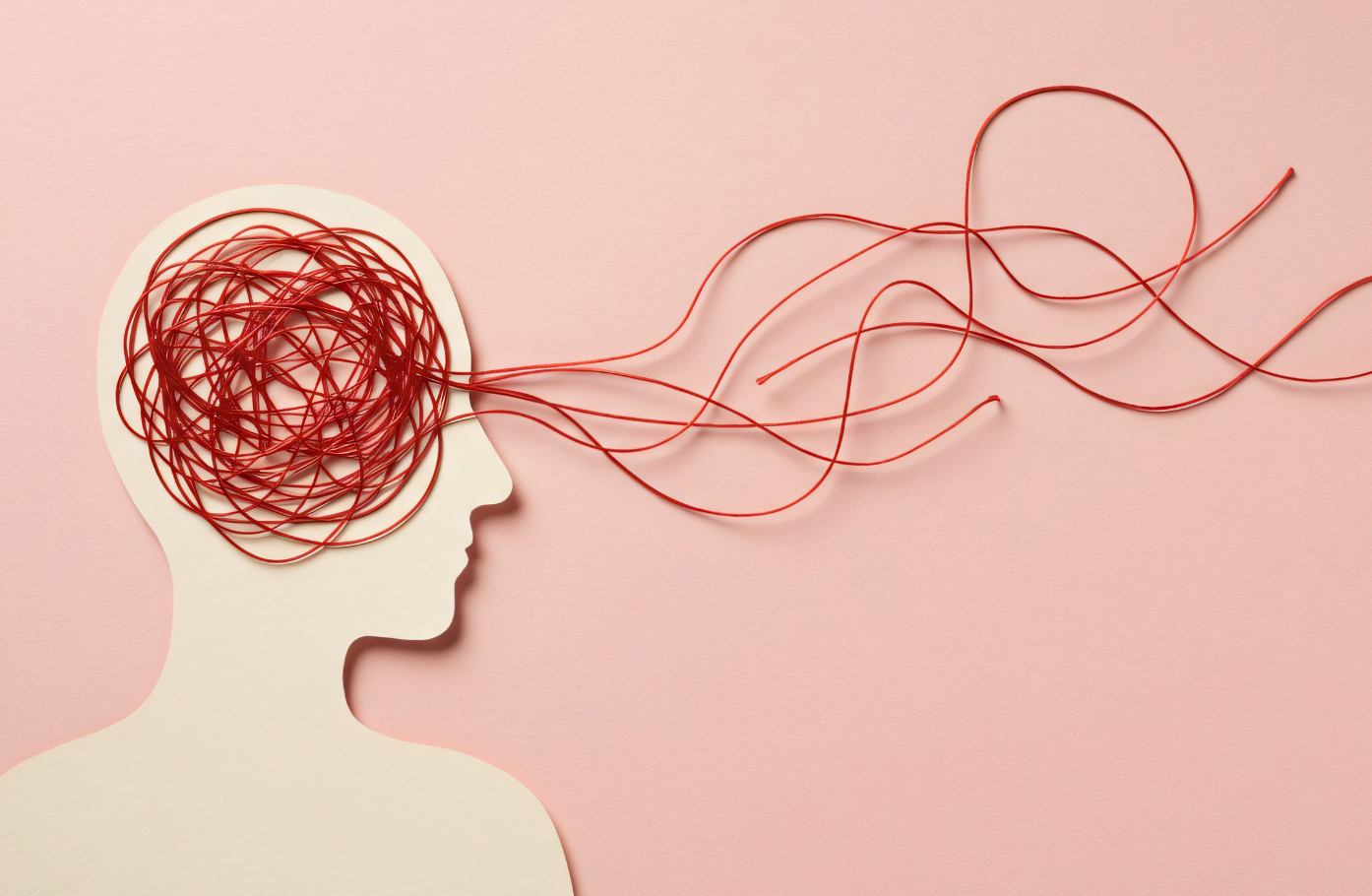
In hormonally driven hair loss, many people pass through a remarkably similar phase:
- constant searching
- constant comparison
- constant switching of solutions
You may already realize that this state is exhausting.
Yet stopping feels almost impossible.
Because underneath it sits a very real, very human thought:
“I can’t just do nothing.”
An Important Conclusion to State First
Repeated searching is not impulsive — it’s a self-rescue instinct
When a problem has three characteristics:
- it involves the body
- its progress is non-linear
- it has no clear timeline
the brain automatically enters one mode:
seeking certainty.
Searching, comparing, tracking, and trying don’t happen because you’re “overthinking.”
They happen because your system is trying to turn the uncontrollable into something controllable.
Why Searching More Often Makes Anxiety Worse
Because what you usually find isn’t a clear path, but instead:
- large amounts of conflicting information
- extreme success or failure stories
- highly emotional personal experiences
All of this sends one implicit message:
“If you’re not better yet, it must mean you haven’t found the right thing.”
So anxiety isn’t soothed.
It’s reactivated.
This emotional pressure around visible changes — such as a widening hair part — is something many people find even harder to endure than short-term shedding itself .
Why Repeated Searching Naturally Slides Toward “Stimulating” Care
This is the most critical step in the entire cycle.
Stimulating Approaches Create a Sense of “Progress”
Stimulating care often has:
- a strong physical presence
- fast sensory feedback (tingling, heat, itching, redness)
- a clear feeling of “something is happening”
In long-term uncertainty, the brain easily interprets this as:
“This might finally be working.”
Stimulating Care Satisfies the Fear of “Waiting Too Long”
When recovery offers no clear signals, waiting itself becomes stressful.
Stimulating care fits a powerful psychological need:
“At least I’m not standing still.”
Even when you understand the risks intellectually, emotionally it’s hard to resist.
Supportive Care Can Feel Like “Doing Nothing”
Gentle, supportive approaches tend to:
- lack strong sensations
- change things very slowly
- offer little immediate confirmation
Under high anxiety, the brain may label this as:
“Am I wasting time?”
That’s when doubt sets in.
This doubt often overlaps with deeper identity shifts — especially during life stages such as menopause-related hair loss and identity change.
Where Repeated Self-Rescue Leads Over Time
Many people end up in a familiar loop:
- anxiety → searching
- searching → choosing something that feels “powerful”
- early sensation → hope rises
- no stable improvement yet → doubt appears
- searching again → adding more or switching
Each cycle produces two outcomes:
- the system is repeatedly disrupted
- psychological tolerance is gradually depleted
But the most damaging effect is this:
You slowly stop trusting stability itself.
This loss of trust is often intensified by unspoken emotions — including the shame around PCOS-related hair loss.
Why This Cycle Is Especially Common in Hormonal Hair Loss
Because hormonal hair loss has a deeply counter-intuitive trait:
The correct path looks the least like progress.
- improvement is delayed
- fluctuations are normal
- there is no instant reward
Stimulating care, by contrast, provides immediate feedback.
In prolonged uncertainty, the brain naturally chooses what responds now.
A Critical Psychological Turning Point
You need to know this:
You didn’t move toward stimulating care because you’re impatient.
You moved there because uncertainty has been wearing you down for too long.
This isn’t a judgment problem.
It’s a psychological load problem.
When Does This Cycle Finally Begin to Loosen?
Usually not when you “decide to stop being anxious.”
But when you genuinely start to notice:
- shedding trends becoming more stable
- scalp behavior feeling more predictable
- yourself checking less frequently
Only then does the brain slowly accept:
“Maybe I don’t need to make a new decision every day.”
This shift in perception is central to the broader Mind & Myths framework of hormonal hair loss recovery.
One Place Where You Deserve More Compassion
If you’re currently:
- constantly researching
- repeatedly testing new approaches
- caught between logic and impulse
please don’t rush to blame yourself.
You’re not acting recklessly.
You’re trying to find a sense of control inside a problem that hasn’t given you answers for a long time.
For many, returning to a consistent, supportive daily routine — including gentle, non-stimulating scalp care — can help reduce decision fatigue over time.
Final Takeaway
In hormonally driven hair loss:
- anxiety leads to searching
- searching leads to stimulation
- stimulation leads to fluctuation
- fluctuation leads back to anxiety
This loop is easy to trigger.
And the key to breaking it isn’t willpower.
It’s the moment you finally begin to see stable trends, instead of being pulled by every fluctuation.
Next, in the final article of the Mind section, we’ll redefine an “answer” many people have been waiting for — and often waiting for in the wrong way:
The Real Sign of Recovery: Not “Zero Shedding,” but a Stable Trend and a Calmer Mind