
After completing the first two steps of recovery— hormonal signals beginning to stabilize, and the scalp environment gradually calming— many people enter the most anxiety-provoking stage of all:
“Why is my hair still falling out if I’m already recovering?”
Some begin to question everything:
- Was my earlier judgment wrong?
- Has recovery not actually started?
- Am I just not suitable for this approach?
But in hormonal hair loss recovery, there is one critical truth that is often misunderstood:
👉 “Still shedding” does not necessarily mean “still getting worse.”
Why Shedding Becomes More Noticeable After Recovery Begins
When hair loss is in its active phase, many people are surprisingly numb to it:
- hair falls every day
- the amount blurs together
- the expectation is simply “things are getting worse anyway”
Once recovery begins, however, something changes:
- you start watching for improvement
- you’re waiting for positive signs
- every shed hair becomes highly noticeable
As a result, a process that was already happening suddenly feels much louder and more alarming.
This shift often occurs after hormonal hair loss recovery conditions have already begun to form —even if the visible results lag behind.
A Basic Follicle Reality: Hair Cycles Cannot Be Skipped
In hormonal hair loss, there is one unavoidable biological fact:
👉 Follicles that have already entered the telogen (resting) phase must complete that cycle before they can restart.
This means:
- the fate of those hairs was decided weeks or even months ago
- what you see falling now is not a “new failure”
- it is the natural conclusion of the previous cycle
This stage does not mean your current adjustments were useless.
It often means they are finally being carried out.
It often means they are finally being carried out—after the stabilizing work done in Step One and Step Two.
Why the “End-of-Cycle Shedding” in Hormonal Hair Loss Is So Often Misjudged
Unlike typical seasonal shedding, the tail end of hormonal hair loss has several distinctive features:
- shedding lasts longer
- the amount may not be dramatic, but it feels persistent
- it often overlaps with the early phase of recovery
This creates a dangerous illusion:
“Am I just stuck in the same place?”
But from the follicle’s perspective, the reality is usually this:
The old cycle is exiting.
The new cycle has not fully taken over yet.
This overlap is a normal pattern across many recovery timelines.
What Happens If You Rush to “Do Something” at This Stage?
This is where Step Three most often goes wrong.
When people see continued shedding, the instinctive response is to:
- add more stimulation
- switch strategies
- increase intensity
- constantly test new methods
But this creates a real risk:
👉 Interrupting a cycle transition that was actually progressing normally.
Once follicles receive a renewed signal of “instability,” they may:
- extend the resting phase
- delay entry into the growth phase
- push the recovery window further away
As a result, shedding that was about to end gets artificially prolonged.
This is why daily actions must align with the current recovery mechanism, not emotional urgency.
How to Tell Whether the Shedding You See Is the End of a Cycle
You can evaluate it across several dimensions:
✔ The shedding amount is not continuously escalating
It stays within a range, rather than increasing day after day.
✔ The scalp feels more stable than before
Less frequent itching, stinging, or loss of control.
✔ Shedding comes with “gaps”
Some days less, some days more, but overall fluctuations are narrowing.
✔ Fine new hairs are already visible
Even subtle ones suggest a transition is underway.
When these signs appear together, the shedding you see is far more likely to be cycle completion—not renewed deterioration.
This pattern is especially clear when viewed through a mechanism × timeline map.
Why “Not Seeing New Hair Yet” Does Not Mean Recovery Hasn’t Started
Regrowth itself has a built-in delay:
- follicle activation ≠ immediately visible hair
- early new hairs are extremely fine
- growth speed is slow in the first few weeks
So the recovery sequence usually looks like this:
Shedding completes →
fine new hairs appear →
visible density changes come later
If you equate “no visible regrowth” with “no recovery,” you’re likely to make the wrong decisions at exactly the right moment.
What Step Three Really Requires: Not Judgment, but Non-Interference
At this stage, the most important actions are surprisingly simple:
- don’t rush to change direction
- don’t keep adding new variables
- don’t give yourself daily verdicts
Your real task now is this:
👉 Let the follicles finish this cycle.
The more completely this step is respected, the more stable the next growth phase will be—creating the conditions for the activation phase that follows.
A Key Reframe: Shedding Usually Stops as a Result, Not a Starting Signal
Many people expect:
“Shedding stops → that means recovery has begun.”
But in hormonal hair loss, the more accurate order is:
Recovery conditions are met →
the cycle completes →
shedding naturally slows and stops
What you’re seeing as “still shedding” is often the middle of that pathway.
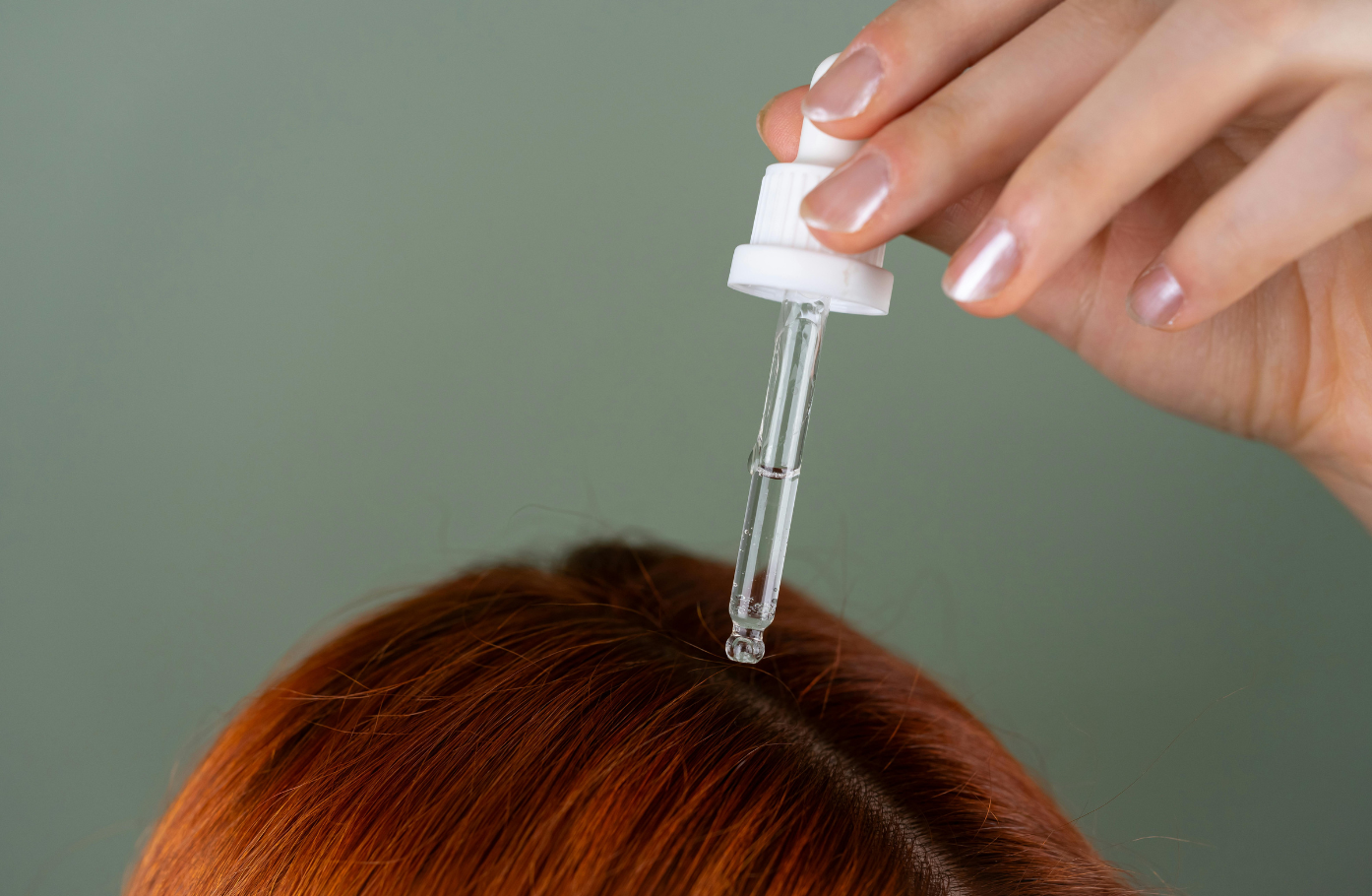
Gentle, non-disruptive support—such as a root fortifying hair essence —is designed to support this transition without forcing premature activation.
Before Moving Into Step Four, Confirm This One Thing
Before expecting obvious regrowth, ask yourself:
- Has shedding stopped getting progressively worse?
- Is the scalp more stable than before?
- Have I resisted the urge to constantly intervene?
If the answers are moving toward “yes,” then you’ve completed Step Three of hormonal hair loss recovery.
In the next article, we’ll enter the true turning point of the Recovery Journey:
Because once follicles complete the cycle transition and activation conditions are met, recovery often accelerates—not gradually, but suddenly.