
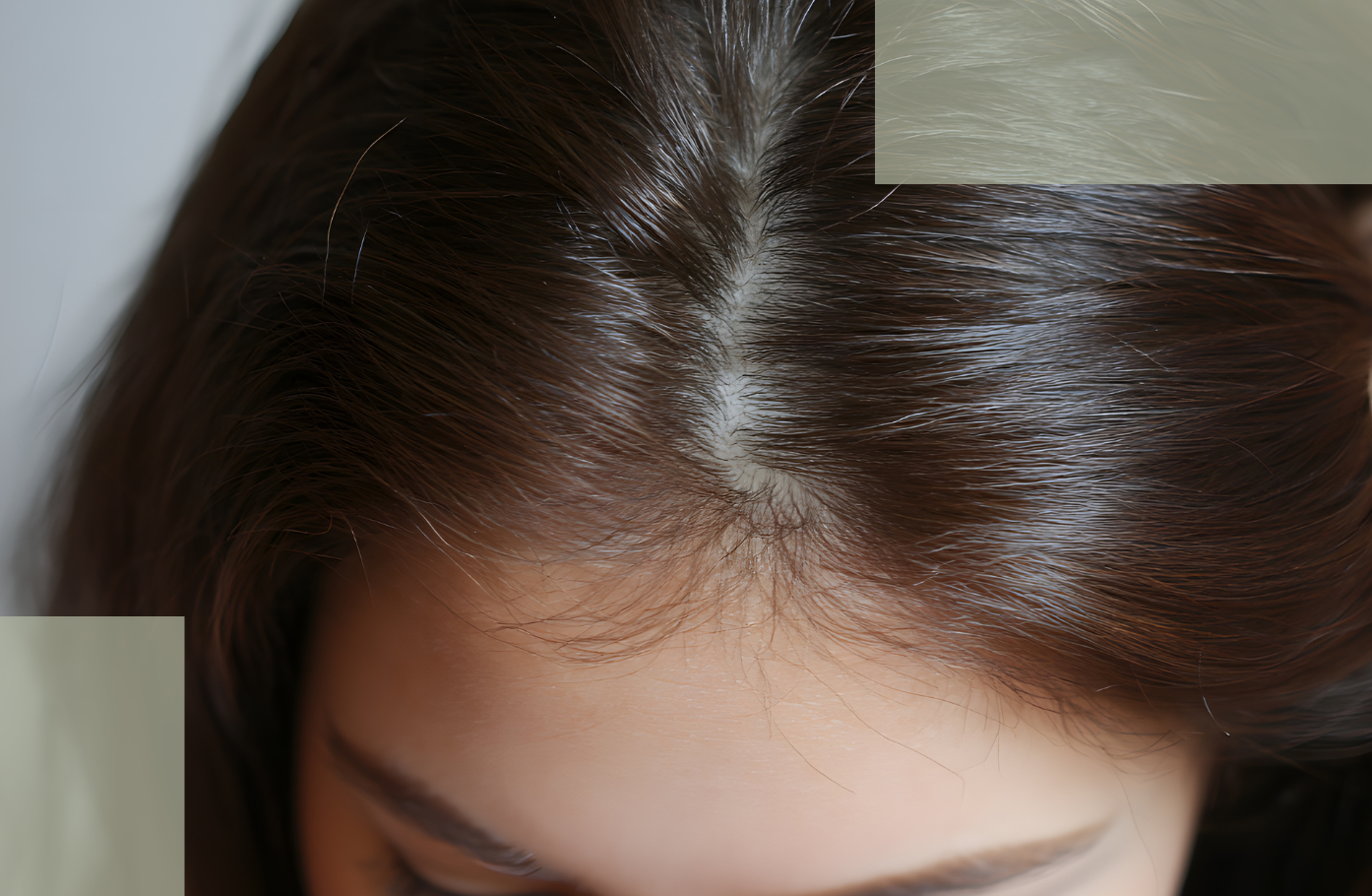
Many new mothers notice not only more shedding after childbirth, but also:
- A more sensitive scalp
- Oily roots
- Itching and flaking
- Red patches or tiny bumps
These changes are not a coincidence.
They are the result of hormonal shifts, stress, disrupted routines, and changing hair-wash habits.
In fact, an unstable scalp environment is one of the most important amplifiers of postpartum hair loss. For a full overview of how hormones, nutrition, thyroid, scalp, delivery method and lifestyle together shape shedding, you can refer to:
👉 Postpartum Hair Loss Causes & Risks
Conditions like seborrheic dermatitis, scalp inflammation, and disrupted sebum production make hair follicles more fragile, more likely to shed early, and slower to recover.
In this guide, we’ll explore:
- Why scalp inflammation and seborrheic dermatitis are more common postpartum
- How sebum fluctuations affect follicles
- Why inflammation makes shedding worse
- Typical signs to watch for
- How to gently restore a healthier scalp environment
1. Why Are Scalp Problems More Common After Birth?
(Hormonal shifts + lifestyle changes)
Postpartum hormonal changes affect not only hair follicles—but also sebaceous glands and the scalp barrier.
If you want to understand how hormone fluctuations set the foundation for many postpartum changes, this detailed guide may help:
👉 Hormonal Fluctuations & Postpartum Hair Loss
1) Hormone drop → Unstable sebum production
During pregnancy, higher estrogen often makes skin and scalp feel more “balanced.”
Within 48 hours after delivery, estrogen and progesterone levels drop sharply, and sebum production can become unpredictable.
This may show up as:
- Some days feeling extremely oily
- Other days suddenly dry or flaky
- Increased dandruff
- A more sensitive, reactive scalp
This instability makes inflammation much easier to trigger.
2) A weakened skin barrier after birth
The skin barrier—including the scalp—can become more fragile due to:
- Hormonal changes
- Sleep deprivation
- Stress
- Nutrient depletion
- Less time and energy for regular hair care
When the barrier is weakened:
- External irritants more easily reach the follicles
- The scalp becomes prone to inflammation
- Sebum builds up more quickly
This is why many women experience new-onset scalp sensitivity and itching after giving birth. Nutritional status also plays a role—iron, zinc, vitamin D and B vitamins are important for barrier repair and follicle health:
👉 Nutritional Deficiencies & Postpartum Hair Loss
On top of that, postpartum immune resetting can make the scalp more reactive to even mild triggers:
👉 Immune Reset & Sensitive Postpartum Scalps
3) Less frequent washing → Sebum build-up → Malassezia overgrowth
Many new mothers:
- Have less time to wash their hair
- Sweat more
- Produce more scalp oil under stress
- Extend the time between washes
These changes favor the overgrowth of Malassezia, a yeast that naturally lives on the scalp.
In small amounts, Malassezia is harmless.
But when it overgrows, it can trigger:
- Inflammation
- Seborrheic dermatitis
- More dandruff
- Itching
- Red, irritated patches
All of these directly stress the follicles and make them easier to shed.
Breastfeeding itself does not “cause” hair loss, but the increased nutrient demand and fatigue that often accompany it can amplify scalp and shedding issues:
👉 Breastfeeding as an Amplifier of Postpartum Hair Loss
2. Common Scalp Issues After Childbirth
1) Seborrheic Dermatitis
Seborrheic dermatitis is very common postpartum.
Typical signs:
- Oily scalp
- Yellowish or white, greasy flakes
- Redness in certain areas
- Itching
- Prominent scaling around the hairline and forehead
- Sudden flare-ups that come and go
Triggers include: hormonal drop + sebum build-up + stress.
2) Visible Scalp Inflammation
This can look like:
- Red patches
- Burning or stinging sensations
- Small bumps or rashes
- Pain or soreness when combing
Inflammation disrupts the microenvironment around the follicle, making it easier for hair to loosen and fall out.
3) Follicular Micro-inflammation
This type of inflammation is subtle but impactful.
Less obvious signs:
- More shedding than peers
- A tight or “tense” feeling on the scalp
- Oily roots even shortly after washing
- Hair quickly becoming flat or limp
- Progressively finer strands
Micro-inflammation is a hidden cause of long-term, hard-to-resolve shedding for many women.
3. How Does Inflammation Make Hair Easier to Lose?
Scalp inflammation and seborrheic dermatitis affect follicles on multiple levels.
1) Disrupting the follicle’s immune microenvironment
Hair follicles don’t exist in isolation.
They sit within a delicate immune and metabolic “zone” that regulates:
- Follicle metabolism
- Growth phase duration
- Local barrier protection
Inflammation can:
- Damage this regulatory zone
- Destabilize the follicle environment
- Push follicles prematurely into the resting (telogen) phase
This intensifies the peak of postpartum shedding.
2) Sebum excess → Malassezia overgrowth → More inflammation
Malassezia feeds on sebum.
Postpartum sebum spikes + less frequent washing =
Rapid overgrowth of Malassezia.
When it becomes excessive, it:
- Irritates the stratum corneum
- Triggers inflammatory responses
- Increases flaking
- Interferes with a healthy growth environment
Result: follicles become weaker and more prone to shedding.
3) Unstable scalp barrier → More sensitivity to products and heat
Postpartum scalps are often more reactive to:
- Fragrances
- Surfactants and detergents
- Hot air from blow-dryers
The weaker the barrier, the easier it is for small irritations to trigger shedding episodes.
4) Inflammation delays the transition from resting to growth
Without inflammation, postpartum shedding often improves within 6–12 months.
But when inflammation is present:
- Recovery can stretch to 12–18 months
- New hairs are finer and more fragile
- Regrowth is easily interrupted
- Overall volume recovers more slowly
This is why many mothers feel like “it keeps getting worse” even months after birth.
4. Signs Your Scalp Is Making Postpartum Hair Loss Worse
If you’ve noticed several of the following postpartum, it’s likely that scalp issues are amplifying your shedding:
✔ Hair feels oily the day after washing
✔ Dandruff has suddenly increased
✔ Redness or itching along the hairline
✔ Stinging or burning under hot water
✔ Localized tenderness when brushing
✔ Hair comes out readily when you scratch
✔ Slow regrowth or weak baby hairs
✔ Flat, limp roots that quickly look greasy
If you meet 3 or more, your scalp condition is probably affecting your follicles.
5. Why Is Seborrheic Dermatitis So Common After Birth?
Two key reasons:
✔ Unstable sebum production
Hormonal changes cause the sebaceous glands to react strongly and unpredictably.
✔ Stress + sleep deprivation amplify everything
Elevated cortisol can further stimulate sebum production and weaken the barrier. If you want to see how stress and sleep interact with postpartum shedding, this guide explains the mechanism in detail:
👉 Stress & Sleep Deprivation and Postpartum Hair Loss
So:
Postpartum hormonal shifts + new-parent stress = Perfect setting for seborrheic dermatitis
Some women with a genetic tendency to slower recovery may find that inflammation-driven shedding takes longer to resolve:
👉 Genetic Predisposition & Slower Recovery
6. Will Scalp-Related Hair Loss Recover?
Yes—
but two conditions must be met:
- Scalp inflammation is brought under control
- Follicles regain a stable growth environment
Once irritation is reduced and the scalp is supported, new hair can grow more easily and follicles can return to a more normal cycle.
Typical recovery:
📌 6–12 months (mild inflammation)
📌 12–18 months (seborrheic dermatitis + postpartum TE combined)
7. How to Improve Scalp Inflammation and Seborrheic Dermatitis (Gentle, Non-Promotional)
1) Choose mild, low-irritation hair care
Avoid:
- Synthetic fragrances
- SLS/SLES
- Heavy silicones
- High alcohol or harsh cleansers
Look for pH-balanced, gentle formulas that respect the skin barrier.
2) Wash regularly (don’t skip washes because you’re busy)
The longer sebum and sweat stay on the scalp, the more inflammation develops.
For most postpartum scalps, washing every 1–2 days works well.
3) Keep the scalp dry and ventilated
Sweat + sebum = inflammation accelerator.
Drying the roots thoroughly (without excessive heat) can help.
4) Minimize mechanical irritation
Try to avoid:
- Vigorous scratching
- Frequent coloring or chemical treatments
- High-heat styling directly on the scalp
- Very tight hairstyles that pull on the roots
5) See a dermatologist if symptoms are severe
In more serious cases of seborrheic dermatitis, short-term medicated shampoos (e.g., antifungal formulas) may be needed—
always under medical guidance, especially when breastfeeding.
8. Summary: Scalp Inflammation and Sebum Fluctuations Amplify Postpartum Hair Loss—but Are Reversible
Remember:
✔ Postpartum scalps are more sensitive and reactive
✔ Less frequent washing + hormonal shifts → Malassezia overgrowth
✔ Inflammation makes follicles weaker and easier to shed
✔ Recovery requires stabilizing the scalp environment, not just nutritional support
With a calmer scalp and a more stable growth phase, shedding gradually eases and regrowth becomes stronger.
Your scalp is going through its own “hormonal storm” after birth.
When you understand it and care for it gently, it can—and will—return to balance.
Looking for a single page that explains causes, triggers, myths, and recovery? Explore our Postpartum Hair Loss overview.
During periods of increased shedding, the Evavitae Root Fortifying Hair Essence can help maintain a clean, non-irritating scalp environment.