
Gentle Science + Consistency.
Postpartum hair loss is reversible—but recovery takes time, and the right kind of care.
In Evavitae’s education system, the “How to care” section is the bridge from knowledge → action → visible change.
- “Why am I shedding?” helps moms understand what’s happening.
- “What can I actually do?” is what helps them see improvement and feel more in control.
In this guide, we’ll focus on three pillars:
- Daily scalp care (Scalp Routine)
- Internal support (Nutrition & Supplements)
- Ingredient science (Key Ingredients for Sensitive, Postpartum Scalps)
Together, they form a gentle, safe, and sustainable postpartum scalp recovery plan. For a structured overview of how these pieces work together, you can also explore our Postpartum Scalp Care guide.
I. Daily Care: Scalp Routine
(Gentle · Regular · Not Excessive)
In postpartum telogen effluvium, many follicles are in a resting phase and the scalp is more sensitive than usual.
So your routine should always follow:
Gentle · Clean · Consistent
For a deeper dive into why daily habits matter so much, see why scalp routine matters for postpartum hair loss recovery.
Here are the most practical strategies.
1️⃣ Gentle Cleansing
Goal: Keep the scalp clean without damaging its barrier.
Try to:
- Use sulfate-free, fragrance-free, low-pH shampoos
- Avoid strong detergents and heavy synthetic fragrance (they can worsen inflammation)
- Lather gently with your fingertips—not your nails
- Rinse thoroughly to avoid residue that can irritate the scalp
Good options for postpartum and sensitive scalps include:
- Amino acid–based surfactants
- Mild cleansing agents
- Low-irritant, minimal-fragrance formulas
- Barrier-supporting botanical extracts
For example, a shampoo like Evavitae Root Fortifying Hair Essence uses:
- Amino-acid–based surfactants
- Cocamidopropyl betaine for gentle foam
- Disodium Laureth Sulfosuccinate for mild de-greasing
This type of system:
- Cleans effectively without stripping the barrier
- Minimizes irritation
- Supports scalps with postpartum oil fluctuations and sensitivity
Many gentle formulas also include:
- Niacinamide – helps balance sebum and strengthen the barrier
- Panax ginseng extract – supports microcirculation and follicle energy
- Aloe vera – soothes irritation and reduces itch
These are particularly helpful for postpartum issues like:
- Sudden oiliness
- Increased flaking
- Tight, sensitive scalp
- Low-grade inflammatory flare-ups from sebum imbalance
2️⃣ Adjusting Wash Frequency (Balance)
Postpartum sebum can swing in both directions—some women get very oily, others become drier. Either way, regular cleansing matters.
Suggested frequency:
📌 Wash every 2–3 days
This helps:
- Keep the scalp from becoming greasy
- Avoid follicle blockage
- Reduce inflammation
- Maintain a healthy, natural lipid layer
Try to avoid extremes:
- Washing every day with harsh products → barrier damage, irritation
- Hardly washing at all → sebum build-up → Malassezia overgrowth → more inflammation and shedding
3️⃣ Scalp Massage
Benefits:
- Supports local microcirculation
- Helps resting follicles “wake up”
- Distributes naturally nourishing sebum more evenly
- Eases tension and stress
How to:
- Use your fingertips, not your nails
- Massage 3–5 minutes a day
- Focus on the hairline and crown with small circular motions
After 4 weeks of consistent massage, many women notice:
- Less scalp tightness
- More lift at the roots
- More visible baby hairs entering the regrowth phase
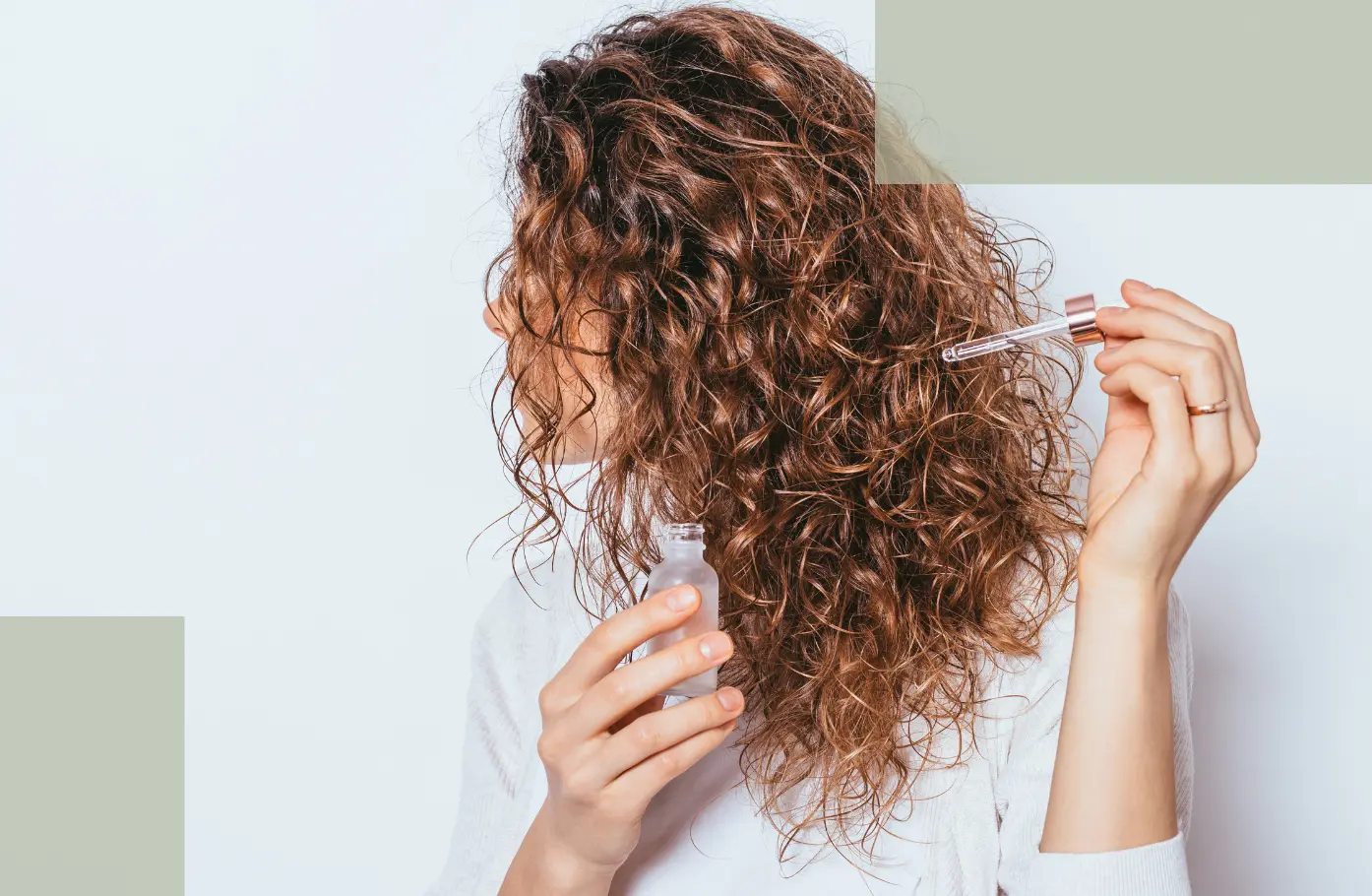
If you use an oil blend, choose something light and scalp-friendly. A formula like the Evavitae serum includes:
- Grape seed oil – antioxidant, light texture
- Coconut oil – nourishes and softens
- Avocado oil – supports barrier repair
- Batana oil – helps repair and strengthen
- Argan oil – soothing and anti-oxidant
- Biotin + Vitamin E – support shaft resilience and oxidative protection
These are suitable for:
- Pre-wash or post-wash massage
- Dry, tight, or irritated scalps
- Reducing mechanical breakage in shedding hair
Recommended usage:
- Daily or every other day
- 3–5 minutes, especially along the hairline and temples
4️⃣ Protecting Against Heat
Postpartum hair is often drier and more fragile, especially along the shaft.
Try to avoid:
- High-heat blow-drying
- Frequent straightening
- Chemical perms or bleaching
- Long, direct contact with curling irons
If you must blow-dry:
- Use a heat-protective mist
- Choose low or medium heat
- Let hair air-dry 50% before using the dryer
5️⃣ Gentle Detangling
Aggressive brushing can pull out hairs that aren’t ready to shed yet.
Instead:
- Use a wide-tooth comb
- Always start from the ends and work upward
- Avoid yanking through tangles, especially when hair is wet
- Lightly brush before bed to prevent knots
For a more complete breakdown of how all these steps fit together, you can explore the six core dimensions of scalp care for postpartum hair loss recovery.
II. Internal Support: Nutrition & Supplements
(The Foundation of Follicle Growth)
External care improves the environment.
But whether follicles re-enter anagen depends largely on nutrition and hormonal balance.
For a deeper framework on this, see nutrition & supplements for postpartum hair loss.
Here are the key nutrients most commonly depleted postpartum.
1️⃣ Iron & Zinc
Why they matter for follicles:
- Support keratin production
- Maintain follicle energy metabolism
- Help resting follicles transition back into growth
Low ferritin is one of the most common reasons postpartum hair recovery is slow.
Best range for hair:
📌 Ferritin: 40–70 ng/mL
Low zinc can lead to:
- Slower growth
- Finer, weaker shafts
- Higher levels of scalp inflammation
2️⃣ Biotin (Helpful Mainly in Deficiency)
Biotin supports:
- Keratin synthesis
- Strand resilience
- Root health
Important nuance:
Biotin is most effective when there is a true deficiency.
Extra biotin in people with normal levels does not make hair grow “super fast.”
For many women, topical use is a safer, more targeted way to support hair without over-supplementing.
3️⃣ Vitamin D & B Vitamins
Many postpartum women are vitamin D deficient. When vitamin D is low, you may see:
- Shortened anagen phase
- Sebum imbalance
- Higher risk of scalp inflammation
B vitamins help support:
- Energy metabolism
- Nervous system function
- Resilience to stress
All of these indirectly support scalp health and follicle recovery.
4️⃣ Quality Protein (Non-Negotiable)
Hair follicles are some of the most metabolically active structures in the body, and they require steady protein intake.
Great sources:
- Eggs
- Fatty fish
- Beans and lentils
- Nuts and seeds
- Avocado
- Greek yogurt
Aim for:
📌 About 1.0–1.2 g of protein per kg of body weight per day
(unless otherwise advised by your doctor).
5️⃣ Hydration & Sleep
(The Invisible Core of Recovery)
- Dehydration → tight scalp → restricted circulation
- Poor sleep → high cortisol → prolonged telogen
Helpful habits:
- Drink 1.5–2 L of water per day (adjusted to your situation)
- Take short daytime naps when possible
- Reduce blue light exposure before bed
Once sleep improves, many women see shedding ease within 2–3 weeks.
To understand how internal and external strategies work together, see topical care + internal nutrition for faster postpartum hair recovery.
III. Ingredient Science: Key Ingredients
(Gentle, Safe, and Postpartum-Friendly)
Many mothers worry: “What is safe while breastfeeding?”
The key is to choose formulas that are:
- Free from hormones and drug actives
- Gentle on sensitive scalps
- Built on plant-based, science-backed ingredients
For a full breakdown of evidence-based ingredients, visit the complete ingredient science guide for postpartum hair loss recovery.
Below is a Gentle Science ingredients map that fits well with postpartum needs.
✨ 1. Scalp & Follicle Support
Ingredient | Main Benefit | Postpartum-Friendly? |
Niacinamide | Balances sebum, calms inflammation, supports barrier | ✅ Yes |
Tripeptide-1 | Supports follicle activity, helps signal growth phase | ✅ Yes (topical, gentle) |
Panax ginseng extract | Supports microcirculation, follicle energy | ✅ Yes |
Aloe vera | Soothes irritation, reduces redness and itch | ✅ Yes |
✨ 2. Strengthening & Repair for Hair Shafts
A well-designed mask might combine hydrolyzed proteins + conditioning agents + reparative oils. For example:
Ingredient | Role | Postpartum-Friendly? |
Hydrolyzed keratin | Supports hair structure, reduces breakage | ✅ Yes |
Hydrolyzed barley protein | Strengthens shaft, improves resilience | ✅ Yes |
Batana oil | Helps repair cuticle, fortifies dry lengths | ✅ Yes |
Argan oil | Antioxidant, smooths and softens | ✅ Yes |
Allium cepa (onion) extract | Helps microcirculation, reduces irritation in low-irritant doses | ⚠️ Effective; needs careful, gentle formulation |
Glycerin, cetearyl alcohol | Moisture retention, softness | ✅ Yes |
These ingredients are typically found in wash-off treatments, like masks or conditioners, which are especially suitable for damaged or brittle postpartum hair.
✨ 3. Growth-Supportive Actives (Topical)
Ingredient | Scientific Role | Safe Topically? |
Biotin | Supports keratin synthesis and strand strength | ✅ Yes |
Vitamin E (tocopheryl acetate) | Antioxidant, protects the scalp and hair from oxidative stress | ✅ Yes |
Again, the focus is topical, gentle, non-hormonal support.
🌿 Summary: Gentle Care + Consistency = Recovery
The most important formula to remember is:
Gentle Science + Consistency = Recovery
In practice, that means:
- Gentle, barrier-respecting cleansing
- Regular but balanced wash frequency
- Daily or near-daily scalp massage
- Adequate iron, vitamin D, zinc, B vitamins, and protein
- Choosing truly gentle, science-based ingredients that respect postpartum physiology
- Sticking with these habits for at least 8–12 weeks
Postpartum hair loss can and does recover.
Every small, consistent choice you make—every gentle wash, every massage, every night of slightly better sleep—is helping your follicles move back into a healthy growth phase.
You’re not just “using products.”
You’re actively supporting your scalp through a full recovery journey.
Want a deeper look at the recovery phases and what to expect month by month? Visit our Postpartum Hair Loss timeline guide.
Sensitive scalps often benefit from a calm, low-foam formula such as the Evavitae Root Fortifying Hair Essence.