
Postpartum hair loss has many causes, but among all controllable factors, iron deficiency—especially low ferritin—is one of the most common, most overlooked, and most reversible root contributors.
Many new mothers experience:
- Handfuls of shedding during washing
- A receding hairline
- Slow recovery even after 9–12 months
- Fine, soft, slow-growing new strands
- Fatigue, poor sleep, or scalp sensitivity
For a large portion of women, the issue is not just hormones. The real chain reaction is:
Low ferritin → Poor follicle energy → Delayed recovery → Ongoing shedding
This guide explains:
- Why postpartum women are more likely to become iron-deficient
- The connection between ferritin and hair follicles
- The types of hair loss caused by iron deficiency
- How to identify iron-related shedding
- What happens once ferritin returns to normal
- Evidence-based and gentle ways to restore iron
1. Why Are Postpartum Women So Prone to Iron Deficiency? (Three Factors Combine)
1. Pregnancy drastically increases iron demand
A pregnant body requires 2–3 times more iron for:
- Fetal blood production
- Placenta development
- Increased maternal blood volume
This means many women—even with supplements—enter late pregnancy with low iron reserves.
2. Childbirth involves significant blood loss
Average blood loss:
- Vaginal delivery: 300–500 ml
- C-section: 500–1000 ml
Most women experience a drop in hemoglobin, but more importantly:
📌 Ferritin decreases sharply after delivery.
Ferritin reflects your iron storage and is one of the most important markers for hair growth.
3. Breastfeeding increases nutritional demand
Breast milk production requires:
- Iron
- Protein
- B vitamins
When nutrients are limited, the body prioritizes milk production—not hair growth.
Hair follicles are essentially “cut off from fuel.”
2. Ferritin and Hair Growth: The Follicle’s Energy Engine
Ferritin is the body’s iron storage protein and the most reliable indicator of iron status.
Hair follicles rely on iron for:
- Oxygen transport
- Keratin formation
- DNA synthesis
- Rapid cell division
- Energy metabolism
When ferritin is low, follicles enter survival mode:
✔ Shorter growth phase
✔ Longer resting phase
✔ Finer, weaker strands
✔ Slow or stalled regrowth
✔ Prolonged shedding
Research shows:
- Ferritin < 30 ng/mL → Higher risk of hair loss
- Ferritin < 20 ng/mL → Follicles struggle to grow hair
- Optimal range for female hair growth: 40–70 ng/mL
3. What Type of Hair Loss Does Iron Deficiency Cause?
Two main types:
1. Telogen Effluvium (most common)
Symptoms:
- Sudden increase in shedding
- Excessive hair loss in shower or brushing
- Overall thinning
- Finer strands
Iron deficiency pushes large numbers of follicles prematurely into the resting phase—amplifying postpartum shedding.
2. Gradual miniaturization (reduced follicle output)
With prolonged deficiency:
- Strands become finer
- Baby hairs grow soft and short
- Hair struggles to lengthen
- Volume decreases gradually
This is the classic “low-energy follicle” pattern.
4. Signs of Iron-Related Postpartum Hair Loss
The more symptoms you match, the more likely iron is involved:
✔ Shedding lasts longer than 3–6 months
✔ Increased hair fall during washing
✔ Fine, soft, easily broken new hairs
✔ Fatigue, palpitations, shortness of breath
✔ Cold hands and feet
✔ Pale skin
✔ Heavy periods once menstruation returns
✔ Sensitive scalp or increased dandruff
✔ Hair loss persists while breastfeeding
✔ More severe shedding after C-section
Iron-related hair loss is often mistaken for “hormonal shedding,” but it’s fully reversible.
5. Why Does Iron Deficiency Slow Down Postpartum Hair Recovery?
Typical postpartum hair loss recovers in 6–12 months,
but iron deficiency extends the timeline to:
📌 9–18 months, sometimes longer
Why?
- Follicles struggle to transition from resting to growth
- Regrowth is slow and weak
- New strands break easily
- Density fails to return to pre-pregnancy levels
Iron deficiency doesn’t always cause more shedding—
it causes slower regrowth, making hair appear thinner over time.
6. Can Iron-Related Postpartum Hair Loss Be Reversed?
Absolutely—recovery is often faster than expected.
Once ferritin reaches:
📌 40–70 ng/mL
Typical regrowth timeline:
- 4–6 weeks: noticeable reduction in shedding
- 8–12 weeks: new growth becomes stronger
- 3–6 months: improved density
- 6–12 months: significant visible recovery
Consistency and patience are key.
7. How to Know If You Are Iron-Deficient
Recommended tests:
- Ferritin (most important)
- Hemoglobin (Hb)
- Transferrin saturation (TSAT)
- CRP (to rule out inflammation that can falsely raise ferritin)
Indicators:
- Ferritin < 40 ng/mL: may contribute to hair loss
- Ferritin < 20 ng/mL: will impair follicle function
8. Evidence-Based Ways to Support Iron Levels (Gentle & Non-Promotional)
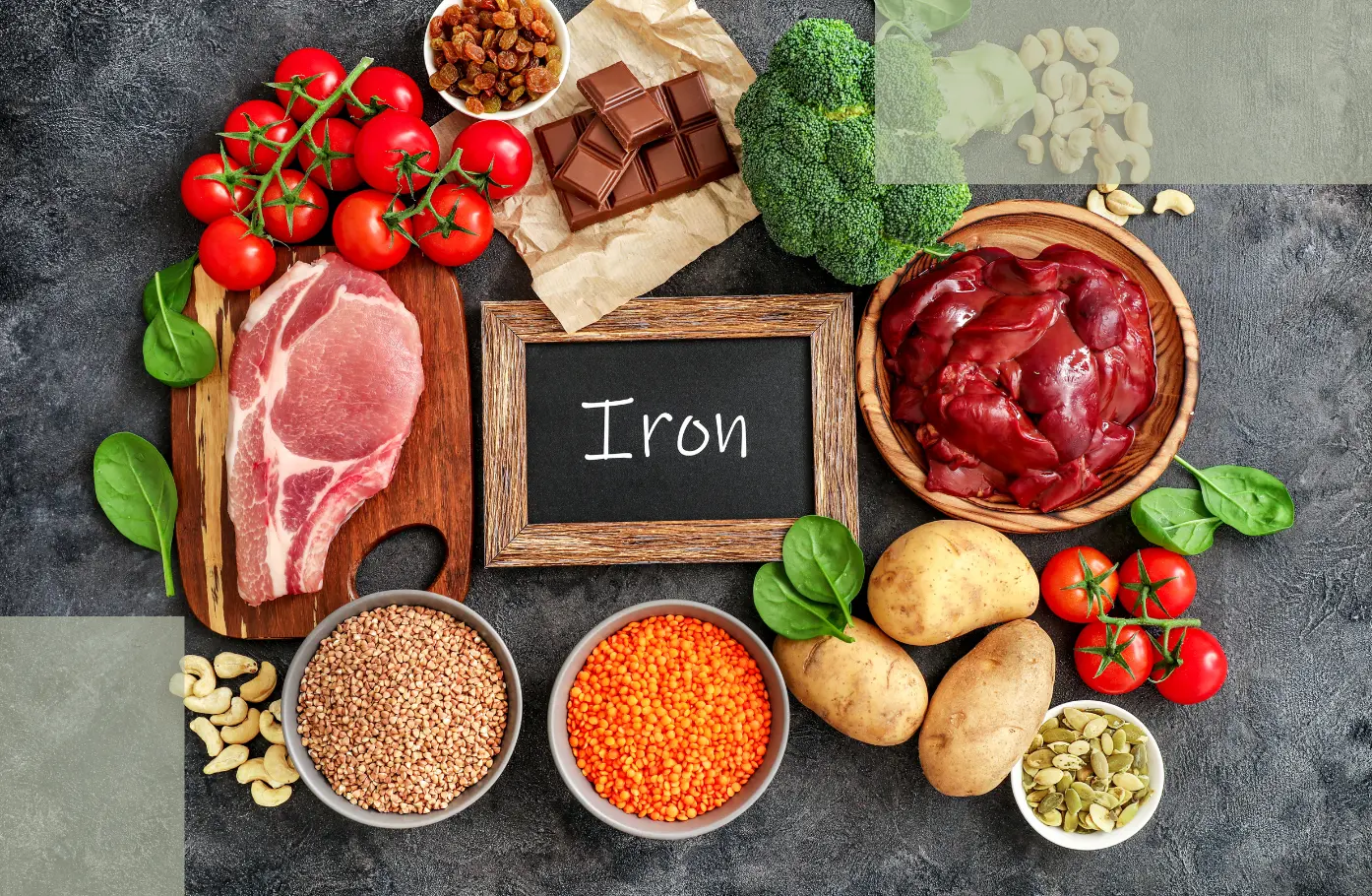
1. Eat iron-rich foods
- Beef, lamb
- Chicken liver
- Dark leafy greens
- Beans and lentils
- Fortified cereals
2. Pair iron with vitamin C for better absorption
- Oranges
- Strawberries
- Lemon
- Tomatoes
3. Avoid factors that block iron absorption
- Tea and coffee (avoid with iron-rich meals)
- High-calcium meals
- Excess phytates (grains)
4. Consult a doctor if supplements are needed
Iron supplements require medical guidance—especially during breastfeeding or post-C-section recovery.
5. Support the scalp to reduce inflammation
Low iron + inflammation = prolonged shedding.
Use:
- Gentle hair care
- Regular cleansing
- Fragrance-free formulas
- Avoid scratching or harsh treatments
9. Summary: Iron Deficiency Is a Major but Reversible Cause of Postpartum Hair Loss
Remember:
✔ Iron deficiency is one of the most common and overlooked postpartum triggers
✔ Hair follicles are extremely sensitive to low iron
✔ Ferritin below 40 ng/mL significantly slows recovery
✔ Iron-related hair loss is fully reversible
✔ Once iron stores improve, regrowth strengthens naturally
Postpartum hair loss is not a punishment—it is your body saying:
“I’m tired. I need more nutrients to repair.”
Give your body the iron it needs, and your hair will naturally return.
You can explore more expert-backed insights inside our dedicated Postpartum Hair Loss section.
If you’re looking for a postpartum-friendly shampoo, the Evavitae Root Fortifying Hair Essence fits well with a gentle recovery routine.