Among all nutrients linked to postpartum hair regrowth, iron (Iron) and ferritin (your iron storage marker) consistently rank at the very top.
Many mothers use gentle shampoos, scalp treatments, and avoid harsh products—yet their shedding still drags on for 9 months, 12 months, or even longer.
Clinically, one of the most common underlying causes is:
👉 Low ferritin → chronic follicle “hypoxia + low energy” → delayed transition into the growth phase.
Before we go deeper into internal mechanisms, you can also explore how the scalp contributes to recovery inside our dedicated Postpartum Scalp Care Guide.
This article focuses entirely on one essential topic:
Why iron and ferritin matter so much for postpartum shedding, what numbers you should look at, and how to support healthy levels safely.
1. Why Is Iron Deficiency So Common After Birth?
Low iron after childbirth is not rare—it’s extremely common.
Especially if any of the following occurred:
1) Blood loss during delivery
Both vaginal and C-section deliveries involve blood loss.
If you already had mild anemia during pregnancy, your iron stores drop even lower after birth.
2) Increased nutritional demands during breastfeeding
Breastmilk production uses multiple nutrients—iron included.
Your body always prioritizes essential functions and breastfeeding…
👉 Hair follicles are not the priority.
3) Uterine and tissue healing
Postpartum recovery (uterine involution, wound healing, C-section incision, perineal tears) all require iron to rebuild red blood cells and tissue.
4) Pregnancy-related anemia
Blood volume increases significantly during pregnancy.
If iron intake wasn’t enough, many mothers already enter postpartum with borderline low ferritin—just without obvious symptoms.
📌 Conclusion:
Postpartum is the perfect storm of:
- Iron demand skyrocketing
- Iron stores dropping
- Follicles becoming “low-priority organs”
Without correction, it’s easy to remain in a state of “not sick enough to faint, but not enough iron for hair growth.”
2. Why Are Iron and Ferritin So Important for Hair Follicles?
Iron doesn’t “help a little”—it directly affects key hair growth mechanisms.
1) Oxygen Delivery (“Follicle Energy”)
Iron is essential for hemoglobin.
Low iron = red blood cells can’t carry enough oxygen → follicles experience chronic micro-hypoxia.
A follicle in low oxygen will:
- Prioritize survival over growth
- Shorten the growth phase
- Enter the resting/shedding phase faster
2) Keratin synthesis
Hair is 85–90% keratin.
Iron deficiency reduces the efficiency of protein and keratin production, resulting in:
- Thin new hairs
- Baby hairs that never thicken
- Very slow visual recovery
High-quality protein intake also plays a role. A deeper explanation is available in: High-Quality Protein for Postpartum Regrowth.
3) Follicle transition into the growth phase
Moving from telogen (resting) to anagen (growing) requires energy.
If ferritin is low, follicles “delay activation”—you’ll notice:
- Shedding lasts longer
- New growth is sparse
- Recovery is slow even at 9–12 months postpartum
📌 In one sentence:
Iron sufficient → follicles restart growth normally
Iron low → follicles stay in “standby mode.”
3. Ferritin Levels: What Numbers Matter for Hair?
On a blood test, you’ll see two iron-related markers:
- Serum Iron
- Ferritin (iron storage)
For hair recovery, ferritin is FAR more important than serum iron.
Common scenario:
- Serum iron may appear “normal,”
- But ferritin is very low → follicles are starving.
Ferritin levels and hair recovery:
🔸 < 30 ng/mL
– Very slow new growth
– Shedding may last 12–18 months
– Hard for hair to regain fullness
🔸 30–40 ng/mL
– Borderline
– Follicles struggle to re-enter the growth phase
🔸 40–70 ng/mL (optimal for hair)
Most hair specialists consider this the ideal target zone for postpartum regrowth.
📌 Important:
“Normal range” on a lab report ≠ “enough for hair growth.”
4. Symptoms of Low Iron (Beyond Hair Loss)
Iron deficiency rarely affects only the hair. Common symptoms include:
- Persistent fatigue
- Morning dizziness
- Heart palpitations
- Shortness of breath
- Brittle or peeling nails
- Pale complexion
- “Lifeless” scalp and hair texture
If you’ve ever thought:
“It’s not just my hair that’s tired—I feel exhausted.”
…it’s worth checking your iron and ferritin.
5. When Should You Test Iron and Ferritin After Birth?
Testing is strongly recommended if:
- Shedding is severe at 3–6 months postpartum
- Shedding continues at 9 months or later
- You had pregnancy-related anemia
- You experience fatigue, dizziness, or heart palpitations
Suggested labs:
CBC
Ferritin
Serum iron
(Optional) TSH
(Optional) Vitamin D — you can learn more in our detailed guide:
Vitamin D & Postpartum Hair Regrowth
6. How to Support Iron Through Diet and Supplements
⚠️ General educational guidelines only — not medical advice.
1) Dietary sources (first priority)
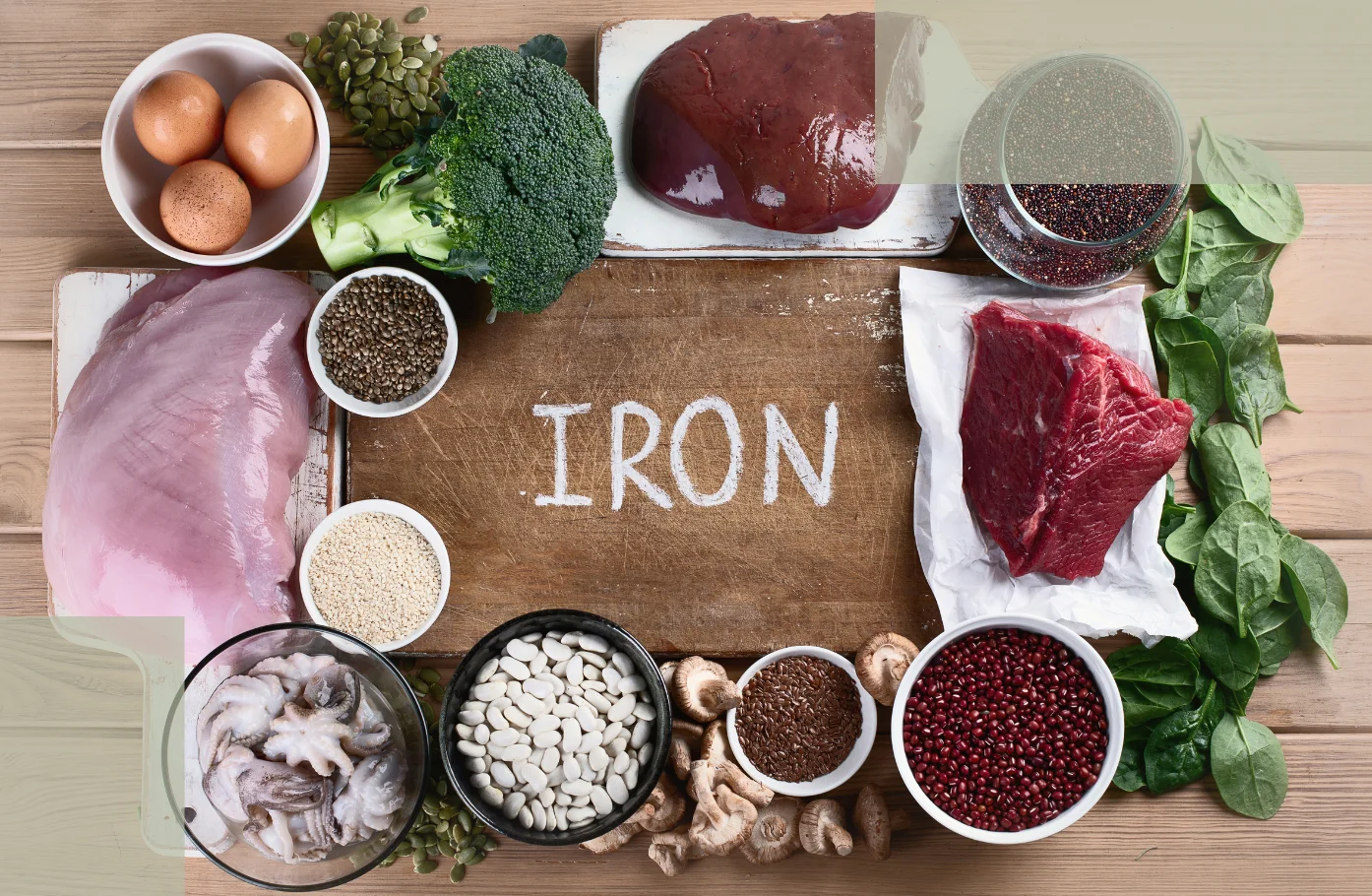
Best sources:
- Red meat (beef, lamb, pork)
- Organ meats (in moderation)
- Dark leafy greens
- Lentils, beans, chickpeas
- Iron-fortified grains
Absorption tips:
- Pair iron with vitamin C (e.g., lemon, vegetables)
- Avoid drinking tea/coffee with meals (reduces absorption)
2) Supplements (only with medical guidance)
Common forms:
- Ferrous sulfate
- Ferrous gluconate
- Ferrous citrate
General principles:
- Do NOT self-prescribe high doses long-term
- Vitamin C improves absorption
- Mild digestive discomfort is common but manageable
3) Breastfeeding considerations
Most standard iron supplements are considered compatible with breastfeeding—
BUT always confirm with your doctor, especially if:
- You take other medications
- You have chronic illnesses
- You are unsure of your iron status
7. How Iron Deficiency Slows Postpartum Hair Recovery
Mechanisms to highlight in educational content:
- Follicle hypoxia → Resting phase extended
- Keratin production impaired → Thin, fragile new hairs
- Energy metabolism down → Slow activation of growth phase
Clinically, this looks like:
- Shedding lasts 9–12 months instead of stopping at 3–6
- Volume stays low even after shedding decreases
- Baby hairs never thicken
📌 If you’re doing everything right externally but recovery is still slow, ferritin is one of the FIRST things to check.
Zinc also strongly influences inflammation and seborrheic dermatitis—learn more in:
Zinc & Postpartum Hair Loss
8. Why Iron Works Best When Combined With Other Nutrients
Iron synergizes with:
B-complex → energy, RBC production, stress regulation
(B-complex postpartum guide)Vitamin D → hair cycle signaling
Protein → keratin building
Omega-3 → reduces inflammation, improves scalp environment
(Omega-3 for hair & scalp)
This combination creates a biologically “growth-ready environment.”
9. When to See a Doctor
Seek medical guidance if:
- Your ferritin is significantly low
- Shedding persists beyond 12 months
- You have heart palpitations, chest discomfort, dizziness
- You have thyroid issues or other chronic conditions
A clinician can help evaluate:
- Whether you have simple iron deficiency or true anemia
- What dosage and duration of iron supplement is appropriate
- Whether thyroid or vitamin D levels are also contributing
Conclusion: Iron & Ferritin Are the Foundation of Postpartum Hair Recovery
If topical care and scalp routines are the “furnishings” of your home…
Then iron and ferritin are the foundation.
- Adequate iron → follicles re-enter the growth phase quickly
- Low iron → follicles remain depleted and sluggish
For every mother experiencing postpartum hair loss, the key question is not:
“How many hairs did I shed today?”
but
“Does my body have enough iron to fuel new growth?”
When ferritin returns to hair-friendly levels, recovery becomes faster, steadier, and much more visible.
For step-by-step recovery guidance, check out our in-depth Postpartum Hair Loss roadmap.
For daily washing without stripping the scalp, the Evavitae Root Fortifying Hair Essence provides a balanced, gentle cleanse.