
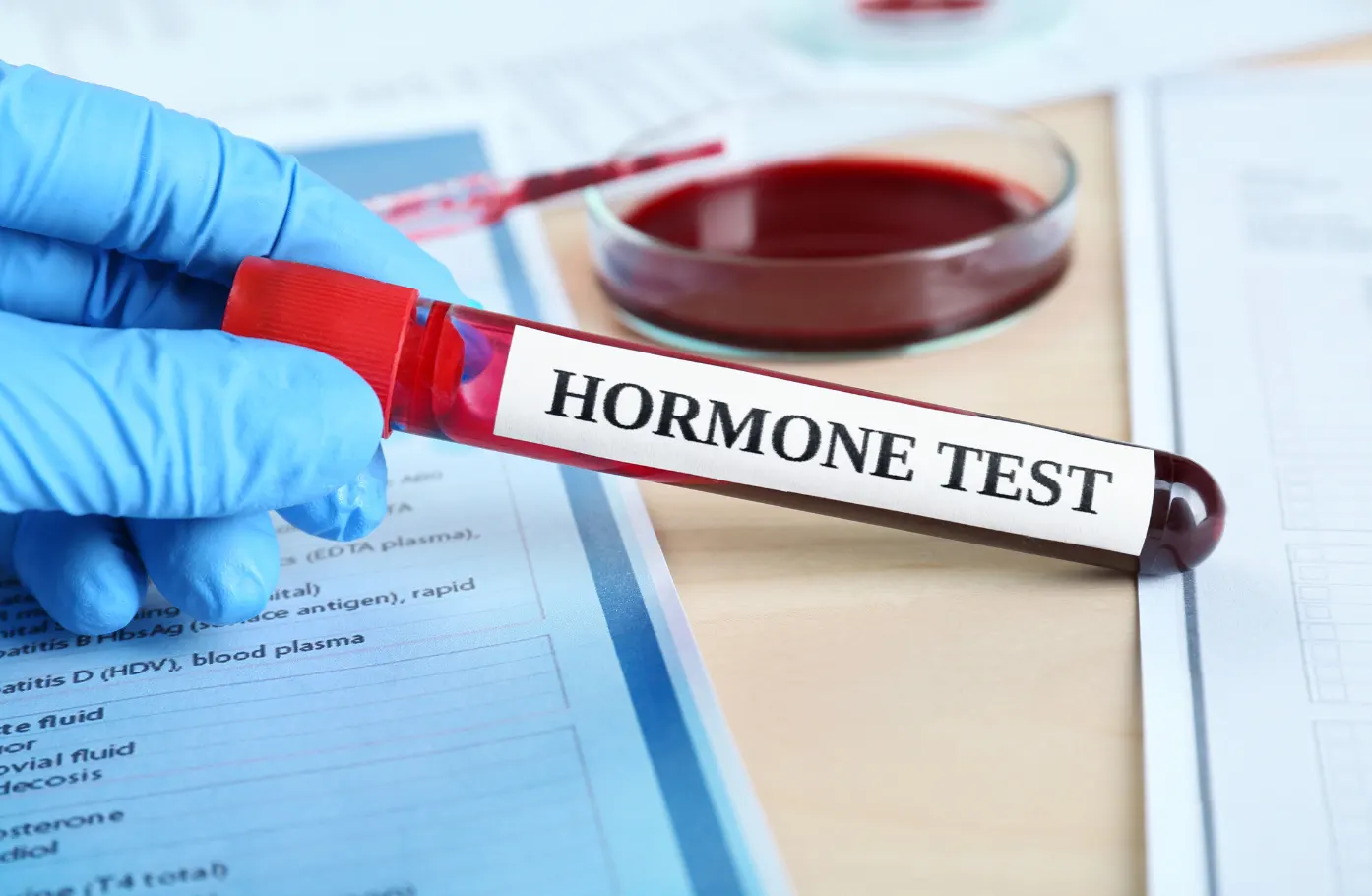
In hormonally related hair loss, many people eventually reach the same crossroads:
“Should I get some tests done?”
And for almost everyone, the first instinct is the same:
Check hormones.
A blood draw.
Waiting for results.
Comparing numbers to reference ranges.
Then placing yourself into one of two boxes:
“Normal” or “abnormal.”
But in hormonal hair loss, what you test often matters far more than whether you test at all.
A Core Principle to Establish First
Medical tests are information tools — not conclusion machines
In hormonal hair loss, there is no single test that can independently answer:
- Why am I shedding?
- Will it recover?
- What should I do next?
What tests can do is:
- provide clues
- rule out extreme pathology
- help you understand system context
What they cannot do is replace judgment about the process itself.
The Most Commonly Overestimated Category
❌ Sex hormone panels (estrogen / testosterone / DHT)
This is the most frequently ordered — and most frequently misunderstood — group of tests.
What do they actually tell you?
- hormone levels at a single moment
- circulating levels in the blood
- whether obvious pathological extremes exist
What don’t they tell you?
- how hair follicles locally interpret those hormones
- how hormones have fluctuated over the past months
- whether the system is currently in a hypersensitive state
A key misconception:
“Normal numbers mean hormones aren’t involved.”
This assumption does not hold.
In many real-world cases of hormonal hair loss:
- values are normal
- responses are abnormal
That combination is far more common than people expect.
This misunderstanding is unpacked in depth in “my hormone tests are normal, so this can’t be hormonal hair loss”.
A Category With Much Higher Practical Value
✔ Ferritin
Ferritin is one of the few markers that closely correlates with recovery tempo.
It does not simply indicate:
- anemia or no anemia
It reflects:
- iron reserves
- energy transport capacity
- whether the system has surplus resources
to support non-survival functions like hair growth
A common mistake is assuming:
“If it’s within range, it’s fine.”
For hair follicles, “low-normal” can still be a limiting factor.
A Frequently Ignored — but Crucial — Marker
✔ Vitamin D
Vitamin D is rarely a direct cause of hair loss.
But it strongly influences:
- immune regulation
- inflammatory background
- stability of follicular signaling
The correct way to understand it is this:
Vitamin D is more of an environment stabilizer than a growth trigger.
Particularly Valuable for PCOS & Metabolic Hair Loss
✔ Fasting glucose / insulin / HbA1c
These tests are often not considered “hair-related,” yet in PCOS or metabolic contexts, they are extremely informative.
They reflect:
- energy rhythm stability
- chronic insulin elevation
- whether the system is operating in emergency metabolism mode
In these populations, blood sugar rhythm often predicts recurrence risk more reliably than sex hormone levels.
The Category Most Likely to Create Anxiety
❌ One-time “full-panel” testing
Driven by anxiety, many people:
- test everything at once
- treat every deviation as a “cause”
- attempt to correct all numbers simultaneously
The result is often:
information overload
- decision paralysis
- increasingly extreme care strategies
One essential reminder:
Not every mild abnormality requires immediate intervention.
This anxiety-driven escalation mirrors other care-layer missteps — such as stimulating logic with strong growth ingredients or over-supplementation in search of faster recovery.
Why Repeated Testing Can Actually Slow Recovery
Because it produces three predictable effects:
- attention shifts from trends back to single data points
- self-doubt intensifies (“What’s wrong with me?”)
- strategies change too frequently
But hormonal hair loss most needs a stretch of time with:
- no new judgments
- no new interventions
This same pattern appears when people panic about still shedding after four weeks.
A Healthier Way to Use Medical Testing
Think of tests as a map, not a destination.
A more reliable sequence looks like this:
- identify the pattern through symptoms and timeline
- use testing to rule out major pathology
- rely on a small number of high-information markers
- return focus to long-term trends
One Fixation You Need to Let Go Of
If you find yourself thinking:
“Once I test enough, the answer will appear,” please know this:
Hormonal hair loss is not an “answer-based problem.”
It is a process-based problem.
This reframing belongs within the broader Mind & Myths framework.
Final Takeaway
In hormonal hair loss:
- tests cannot tell you when you’ll recover
- but they can help you avoid obvious detours
What ultimately determines recovery is not a report — but whether you stop re-verifying constantly and allow the system enough time to stabilize.
For many people, creating that stability means returning to gentle, non-stimulating daily care and resisting the urge to react to every new number.