
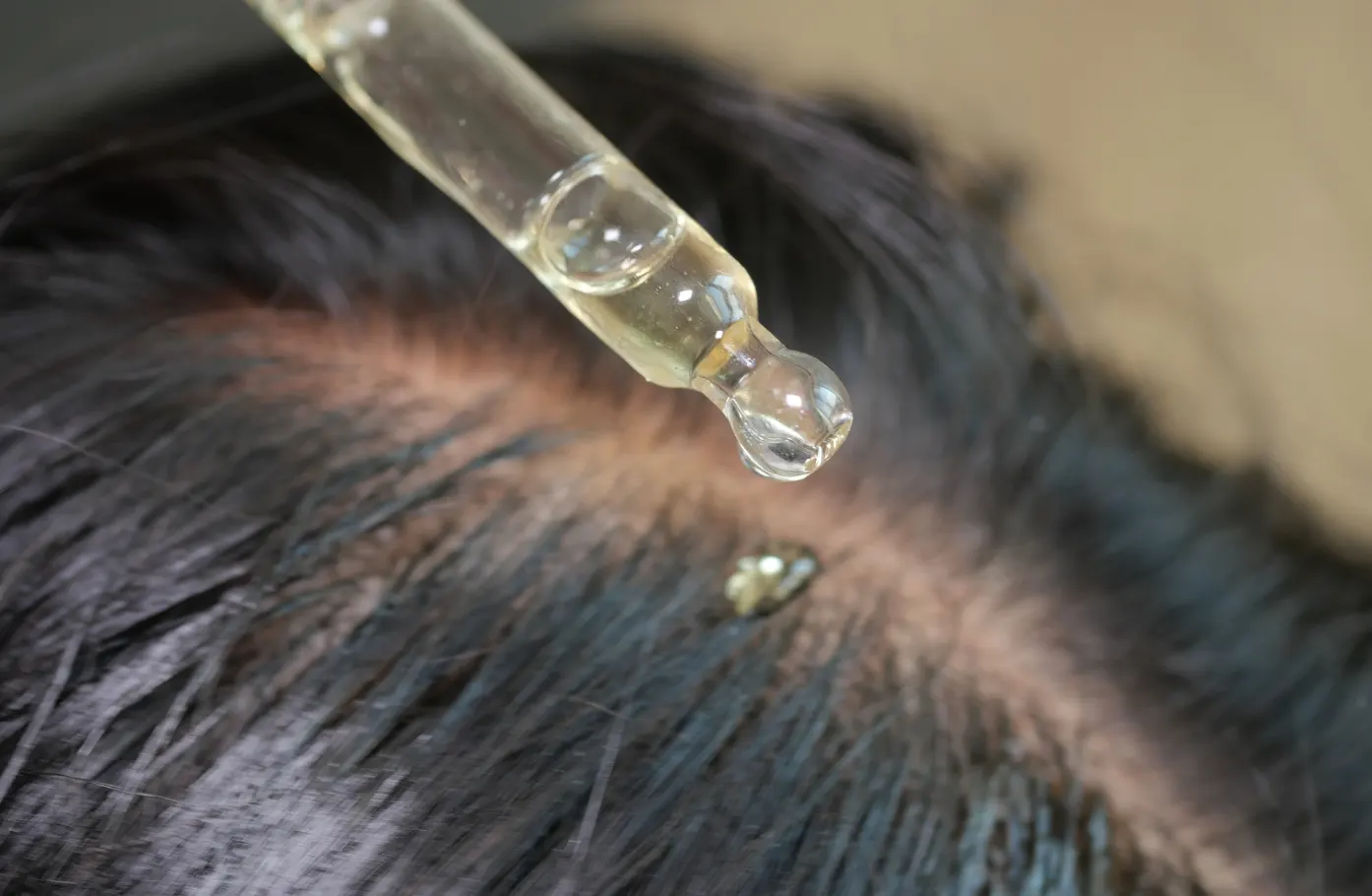
In hormonally driven hair loss, excess oil is often one of the earliest — and most unsettling — signals.
For many people, the reaction is almost instinctive:
“There’s so much oil.
I need to clean it more thoroughly.”
So care routines escalate:
- shampoos with stronger degreasing power
- more frequent washing
- chasing that squeaky-clean, ultra-fresh feeling
But it’s often right here that hair shedding becomes more stubborn and more recurrent.
A Conclusion That Must Be Clearly Stated
In hormonal oily scalps, oil is not the enemy — inflammation is
Oil is a result signal, not the starting point of the problem.
Under hormonal fluctuation:
- sebum secretion rhythms become disrupted
- sebum composition changes
- the scalp enters a state that is more prone to inflammation
If you focus only on “washing the oil away” without understanding why the oil is there, cleansing can easily shift from a form of support into an amplifier of imbalance.
Why Hormonal Oily Scalps Are Especially Vulnerable to Harsh Cleansing
Because the scalp is already more sensitive during hormonal fluctuation
During periods of hormonal instability:
- barrier repair capacity declines
- tolerance to stimulation decreases
- even mild irritation is more easily amplified
Harsh cleansing can:
- strip sebum rapidly
- disrupt the stratum corneum
- leave the scalp exposed to irritation
The result?
The scalp feels very fresh after washing — but system stress increases.
Because harsh cleansing triggers rebound oil production
Sebum secretion is not random.
It’s governed by a feedback system.
When the system repeatedly receives the signal:
“Oil has been rapidly removed,” it responds logically:
“Then I need to produce oil faster.”
When hormones are already unstable, this rebound response becomes stronger.
So you may notice:
- the more you wash, the oilier it feels
- the oilier it feels, the more you want to wash
- washing frequency keeps increasing
Because harsh cleansing prolongs the presence of inflammation
Low-grade, persistent inflammation is one of the most overlooked drivers of hormonal hair loss.
Harsh cleansing can:
- repeatedly interrupt barrier repair
- prevent inflammation from fully resolving
- keep the scalp in a halfway-inflamed state
For hair follicles, this translates into one message:
“It’s not safe yet.
Recovery should wait.”
This mechanism often remains invisible when people rely only on lab results, assuming normal hormone tests rule out hormonal involvement.
Why “Very Clean” Scalps Often Come With Worse Shedding
Because what you wash away is not just oil.
You also remove:
- sebum’s protective function
- the barrier’s buffering capacity
- the scalp’s filtration layer against stimuli
As a result, the same environmental triggers reach hair follicles more directly.
Many people notice:
- tightness or heat after washing
- visibly increased shedding post-wash
- stronger reactions to ingredients
This isn’t coincidence.
It’s the system being pushed into defense mode.
This is especially common when cleansing is paired with stronger growth ingredients and stimulating logic.
Does That Mean Oily Scalps Should Wash Less?
This is another common extreme.
In hormonal oily scalps, the real issue is never simply:
- washing too often
- or washing too little
The real question is:
“Does each wash add to system load — or reduce it?”
If cleansing is:
- gentle
- predictable
- non-irritating
then regular washing can actually help stabilize rhythm.
This is why people sometimes feel confused weeks into treatment, asking why they’re still shedding after several weeks.
What Kind of Cleansing Logic Do Hormonal Oily Scalps Truly Need?
Not “washing until there’s no oil,” but asking:
“Can my scalp settle after washing?”
The correct direction is:
- not chasing extreme freshness
- not creating tingling, heat, or tightness
- not causing large post-wash swings
When cleansing becomes predictable, oil rhythms finally have a chance to stabilize.
A Very Important Self-Check Question
You can ask yourself this:
“If I use the same gentle cleansing method for 2–3 consecutive weeks, does my scalp feel more chaotic — or more predictable?”
- If it’s the latter, you’re reducing noise
- If it’s the former, cleansing is likely excessive
Why Harsh Cleansing Is So Psychologically Tempting
Because it delivers:
- instant freshness
- a clear sense of “I did something”
- immediate, noticeable feedback
In long-term uncertainty, this kind of instant feedback can become addictive.
But remember: Immediate freshness ≠ long-term stability.
This same psychological pull appears across many care decisions and sits within the broader Mind & Myths framework.
One Definition You Need to Rebuild
In hormonal oily scalps, “successful cleansing” does not mean:
- zero oil after washing
- extreme freshness
It means:
- no irritation after washing
- a state that can be maintained
- fluctuations that gradually shrink
Final Takeaway
In hormonally driven hair loss:
- oil is a signal of system imbalance
- harsh cleansing is one of the most easily misused interventions
The more you fear oil, the more likely you are to wash incorrectly.
The more you rush, the more likely recovery is delayed.
For many people, returning to gentle, non-stimulating daily care helps rebuild tolerance and rhythm over time.
Next, we’ll move into a product-level misconception
where “feeling effective” often overrides what actually helps: