
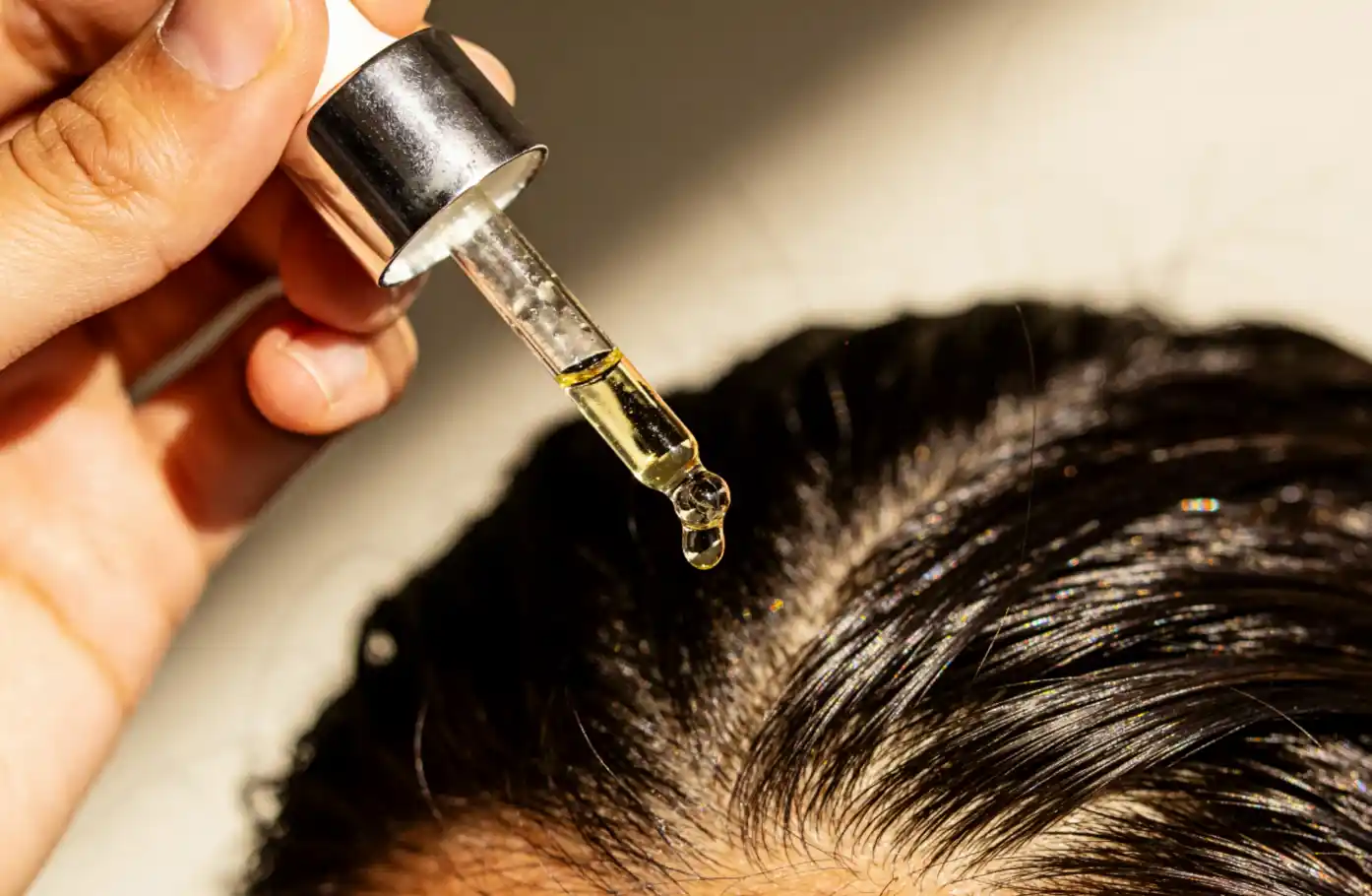
Many people who experience hair loss also notice seemingly unrelated but recurring issues:
Scalp becomes oily but tight after washing
Itchy, red, or prickly sensations appear easily
Scalp condition fluctuates frequently
Symptoms worsen with stress, late nights, or dietary changes
These are often oversimplified as:
“Scalp is not clean enough”
“Sebum production is too high”
“Skin is too sensitive”
However, in nutrient deficiency–related hair loss, these signs usually indicate a deeper issue: regulatory system dysfunction. Zinc is one of the most underestimated yet crucial players in this system.
1. What Role Does Zinc Play in the Scalp and Hair Follicles?
Zinc is not a nutrient that directly grows hair. It functions more as a regulatory and stabilizing factor, involved in:
Regulating sebum gland activity
Repairing skin and scalp barrier
Controlling and resolving inflammatory responses
Managing cell differentiation and renewal rhythm
In short:
Zinc doesn’t determine “whether hair grows,” but it regulates whether hair can grow in a stable, safe environment.
2. Why Does Oil Imbalance Occur When Zinc Is Low?
This often confuses people. Intuitively, one might think:
“Lack of nutrients → scalp should be dry.”
But reality is different:
Zinc regulates sebum feedback
When regulation fails, sebum production becomes erratic
Barrier repair is impaired
The result is an oily surface with a fragile internal structure, a pattern also seen in Mechanism 6: Supplementation, Absorption, and Chronic Inflammation.
Hence the common paradox in zinc-related imbalance: oily yet unstable scalp.
3. Why Zinc Deficiency Often Accompanies Low-Grade Inflammation
Zinc plays a key role in the immune system: it helps inflammation resolve properly.
When zinc is insufficient:
Inflammatory responses trigger more easily
They are harder to shut down
A low-grade, persistent stimulation state develops
Even subtle inflammation can interfere with follicle growth signals, shorten growth phases, and increase follicle sensitivity to stress — a dynamic connected to why low ferritin prevents hair follicles from activating growth.
4. Why an Unstable Scalp Makes Hair Loss Worse
Hair follicles do not thrive in chaotic environments. When the scalp is chronically:
Experiencing large sebum fluctuations
Repeated inflammation
Barrier damage
Follicles adopt a conservative strategy:
Shortened growth phases
Premature exit from growth
This is not damage but a risk-avoidance mechanism, similar to why protein deficiency slows new hair growth.
5. Why Zinc-Related Issues Often Appear With Stress
Zinc is more easily depleted under stress. During chronic stress, sleep deprivation, or high inflammation:
Zinc demand rises
Absorption and utilization may decline
This creates a cycle:
Stress ↑ → Zinc availability ↓ → Inflammation and oil instability ↑ → Scalp sensitivity ↑ → Hair shedding ↑
This explains why “as soon as I’m stressed, scalp issues flare up first” is a common complaint.
6. Why Skincare or Haircare Alone Can’t Solve Zinc-Related Issues
Haircare mainly addresses:
Surface cleanliness
Short-term relief
Minimizing additional irritation
It cannot fix:
Internal regulatory capacity
Inflammatory thresholds
Sebum feedback mechanisms
When zinc-related regulation is impaired, haircare can only prevent worsening and rarely fully stabilize scalp function. Targeted support with Evavitae Root Fortifying Hair Essence can help reduce external stress during recovery.
7. Are Zinc-Related Scalp Problems Reversible?
Yes, and improvement is often gradual. As regulatory conditions recover, you’ll first notice:
Milder scalp reactions
Reduced sebum fluctuations
Less itch and discomfort
Later, this gradually affects:
Hair shedding frequency
Growth phase stability
Quality of the new growth environment
Hence, in recovery, scalp stabilization often precedes visible hair growth, similar to the staged process described in Why Your Hair Remains Fine and Weak Even When You’re Taking Supplements.
8. Zinc’s Place in Nutrient-Deficiency Hair Loss Mechanisms
Putting the mechanisms together:
Low energy → growth paused
Low protein → growth quality limited
Low ferritin → growth permission restricted
Zinc imbalance → unstable growth environment
Zinc does not determine “whether follicles exist,” but whether follicles are willing to sustain growth. This forms part of the nutritional deficiency hair loss mechanisms hub.
Conclusion
Recurring hair loss and unstable scalp often indicate regulatory system issues, not poor hygiene. If you experience:
Sebum imbalance
Repeated inflammation
Fluctuating scalp condition
Hair loss strongly related to stress
Do not blame haircare or yourself. Regulatory conditions required for stability may not yet be fully restored.
In the next article, we will explore:
Why trace elements like selenium and copper, though subtle, affect antioxidant defense and long-term follicle health, forming a deeper protective and balancing system, as described in Trace Elements: Selenium and Copper.