
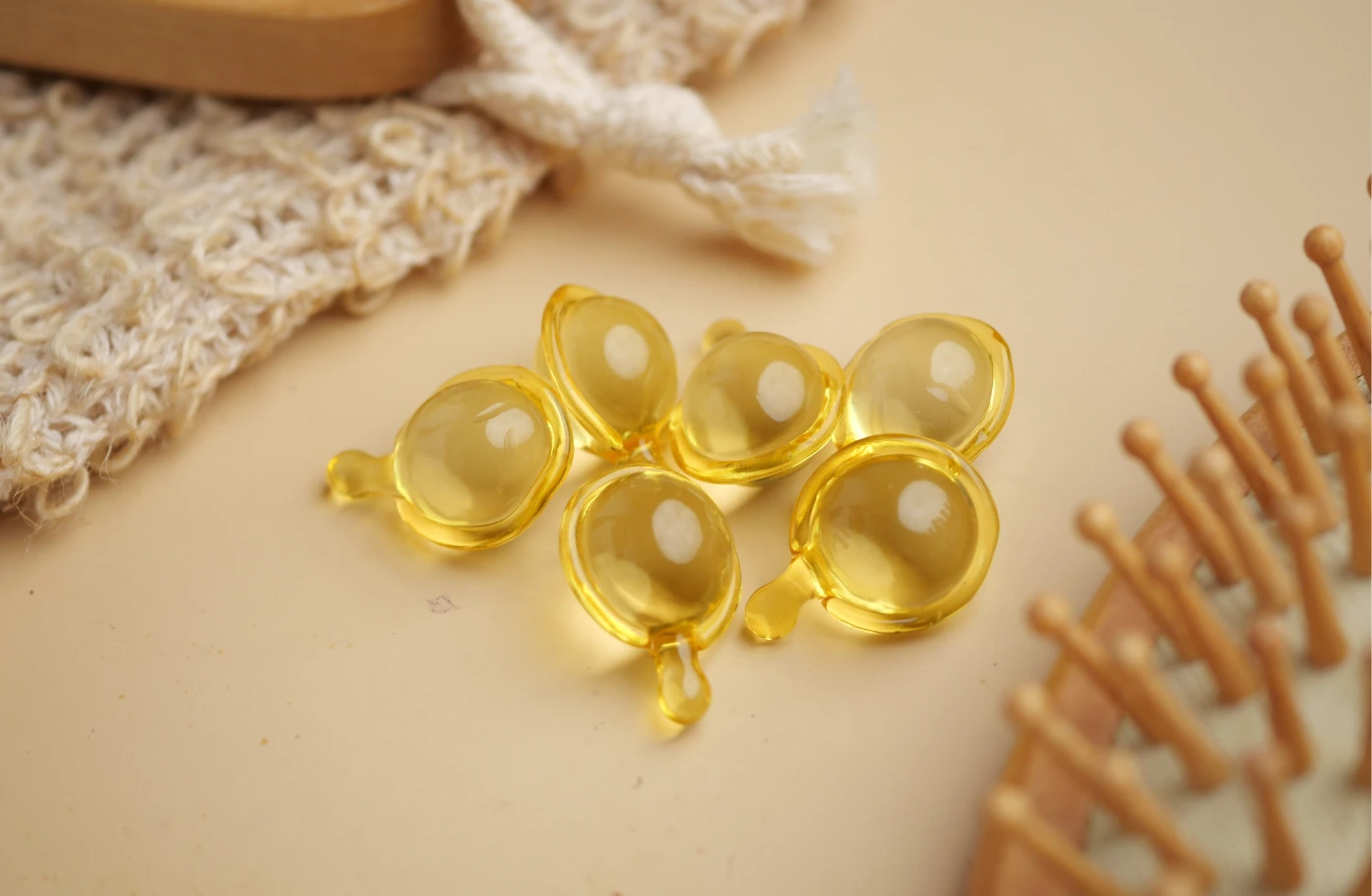
In nutrient-deficiency–related hair loss, Omega-3 is often misunderstood as something that “makes hair grow.” In reality, its true value lies elsewhere: preventing recovery from being repeatedly disrupted by inflammation (see the broader framework of Nutritional Deficiency Hair Loss and its recovery environment focus in Scalp Care & Routine).
If you’ve ever searched for nutritional advice related to hair loss, you’ve almost certainly seen Omega-3 mentioned:
Some say it’s anti-inflammatory and good for the scalp
Others take it for months and feel “nothing really changed”
As a result, Omega-3 often ends up in an awkward position:
It seems important—but not as “essential” as iron or protein (see Iron & Ferritin: The Top Priority in Nutrient Deficiency Hair Loss and Protein: The Most Overlooked Raw Material for Hair Growth).
This article aims to clarify one key point:
In nutrient-deficiency hair loss, Omega-3 is not meant to “pull growth forward,”
but to “hold the environment steady.”
1. The Core Conclusion: Omega-3 Regulates the Inflammatory Background, Not Growth Speed
In hair physiology, Omega-3’s primary role is not to stimulate hair follicles directly.
Its real function is to regulate the intensity and duration of inflammatory responses, which also aligns with the anti-inflammatory environment discussed in Anti-Inflammatory Balance Ingredients: Reducing Inflammatory Background to Create a Better Environment for Hair Follicles.
This determines:
Whether the scalp remains in a constant state of low-level “noise”
Whether hair follicles are repeatedly interrupted and depleted
That’s why the value of Omega-3 is usually reflected in how smooth and uninterrupted recovery feels, not in whether new hair appears within a few weeks.
2. Why Inflammation Acts as an “Amplifier” in Nutrient-Deficiency Hair Loss
In nutrient-deficiency hair loss, inflammation is often not the root cause, but it easily becomes an amplifier of the problem.
When the body is already in a state of:
Insufficient nutrients
Elevated stress
Reduced repair capacity
Even low-grade inflammation can lead to:
Scalp sensitivity
Sebum instability
Disrupted follicle cycling
This creates a common but confusing condition:
Nothing looks severely inflamed, yet the scalp never feels truly calm — a phenomenon also explored in Scalp Environment Management: Micro-Inflammation and Barrier Recovery.
3. How Omega-3 Supports the Scalp Environment
Omega-3 is not an “anti-inflammatory drug.”
It functions more like a long-term environmental regulator.
With consistent intake and appropriate dosing, it may help:
Reduce excessive inflammatory amplification
Shorten the duration of inflammatory responses
Improve the overall background of sebum balance and skin barrier function, which works alongside external support strategies described in The Science of Topical Ingredients in Nutrient Deficiency Hair Loss: What Should They Really Do?.
In practical terms, this means:
The same stimuli cause less disruption to the scalp over time.
For those building a gentle external routine, supportive products like Evavitae Root Fortifying Hair Essence are often used as part of long-term environment stabilization rather than rapid stimulation.
4. Why So Many People Feel “Nothing” When Taking Omega-3
This experience is extremely common.
Most of the time, it’s not because Omega-3 is ineffective—but because expectations are misaligned.
① Expecting It to Act Like a Hair Growth Supplement
If you’re hoping for:
Rapid reduction in shedding
Visibly faster new hair growth
Omega-3 will almost certainly disappoint you.
② Inflammation Isn’t the Primary Bottleneck
If your main issues are:
Low overall energy availability
Clearly insufficient iron or protein
Then hair growth itself cannot fully activate. This is why internal recovery priorities are usually addressed first, as explained in Overview of Internal Support: What to Supplement, How, and How Long Is Reasonable.
③ Not Using It Long Enough
Omega-3 operates on a monthly, not weekly, rhythm.
It works more like slowly turning down background noise, rather than producing strong, immediate feedback.
5. The Correct Role of Omega-3 in a Recovery Framework
In nutrient-deficiency hair loss, Omega-3 fits best in this position:
After basic energy intake, iron, and protein levels are stabilizing
As long-term support for the scalp environment and inflammatory background, often alongside structured recovery planning such as the Supplement Combination Guide: The Simplest, Safest, and Most Sustainable Approach.
It is not responsible for:
Rapidly stopping hair loss
Actively stimulating growth
What it can do is help reduce the cycle of “improving, then being disrupted again,” making recovery more continuous and stable.
6. Why Omega-3 Is Especially Friendly for Sensitive Scalps
If you also experience:
Itching, tightness, or stinging of the scalp
Heightened reactions to washing or haircare products
This often indicates a lower inflammation threshold and limited environmental tolerance. In these cases, pairing internal anti-inflammatory support with gentle routine design — such as the cleansing strategies described in Gentle Cleansing: Why Strong Oil Removal Makes Fragile Follicles Pay a Higher Price — becomes particularly important.
Omega-3’s value lies in the fact that it:
Does not introduce stimulation
Does not chase strong feedback
Supports stability at the background level
7. Putting Omega-3 Back Into Its Proper Role: Environmental Support
In nutrient-deficiency hair loss, Omega-3 is not the main character—and it shouldn’t be expected to “reverse everything.”
It functions more like a buffering layer that stabilizes the environment once the system has already begun repairing itself, which reflects the overall recovery logic explained in Why Scalp Routine Still Matters in Nutrient Deficiency–Related Hair Loss.
When you stop measuring its value by “did my hair grow,” and instead observe:
Whether the scalp feels calmer
Whether recovery after irritation is faster
It becomes easier to understand why Omega-3 is often the part of recovery that helps you go farther — not faster.