
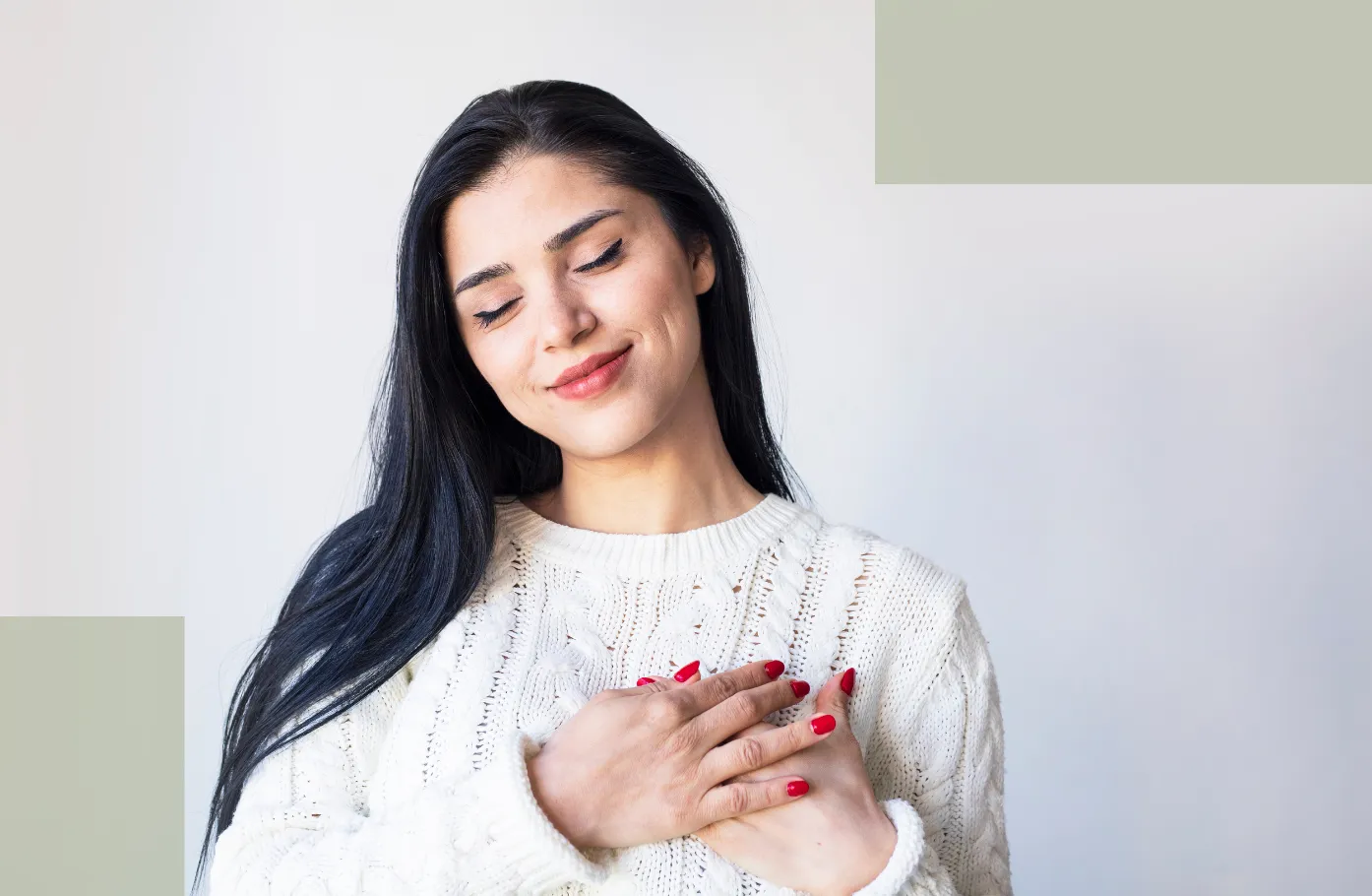
Postpartum hair loss may look like a purely external change.
But for many women, it quietly touches something much deeper:
“Who am I now?”
“Am I still myself?”
Postpartum shedding is not only a physical event.
It can become a powerful psychological shock—to your sense of identity, attractiveness, self-worth, and your relationship with the “old you.”
For many mothers, understanding these emotions begins with gaining clarity about the postpartum mind. Our postpartum emotional wellness guide offers gentle insights into why these shifts feel so intense.
This article gently explores these shifts in self-image and identity, and helps you understand why postpartum hair loss can feel so emotionally intense.
I. Why Is Hair So Tightly Tied to Self-Image?
For most women, hair is not just another body part. It is often:
- a symbol of attractiveness
- an expression of feminine energy
- a visible sign of health
- a key part of personal style
- a source of control and confidence
- an external extension of “who I am”
We use hair to express ourselves:
curls, straight hair, color, length, fringe, parting—these are all reflections of identity, personality, and attitude.
So when hair suddenly starts falling out in large amounts, it doesn’t just trigger:
“I look worse.”
It often feels more like:
“I’ve lost a piece of myself.”
This emotional weight is something many women carry silently, and it is often intensified by the cultural pressure to “look okay.” Our guide on postpartum social anxiety explores this more deeply.
II. The “Identity Gap” Created by Postpartum Hair Loss
Life after birth changes on every level: body, role, daily rhythm, responsibility.
Amid all this, hair loss becomes a visible sign of losing control.
It keeps reminding you:
- your body is changing
- you’re no longer the relaxed, polished, energetic version of yourself
- you are becoming “a mother,” not just the person you were before
This creates a complex emotional experience—a kind of identity gap.
1. Missing the “Old You”
You might find yourself missing the woman who:
- had more energy
- slept through the night
- felt in control of her appearance
- never had to worry about clumps of hair in the shower
Postpartum hair loss can feel like:
“The old me is slipping away from me.”
Many mothers describe this as a form of emotional distress, a quiet grief for a version of themselves they can’t easily return to. More on this emotional layer is explored here.
2. Feeling Unfamiliar with the “New You”
The reflection in the mirror may show:
- a higher hairline
- thinner temples
- a more visible parting
This unfamiliar face can feel like a shock in itself.
You might think:
- “Is that really me?”
- “When did I start looking like this?”
That sense of not recognizing yourself is a real and valid form of psychological disturbance.
Hormonal sensitivity can deepen this reaction, making even small changes feel overwhelming. This is explained in our hormonal sensitivity guide.
3. Living Between Two Identities
You are trying to adapt to two versions of “me”:
- the pre-baby me
- the mom me
The transition between these two identities would already require time and tenderness.
Hair loss simply magnifies this gap, making the transition feel sharper and more emotional.
III. When Hair Loss Shakes Your Sense of Self-Worth
Self-worth is often tied—at least partly—to appearance.
And postpartum women are in a particularly vulnerable window.
Hair loss can lead to thoughts like:
- “I’m not beautiful enough anymore.”
- “Maybe I’m not attractive to my partner like before.”
- heightened sensitivity in the relationship
- more self-consciousness in social situations
- avoiding photos or not wanting to be on camera
- worrying about looking “tired” or “less professional” at work
These concerns are not superficial.
They are deeply human.
When changes in your body impact how you see yourself,
it’s natural for your confidence to tremble.
The pressures of motherhood and constant responsibility may also amplify these feelings—explored further here.
IV. Why Postpartum Hair Loss Feels So “Out of Control”
Hair loss is:
- fast when it starts
- highly visible
- difficult to stop immediately
This can lead to the feeling:
- “My body isn’t listening to me anymore.”
- “No matter what I do, I can’t stop it.”
- “I don’t know when this will end.”
Hair loss becomes a symbolic event in the body’s rebuilding process—
one that easily triggers strong feelings of loss of control and anxiety.
If this sense of uncertainty feels familiar, you may resonate with our guide on regaining a sense of safety and stability.
V. A Different Answer: You Haven’t Become “Less”—You’re Becoming More
When women go through postpartum hair loss, they often secretly wonder:
- “Have I become worse?”
- “Am I less attractive now?”
- “Will I ever go back to how I was?”
The deeper answer is:
You have not become less.
You are going through a profound life transition.
Hair loss is not decay.
It is your body rebalancing after one of the most intense experiences it can ever go through.
This is not the end of your beauty.
It is the beginning of a new phase of it.
You are not “no longer enough.”
You are moving through a powerful rebirth—with your body, your identity, and your story.
Hair will grow back.
And as you learn to care for yourself in this new chapter, your confidence can return too—
often deeper and more grounded than before.
VI. From Identity Shock to Identity Integration
The psychological impact of postpartum hair loss often follows a natural path:
- Shock
Sudden heavy shedding, panic, disbelief.
- Comparison
“Others don’t seem to lose this much—why me?”
- Longing
Missing your pre-baby state and your “old self.”
- Adjustment
Learning the science, starting a gentle routine, finding new rhythms.
- Rebuilding
Gradually accepting the current you while seeing signs of recovery.
- Integration
Realizing you are not just “who you were before,” and not only “who you are now as a mother,” but a more complete version of yourself—carrying experience, resilience, and growth.
Realizing that your emotional process has a predictable rhythm can be comforting. This kind of insight aligns with the positive psychology approach to postpartum recovery.
VII. You Are Not Alone: Every Mother Is Quietly Rebuilding Herself
Everything you’re experiencing:
- the sense of unfamiliarity
- the gap between past and present
- the feeling of losing control
- the longing for the “old you”
- the worry about how you look and who you are now
None of this is your fault.
None of this means you are weak.
And none of this is something you are going through alone.
This is a shared, global experience among mothers—a Self-image & Identity Shift that is rarely talked about, but deeply real.
And in the middle of all this, you may slowly discover:
You are stronger, softer, and more powerful than you thought.
Not because nothing changed—
but because so much changed, and you are still here, still loving, still showing up.
You can learn more about common causes, timelines, and recovery tips in our complete Postpartum Hair Loss resource.
If you prefer a shampoo that avoids harsh surfactants, the Evavitae Root Fortifying Hair Essence is designed with a gentle cleansing base.