
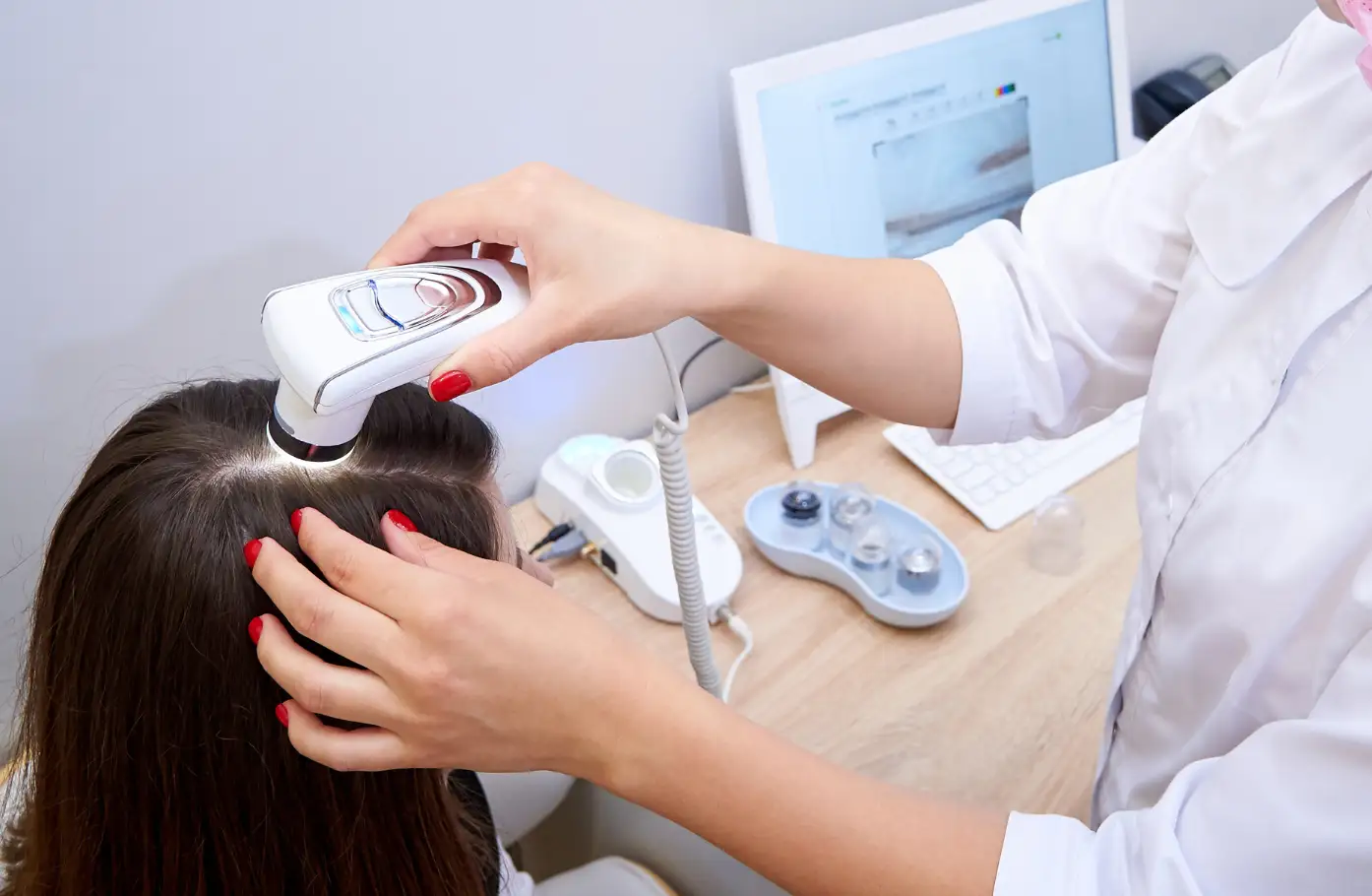
In nutrient-deficiency hair loss, what truly determines whether your hair care “works” is often not how much you do, but whether your scalp environment has settled into a stable state (Scalp Care & Routine).
If you are experiencing nutrient-deficiency hair loss, you may repeatedly notice subtle, hard-to-define sensations:
It’s not very itchy, but it never feels quite right
No obvious redness, yet it feels tight, warm, or prickly
Changing products, washing less, or washing more often doesn’t seem to fully help
Many people dismiss these sensations as minor issues, but during recovery, they all point to the same thing: your scalp environment has not yet stabilized (Evavitae Root Fortifying Hair Essence).
1. What Is the “Scalp Environment”? Not About Cleanliness, But Stability
When people hear “scalp environment,” the first thought is often:
Is it clean? Is it oily?
From a recovery perspective, the scalp environment focuses on three things:
Is the barrier intact (Barrier Repair Ingredients)?
Is micro-inflammation elevated (Anti-Inflammatory Balance)?
How sensitive is it to daily stimuli?
A “healthy environment” usually means:
Rarely itchy
Hardly ever prickly
Doesn’t require constant attention
Calmness itself is an important signal.
2. Why Micro-Inflammation Is More Likely During Nutrient Deficiency
Micro-inflammation does not mean visible, severe inflammation.
During nutrient-deficiency hair loss, it often presents as:
Low-grade, persistent
Not intense, but doesn’t disappear
Easily amplified by stimulation
Reasons include:
Reduced barrier repair capacity
Insufficient resources for anti-inflammation and repair (Omega-3 Support)
Lowered neural and immune response thresholds
Even previously unnoticed stimuli can feel amplified, making it harder for follicles to enter a “safe, restorative” state (Scalp Environment Management).
3. Why You May Feel “More Sensitive Despite Gentle Care”
Many wonder:
“I’m already using very gentle methods. Why does it still feel off?”
A common reason is: the scalp barrier hasn’t recovered. Even gentle care can become a stimulus (Gentle Cleansing).
When the barrier is compromised:
Water is lost more easily
Nerve endings are more easily activated
External changes are perceived as stronger
As a result, you may notice:
Hair feels tighter after washing
Scalp feels heavier after care
Doing nothing sometimes feels better
This doesn’t mean you chose the wrong products; it means the environment isn’t ready to handle extra interventions (Safety & Sensitive Scalp).
4. The Core Goal of Scalp Environment Management: Reduce Noise, Not “Solve Everything”
During nutrient-deficiency hair loss, the goal is to reduce background noise so recovery signals aren’t repeatedly interrupted.
It does not aim for:
Strong, immediate relief
Obvious “cooling,” “warming,” or “tingling” feedback
Complex, stacked care routines
It focuses on:
Reducing the frequency of discomfort
Shortening recovery time after stimulation
Allowing the scalp to gradually reach a state where it doesn’t need constant checking
5. Scalp-Friendly Environment Management Principles
5.1 Fewer Variables, Not More Layers
Reduce frequent product changes
Avoid introducing multiple new stimuli at once
Stability itself is a form of repair (Why Scalp Routine Still Matters).
5.2 Low Reaction, Not Strong Feedback
Don’t pursue noticeable “cool” or “warm” sensations
Don’t treat prickling or tingling as “working”
During recovery, strong feedback usually means strong stimulation.
5.3 Recoverable, Not “Endure at All Costs”
A simple check: after use, can your scalp return to comfort quickly?
If every session requires “gritting your teeth,” it’s not suitable for long-term use.
6. Why Many Problems Improve Once the Scalp Environment Stabilizes
As micro-inflammation decreases and the barrier gradually recovers:
The emotional impact of shedding is reduced
The scalp feels less noticeable
Decisions about washing and care become clearer
This does not mean problems disappear magically; it means the system is no longer constantly disrupted by background noise (The Science of Topical Ingredients).
7. Place Scalp Environment Management in a “Foundational Support” Role
During nutrient-deficiency hair loss, scalp environment management should not be:
An additional burden
A complex routine
Instead, it lays a quiet, stable foundation for all recovery behaviors.
When the scalp is no longer:
Tense
Easily itchy
Easily triggered
…then cleansing, washing frequency (Hair Washing Frequency), massage (Scalp Massage), and nutrition supplementation (Overview of Internal Support) can truly perform their roles effectively.
Sometimes the most effective care isn’t doing more — it’s letting the system finally calm down. This often signals that true recovery has begun.