The Key Step to “Waking Up” Resting Follicles During Postpartum Hair Loss
During postpartum shedding, many mothers focus on the amount of hair falling out — but overlook one of the most powerful, science-backed actions they can take:
👉 Scalp Massage.
It’s universally recommended by hair-science experts for one simple reason:
Scalp massage requires no medication, causes no irritation, has no side effects — yet directly improves blood flow, oxygen delivery, nutrient transport, and stress levels that influence how quickly follicles can return to the growth phase.
For the full foundation of postpartum scalp stability, see our
Postpartum Scalp Care Guide.
In this guide, you’ll learn:
- Why scalp massage accelerates postpartum recovery
- What it does at the biological level
- How to do it correctly
- How long to massage
- Which areas give the best results
1. Postpartum Follicles Are in the Resting Phase — And Need Blood Flow to “Reawaken”
Postpartum Telogen Effluvium is a temporary and fully reversible condition.
When hormones drop suddenly after birth, many follicles:
- Stop growing
- Shift early into the telogen (resting) phase
- Shed more easily
- Delay their return to the growth phase
At this moment, follicles are essentially “on hold,” waiting for the right signals to restart.
For follicles to leave the resting phase, they need:
① Adequate blood flow
To deliver amino acids, iron, proteins, and essential nutrients to the follicle bulb.
② Sufficient oxygen
Oxygen is a recognized biological signal that helps activate the next growth cycle.
📌 Scalp massage is the simplest and most natural way to improve both.
To understand how cleansing affects this environment, read
gentle cleansing for postpartum recovery.
2. The Science: How Scalp Massage Promotes Hair Regrowth
Research shows that regular scalp massage enhances recovery through five biological pathways:
1) Improves Local Blood Circulation
Gentle circular pressure stimulates microvascular dilation.
This increases:
- Nutrient delivery
- Oxygen supply
- Waste removal
- Follicle recovery speed
📌 Blood flow is the “engine” of hair regrowth.
2) Boosts Follicle Cell Activity & Shortens the Resting Phase
Mechanical stimulation from massage encourages:
- Higher follicle cell metabolism
- Increased fibroblast and dermal papilla activity
- A biological “signal” that it’s time to re-enter anagen (growth phase)
👉 Scalp massage acts as a gentle wake-up call for resting follicles.
3) Reduces Stress Hormones (Cortisol)
Postpartum mothers often experience:
- Sleep deprivation
- Anxiety
- High stress
- Emotional fluctuations
All of which elevate cortisol — a hormone known to:
- Suppress follicle activity
- Prolong the resting phase
- Increase shedding
Scalp massage activates the parasympathetic nervous system, helping the body shift into relaxation.
Studies show:
- Just 5 minutes can reduce stress indicators
- It can ease scalp tightness
- It supports better sleep quality
4) Softens the Scalp & Improves Tissue Flexibility
Chronic tension, inflammation, and impaired blood flow make the scalp feel:
- Tight
- Tender
- Painful when pressed
- Restricted, like a “headband” sensation
A stiff scalp compresses follicles and limits their nutrient supply.
Massage can:
- Relax connective tissue
- Improve elasticity
- Increase subcutaneous flexibility
- Create a more supportive environment for new hair to grow
5) Enhances Absorption of Nourishing Ingredients
If you use:
- Lightweight scalp oils
- Grape seed, avocado, coconut, or batana oil
- Niacinamide-based scalp serums
Massage helps:
- Spread the product evenly
- Improve penetration
- Boost the efficacy of soothing or strengthening ingredients
For keeping follicles unblocked before massage, see optimal wash frequency for postpartum recovery.
3. The Correct Way to Perform Scalp Massage (Most People Do It Wrong)
Incorrect massage can cause irritation or unnecessary shedding.
Here’s the proper method:
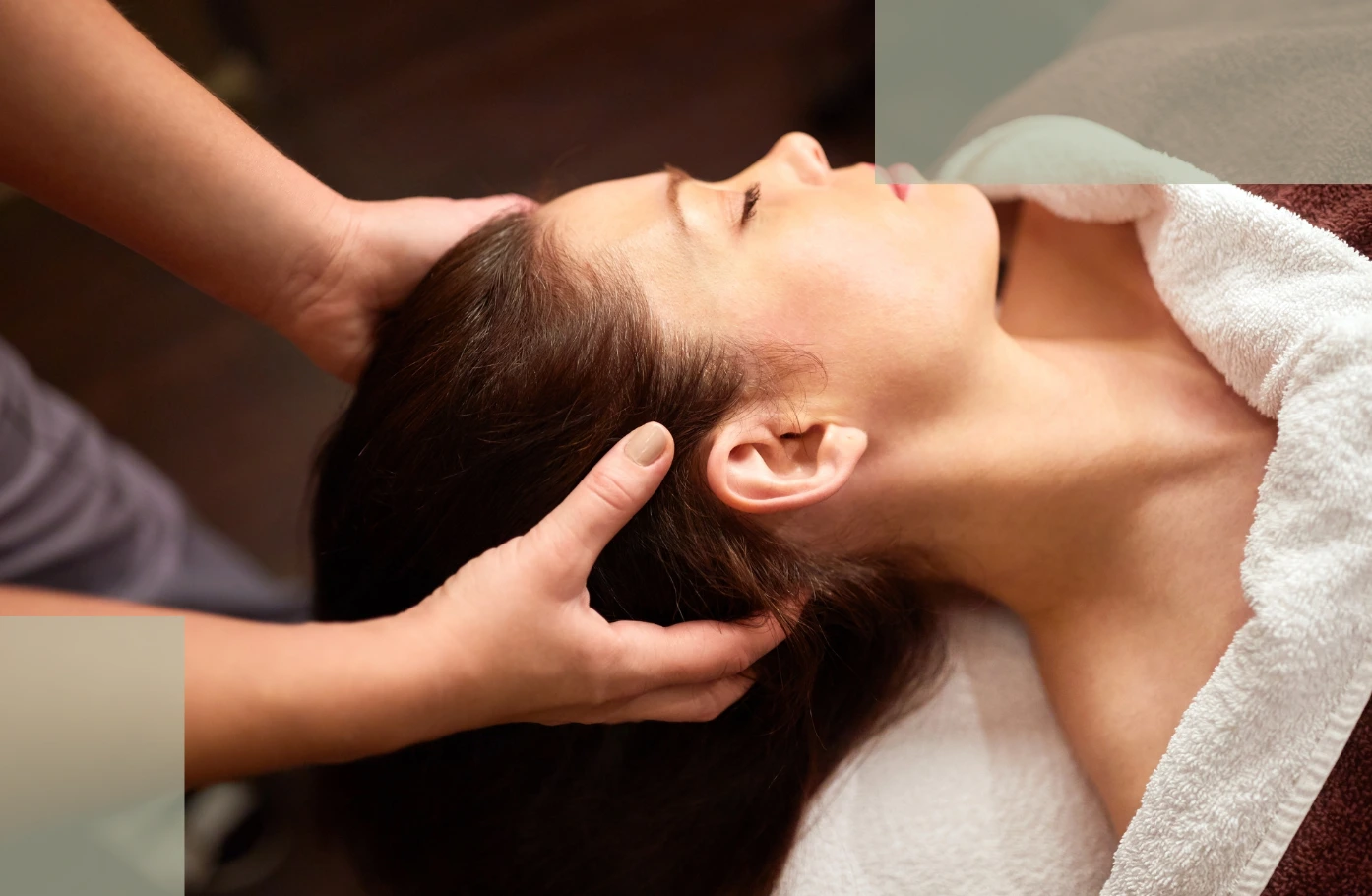
① Use fingertips, not nails
Nails can:
- Scratch the scalp
- Cause inflammation
- Trigger sensitivity
- Dislodge resting-phase hairs prematurely
② Pressure should be gentle, slow, and controlled
Use:
- Circular motions
- Forward–back strokes
- Light pressing
The ideal pressure:
📌 Light enough not to hurt, but firm enough to feel movement under the skin.
③ Focus on the most effective regions
Massage:
- Hairline (most vulnerable area)
- Temples (tension zone)
- Crown/vertex (lowest blood flow)
- Occipital area (supports lymphatic drainage)
④ Duration: How long is enough?
Optimal:
- 3–5 minutes per day
- Or split into 2–3 minutes, twice daily
- At least 5 days per week
Consistency matters more than duration.
👉 Small efforts daily are better than long sessions occasionally.
⑤ Best timing: Before washing > After washing
Massaging before washing:
- Softens sebum
- Reduces friction-related shedding during washing
- Helps cleanse more effectively
- Relaxes the scalp
- Facilitates better product absorption
To avoid friction-induced false shedding during washing, see false shedding from mechanical damage.
4. Bonus: Using Lightweight Oils Enhances the Effects
Not required — but helpful.
Beneficial oils include:
- Grape seed oil
- Coconut oil
- Batana oil
- Argan oil
- Avocado oil
These offer:
- Antioxidant benefits
- Barrier repair
- Reduced friction
- More scalp flexibility
Especially helpful for dry, tight, or sensitive postpartum scalps.
5. Common Mistakes to Avoid
❌ Scratching with nails
❌ Applying excessive pressure
❌ Massaging with conditioner on the scalp
❌ Massaging under hot water
❌ Expecting immediate results
Proper scalp massage is:
- Gentle
- Low-risk
- A long-term investment
- Noticeably effective after 4–8 weeks
To prevent heat from irritating the postpartum scalp, see gentle heat management.
6. What Happens When You Massage Consistently?
With daily 3–5 minute sessions, most mothers notice:
- More controlled shedding
- Less shedding during washing
- Reduced scalp tightness
- More baby hairs along the hairline
- Gradual improvement in density
Scalp massage isn’t meant to “force growth.”
Its purpose is to create the conditions for follicles to begin growing again.
For full stabilization of scalp oil, microbiome, and inflammation, review scalp environment management.
Conclusion: Scalp Massage = A Postpartum Follicle Accelerator
Scalp massage influences:
- Blood flow
- Oxygenation
- Stress hormones
- Barrier health
- Follicle activity
- Ingredient absorption
These six mechanisms form the biological foundation of postpartum recovery.
A simple 3–5 minutes a day may be the most underrated — and most powerful — step in waking up resting follicles.
Looking for a single page that explains causes, triggers, myths, and recovery? Explore our Postpartum Hair Loss overview.
If your scalp feels oily yet sensitive, the balanced cleanse of the Evavitae Root Fortifying Hair Essence can be helpful.