
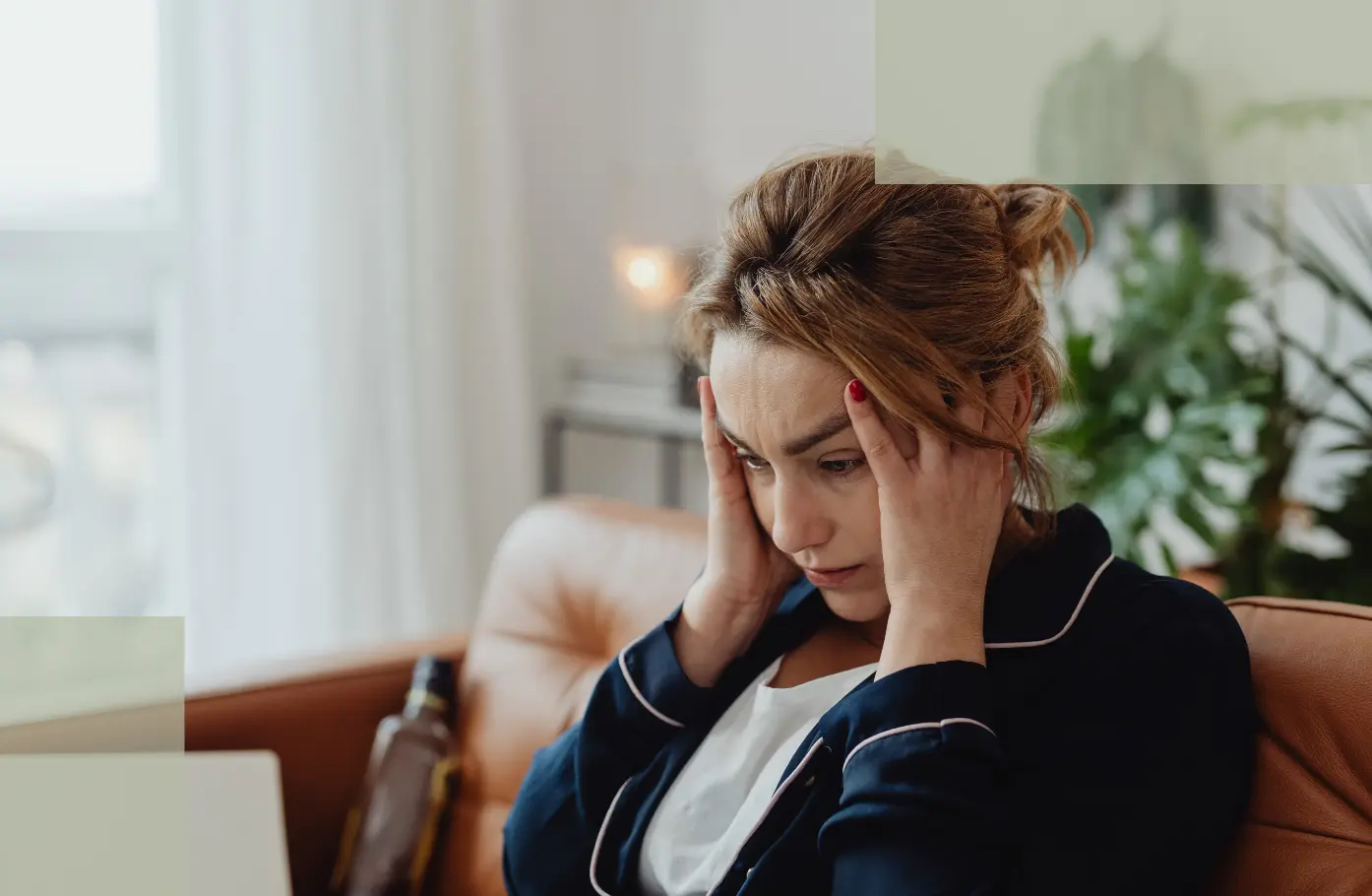
When shedding isn’t just physical, but a psychological overload.
For many mothers, the most painful part of postpartum hair loss isn’t
how much hair is falling out — it’s this:
👉 The more you worry about shedding, the worse it seems to get.
👉 The worse it gets, the more anxious you become.
This is the classic Stress–Hair Loss Loop.
It isn’t your fault, and it isn’t “overthinking.”
It’s a real, deeply intertwined mind–body mechanism.
For a deeper look into the emotional patterns behind these reactions, you can explore our Postpartum Mind framework here.
This guide will help you understand:
- why anxiety can make you shed more
- how hair loss, in turn, amplifies your anxiety
- how to break this vicious cycle
- how to bring your body back into “recovery mode”
I. What Is the Stress–Hair Loss Loop?
In simple terms:
- Hair loss → triggers anxiety
- Anxiety → raises cortisol (stress hormone)
- High cortisol → keeps follicles stuck in the resting (telogen) phase
- Prolonged telogen → more shedding
- More shedding → even more anxiety
The cycle repeats, again and again.
You’re not being dramatic.
👉 Your body is interpreting hair loss as a “threat” and activating a full stress response.
You’re not being dramatic — your body interprets visible hair loss as a “threat” and activates a full stress response. This heightened sensitivity is explained more deeply here.
II. Why Does Anxiety Make You Shed More? (The Science)
1. Cortisol keeps hair follicles in the resting phase
Cortisol is your main stress hormone.
When emotional stress is high, sleep is poor, or you feel constantly on edge, cortisol rises.
High cortisol can:
- keep follicles “stuck” in the resting (telogen) phase
- delay the transition back into the growth (anagen) phase
- prolong the shedding period
- slow new growth
- increase scalp sensitivity
This isn’t “all in your head” — it’s a physiological reaction.
2. Stress reduces scalp blood flow → less oxygen and nutrients
When you’re anxious, exhausted, or overwhelmed:
- blood vessels in the scalp may constrict
- local blood flow decreases
- oxygen delivery to hair follicles drops
- nutrients arrive more slowly
- new hair grows thinner, softer, and more slowly
That tight, tingling, or “helmet-like” sensation on your scalp?
Often, it’s a sign of stress-related changes in circulation and tension.
3. Emotional stress amplifies scalp inflammation
Stress can drive low-grade inflammation throughout the body, including the scalp:
- more itching
- scalp tenderness or burning
- increased flaking
- micro-inflammation around follicles
The more inflamed the scalp, the more vulnerable the follicles become — and the more shedding you may see.
4. Stress disrupts your self-care rhythm
Stress doesn’t just live in your head — it shows up in your habits.
The pattern often looks like:
- too tired to wash your hair
- then suddenly washing too often
- over-scrubbing the scalp
- massaging too aggressively
- constantly switching products
- forgetting supplements or balanced meals
- sleeping poorly, eating quickly, rushing through the day
All of this can disturb your scalp barrier, your hair growth cycle, and your sense of stability.
These behaviors often worsen the scalp barrier — a pattern explored in behavioral changes driven by shedding.
III. Why Does Shedding Trigger So Much Anxiety? (The Psychology)
Hair loss isn’t “just cosmetic.”
It touches much deeper fears:
- “I can see my body getting worse.”
- “I can’t control what my body is doing.”
- “What if it never grows back?”
- “What if other people notice?”
- “Am I normal? Why do I shed more than others?”
- “Did I do something wrong?”
Many mothers also experience unexplained emotional soreness or panic, which we explore in the hidden emotional distress of postpartum shedding.
Shedding often intensifies the sense of losing control, a common theme covered in fear of losing control.
Because hair loss is visible, your brain treats it as a loud alarm.
Fear, shame, guilt, and self-blame quickly join in.
That’s when you fall into the Stress Loop.
At the same time, hair thinning subtly changes how mothers see themselves — their femininity, confidence, and identity — something we detail in postpartum self-image shifts.
IV. How Stress and Shedding Reinforce Each Other
You can think of it like this:
Hair loss
→ emotional fear
→ cortisol rises
→ follicles stay longer in resting phase
→ more shedding
→ fear intensifies
→ blood flow decreases
→ growth phase delayed
→ recovery feels slower
→ anxiety deepens
→ loop continues
You may recognize yourself in these patterns:
- checking your hairline multiple times a day
- counting hairs in the shower or on your brush
- endlessly searching “how to stop postpartum hair loss fast”
- fearing every wash day
- avoiding mirrors or photos
- relying heavily on hats, hair powders, or specific camera angles
- over-massaging, over-washing, over-layering products
- feeling like you’re “failing” if you still shed
- crying easily, feeling on edge, feeling exhausted
For some women, these emotional changes quietly affect intimacy and closeness — something we explain in relationship impact during postpartum shedding.
And in emotionally fragile periods, shedding can even intensify postpartum sadness or anxiety, as discussed in PPD amplification through hair loss.
This is not weakness.
It’s the Stress–Hair Loss Loop in action.
V. How to Break the Stress–Hair Loss Cycle
(this is the most important part)
1. Shift your goal: from “stop the shedding” to “calm the stress response”
In the early shedding phase (around 3–6 months postpartum), the priority is not:
✘ instantly stopping hair loss
✘ forcing rapid regrowth
✘ doing more and more treatments
The real priority is:
✔ stabilizing the scalp
✔ lowering cortisol
✔ supporting sleep and recovery
✔ gentle, consistent care
✔ balanced nutrition
✔ predictable routines
When stress comes down, follicles naturally move back into growth mode.
2. Set clear “care boundaries” for yourself
For example:
- look at your hairline no more than once a day
- stop counting hairs — switch to weekly photos instead
- limit “hair loss” Googling to 10 minutes a day
- stop frequently changing products
- keep care time anchored to existing routines (e.g., during your shower), 3–5 minutes at a time
This reduces how often your brain is triggered by hair-related stress.
3. Prioritize sleep quality (this is huge)
Sleep recovery is one of the strongest ways to interrupt the Stress Loop.
Better sleep can:
- lower cortisol
- support hormonal recalibration
- speed up the transition back into growth phase
- enhance immune balance
- reduce inflammation
For a recovering mother, sleep is more powerful than any serum, oil, or “miracle shampoo.”
4. Create a simple, stable care system (to reduce uncertainty)
Think of a gentle, repeatable framework, such as:
- wash every 2–3 days with a mild, low-irritation shampoo
- 3–5 minutes of scalp massage daily (with fingertips, not nails)
- daily intake of key nutrients (iron if needed, vitamin D, zinc, B vitamins, protein) as advised by your doctor
- a nourishing hair mask once a week
- at least 30 minutes of light movement + deeper breathing most days
- drink 1.5–2 liters of water when possible
Your nervous system needs predictability.
Routines reduce anxiety.
5. Build a “recovery mindset” — trust your body again
Gently remind yourself:
- “I am in recovery, not in failure.”
- “Shedding is part of the process, not the final result.”
- “My body is recalibrating after pregnancy and birth.”
- “I don’t need perfection; I need consistency.”
- “Time will help my hair and hormones find their rhythm again.”
- “I am already doing a lot. I deserve kindness, not criticism.”
The more softness you offer yourself, the faster your nervous system can exit crisis mode — and the more easily your follicles can return to growth.
If you want a structured emotional roadmap, our Positive Psychology Recovery Path offers grounding and gentle tools.
VI. The Softest Truth: Time Is Quietly On Your Side
The Stress–Hair Loss Loop can be broken.
Your body can and will recover.
Your hormones will stabilize.
Your follicles can re-enter the growth phase.
This process is not forever — it’s a phase:
- around 3 months: tiny baby hairs and fuzz begin to appear
- around 6 months: shedding often decreases
- around 9–12 months: density gradually improves for many women
You are not out of control — your body is working hard to find balance again.
You are not being crushed by hair loss — you are slowly, steadily walking out of the stress cycle.
You are already doing much more than you give yourself credit for.
And you don’t have to walk this recovery journey alone.
For moms who want both science and practical recovery steps, this Postpartum Hair Loss hub is the best place to start.
For women seeking cleaner formulas during postpartum recovery, the Evavitae Root Fortifying Hair Essence offers a soft, non-irritating option.