
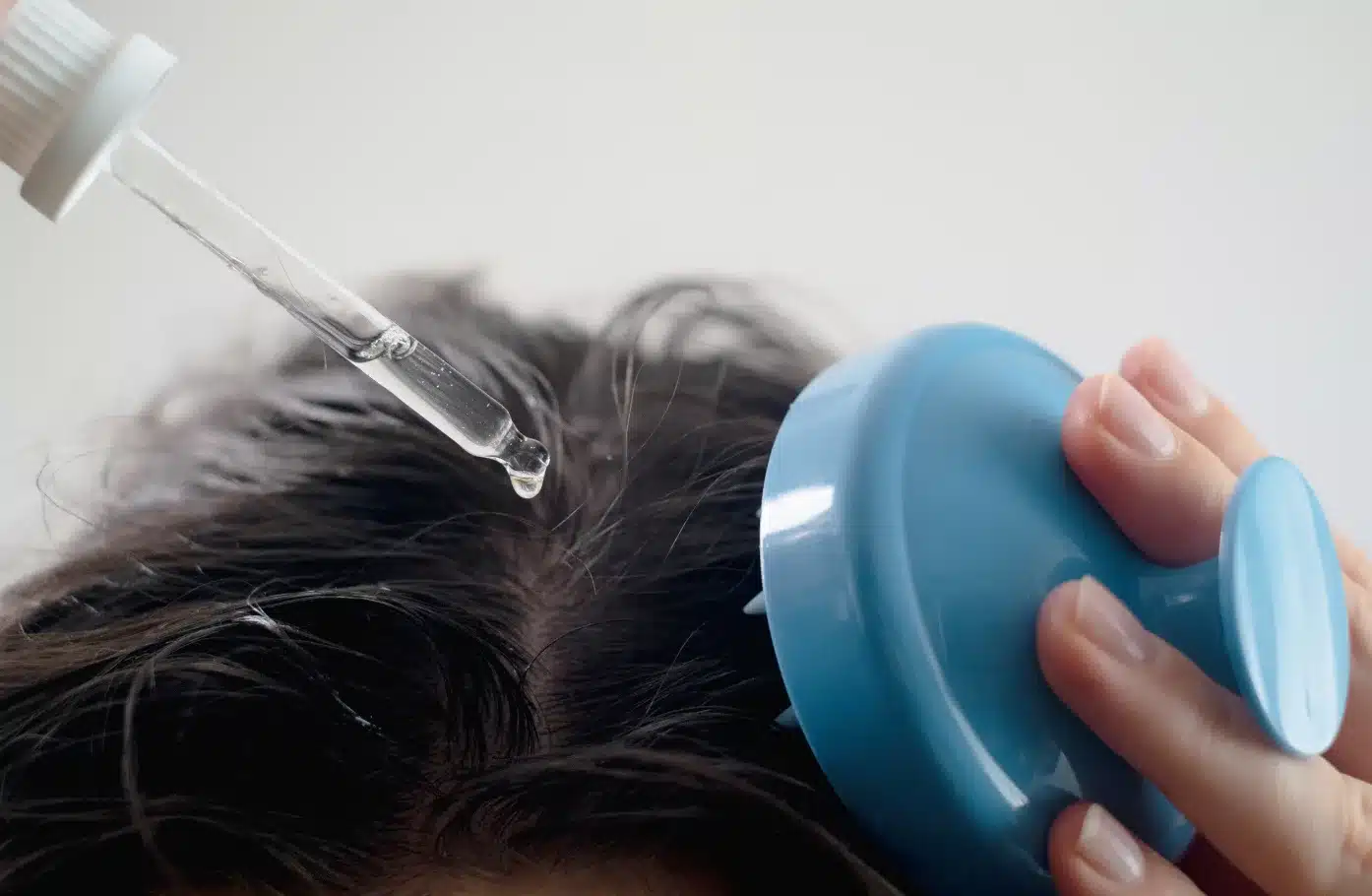
Daily routines create stability.
Weekly scalp care defines boundaries.
Many hair regrowth setbacks don’t come from neglect —
they come from overdoing the wrong things too often.
Weekly scalp care is not about adding intensity.
It’s about deciding what deserves space, and what should not be done every day.
Why Weekly Care Matters More Than Most People Think
Hair follicles respond poorly to constant input.
Even beneficial actions can become stressful when repeated too frequently.
The role of weekly care in regrowth
Weekly scalp care exists to:
- reset buildup without stripping
- support circulation without chronic stimulation
- maintain balance without triggering inflammation
Think of it as maintenance, not intervention.
What Weekly Scalp Care Is Actually For
Weekly care should do what daily routines intentionally avoid.
The correct purpose of weekly care
- address buildup gradually
- support long-term scalp health
- give follicles clear signals — then leave them alone
Weekly care is about spacing, not escalation.
Scalp Exfoliation: If You Do It, Do It Weekly (Not Daily)
Exfoliation is one of the most commonly overused steps.
When exfoliation helps regrowth
Gentle exfoliation can:
- reduce excess buildup
- improve scalp comfort
- support ingredient tolerance
When exfoliation harms regrowth
Exfoliation backfires when:
- done too frequently
- paired with other strong actives
- used on an already sensitive scalp
For most women in regrowth:
once a week — or less — is enough.
Weekly Treatments vs Daily Treatments
Some treatments feel “too mild” if used weekly — but that’s the point.
Why weekly treatments are different
Weekly treatments:
- work through cumulative effect
- reduce irritation risk
- allow recovery days in between
Daily treatments shape the environment.
Weekly treatments nudge it.
Scalp Massage: Why Weekly Is Often Better Than Daily
Massage is helpful — until it isn’t.
Benefits of limited massage
Weekly or occasional massage can:
- support circulation
- release tension
- improve awareness without overstimulation
Risks of daily or aggressive massage
Too much massage can:
- irritate follicles
- increase shedding
- keep the scalp in a reactive state
Massage should leave the scalp relaxed — not sore.
Clarifying vs Stripping: Knowing the Difference
Weekly cleansing is often misunderstood as “deep cleaning.”
What weekly cleansing should do
- remove residue gradually
- restore neutral scalp feel
- improve tolerance to daily products
What it should not do
- leave the scalp squeaky or tight
- cause burning or tingling
- dramatically increase shedding
Clean does not mean stripped.
How to Structure Weekly Scalp Care Simply
You don’t need a long checklist.
A realistic weekly structure
- Choose one focus per week
(exfoliation or massage or treatment — not all at once)
- Observe response over days
Not hours.
- Return to baseline daily routine
Let the scalp settle.
Weekly care should blend into the routine — not disrupt it.
Signs Your Weekly Care Is Supporting Regrowth
Supportive weekly care often results in:
- better tolerance to daily routines
- less buildup-related irritation
- more predictable scalp behavior
- fewer “mystery flare-ups”
If weekly care causes prolonged discomfort, it’s too much.
Common Weekly Care Mistakes That Slow Regrowth
Turning weekly care into a “reset button”
Trying to undo a stressful week with aggressive treatments adds stress instead of relieving it.
Stacking weekly steps together
Exfoliation + massage + actives in one session overwhelms follicles.
Spacing matters more than quantity.
Using weekly care to chase growth speed
Weekly care supports conditions, not timelines.
Trying to speed things up often destabilizes progress.
How Weekly Care Fits Into the Bigger Regrowth Picture
Weekly scalp care should feel:
- intentional
- restrained
- almost boring
That’s how you know it’s aligned with regrowth.
Daily routines create safety.
Weekly care maintains it.
Final Thoughts
Weekly scalp care is not about doing more.
It’s about doing just enough — at the right frequency — and then stepping back.
Hair regrowth doesn’t need constant correction.
It needs room to happen.
When weekly care supports calm instead of intensity, follicles stay in growth mode longer — and recovery becomes sustainable.