

Natural Remedies for Postpartum Hair Loss: What Really Works
After childbirth, many mothers prefer natural solutions over aggressive treatments. But does “natural” actually mean effective? The answer is yes—when guided by science.
Natural ingredients can nourish follicles, soothe scalp sensitivity, and complement your body’s hormonal recovery. Let’s explore which remedies truly work and how to use them safely for visible results.
Why Natural Doesn’t Mean Weak
There’s a misconception that natural treatments are mild but ineffective. In fact, many plant-based extracts contain potent bioactive compounds that have been studied for decades.
According to Johns Hopkins Medicine (2024), certain botanical oils and antioxidants exhibit measurable effects on microcirculation, inflammation, and follicle strength. These natural compounds are not “weak alternatives” but rather gentle allies that work with your body—not against it.
The postpartum period is marked by hormonal shifts and scalp sensitivity, making natural remedies ideal. They deliver results without synthetic fragrances, sulfates, or hormone disruptors, helping your scalp recover in harmony with your body’s rhythm.
Top Proven Ingredients
Nature offers an array of effective, clinically studied ingredients for hair regrowth. Here are a few that dermatologists and researchers highlight most often:
1. Rosemary Oil
One of the most researched essential oils for hair regrowth. Studies show that rosemary oil may stimulate circulation and encourage follicle renewal, sometimes performing comparably to 2% minoxidil when used consistently (Verywell Health, 2023).
To use: dilute a few drops of rosemary essential oil in a carrier oil (like coconut or jojoba) and massage gently into the scalp 2–3 times per week.
2. Batana Oil
Harvested from the American palm (Elaeis oleifera), batana oil is rich in oleic acid and tocopherols (vitamin E compounds). It helps restore the scalp’s lipid barrier, reduce dryness, and protect fragile follicles. This makes it particularly suitable for postpartum scalps experiencing sensitivity or flaking.
3. Peptides and Amino Acids
Peptides act as the building blocks of keratin—the protein structure of hair. They signal follicles to repair and strengthen while improving overall hair texture. Natural peptide complexes (from soy or wheat) are safe for daily use and often included in lightweight serums.
You can explore more plant-based actives and essential oils in our in-depth guide: Top 10 Essential Oils and Natural Extracts for Postpartum Hair Regrowth.
How to Combine Remedies with Nutrition
Even the best topical remedies work better when paired with good nutrition. Hair growth is a biological process that depends on nutrients—particularly iron, zinc, and B vitamins—to sustain follicle activity.
According to DermNet NZ (2024), postpartum women often experience temporary micronutrient deficiencies that can slow regrowth. Natural remedies can support external recovery, while balanced nutrition supports internal healing.
Here’s how to combine both effectively:
- Feed the follicle from within:
- Include protein-rich foods like eggs, tofu, and salmon.
- Add leafy greens and whole grains for iron and zinc.
- Take a postpartum-safe supplement if prescribed.
- Nourish the scalp from the outside:
- Apply rosemary or batana oil 2–3 times weekly.
- Use peptide-based essences or serums to repair microdamage.
- Keep the scalp clean with a mild, fragrance-free cleanser.
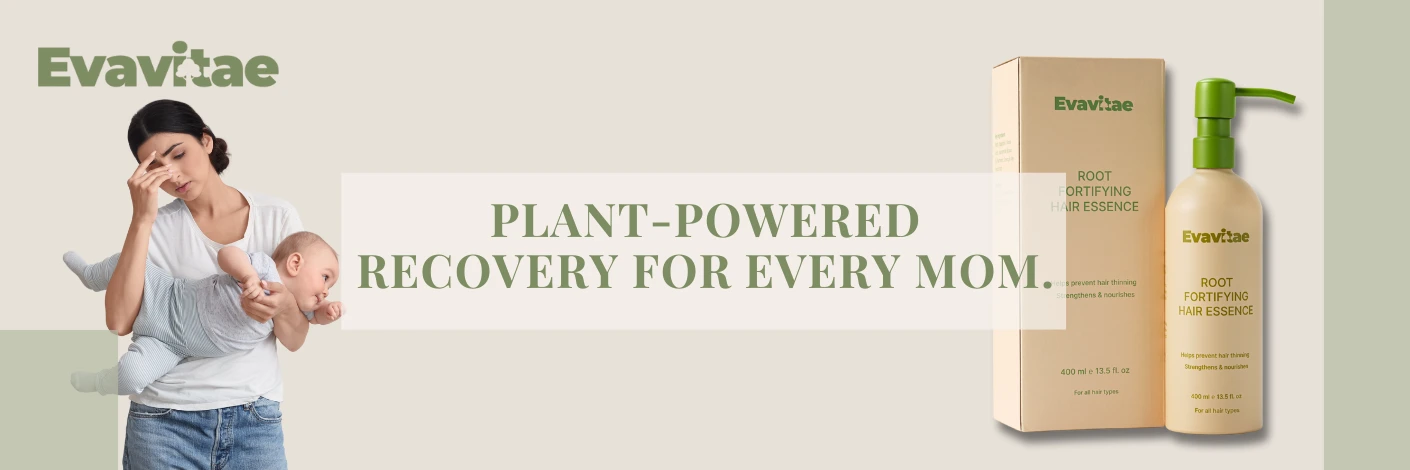
The Evavitae Root Fortifying Hair Essence combines biotin, natural oils, and peptides for gentle daily nourishment—perfect for postpartum scalps.
For additional insight into internal nutrition, read Best Postpartum Vitamins to Reduce Hair Shedding.
See how natural care supports real results → it’s not about replacing science with nature—it’s about letting both work together.
Practical Tips for Success
- Patch test first. Even natural oils can cause reactions. Always test behind the ear before applying to the scalp.
- Be patient. Visible results from natural care usually appear after 8–12 weeks of consistent use.
- Avoid mixing too many actives. Simplicity yields better results than overloading the scalp with multiple products.
- Stay consistent. Like nutrition, topical treatments work cumulatively—not instantly.
When used correctly, natural remedies can provide a sustainable, long-term improvement rather than a temporary fix.
What to Expect Over Time
By three months of regular care, most mothers notice less shedding and healthier texture. Around the six-month mark, fine new hairs typically appear near the temples and hairline.
If shedding persists beyond a year, consult a dermatologist to check for thyroid or iron-related issues. But for most women, a natural, gentle regimen supports both visible regrowth and overall scalp comfort.
For additional science-backed routines, revisit Postpartum Hair Loss Treatment: From Science to Natural Recovery.
And if you’d like to explore more insights on ingredient science, visit our Ingredients Science category for research-based articles on plant actives and safe postpartum formulations.
Discover what really helps after childbirth in our Postpartum Hair Recovery Guide.
References (APA Style)
- Johns Hopkins Medicine. (2024). Botanical compounds and hair follicle health. Retrieved from https://www.hopkinsmedicine.org
- Verywell Health. (2023). Rosemary oil and natural hair regrowth: Evidence review. Retrieved from https://www.verywellhealth.com
- DermNet NZ. (2024). Postpartum hair loss and nutrient deficiency overview. Retrieved from https://dermnetnz.org
Evavitae products are now available exclusively at www.evavitae.com.


Add comment
You must be logged in to post a comment.