
Hair shedding after childbirth can feel alarming—but it’s actually a sign of your body’s recovery, not decline. Most women experience some degree of postpartum hair loss, typically peaking between three and six months after delivery.
What matters most isn’t how much you shed, but how well you support regrowth. With gentle care, patience, and the right nutrients, this temporary phase becomes a foundation for long-term strength and renewal.
The Transition from Loss to Growth
During pregnancy, elevated estrogen levels keep hair in its active growth (anagen) phase. After childbirth, these hormones drop sharply, shifting follicles into a resting (telogen) state. This transition triggers the shedding many mothers notice a few months postpartum.
According to Cleveland Clinic (2024), up to 90% of postpartum women experience telogen effluvium, but regrowth typically begins within six months as hormone levels stabilize.
This stage can feel discouraging, but it’s also when your follicles are restarting. The same body that nourished life is now redirecting its energy toward recovery—slowly rebuilding balance and hair density.
To see how this cycle unfolds and when regrowth usually begins, read When Will Postpartum Hair Loss Stop? Real Recovery Stories.
Importance of Long-Term Consistency
Postpartum recovery doesn’t respond well to “miracle treatments.” Instead, it thrives on consistency—steady daily actions that nurture the scalp, feed the follicles, and reduce stress.
1. Stay patient with your timeline.
Hair cycles run in three- to six-month intervals. Results aren’t visible overnight, but progress builds silently beneath the surface. Harvard Health Publishing (2023) notes that consistent routines—gentle washing, balanced diet, and emotional rest—have greater long-term impact than any single product.
2. Maintain scalp circulation.
Light massages for two to three minutes daily stimulate blood flow. Use a few drops of rosemary, babassu, or jojoba oil to enhance nutrient absorption and relaxation.
3. Prioritize overall wellness.
Stress, fatigue, and poor sleep elevate cortisol, which can prolong the shedding phase. Integrating deep breathing or short walks can help regulate stress and encourage balanced hormone recovery.
4. Combine internal and external nourishment.
A balanced diet supports keratin production and hair strength from within, while topical nutrients reinforce follicle resilience externally.
You can explore this internal-external synergy in Postpartum Hair Loss Treatment: From Science to Natural Recovery.
Strengthening the Hair Cycle with Topical Nutrients
Topical nourishment can accelerate visible results by reinforcing the scalp environment and protecting new strands. The goal is to support the entire follicle cycle—not just trigger growth.
1. Peptides for Repair and Density
Peptides are short amino acid chains that signal follicles to strengthen and produce keratin. They improve elasticity and reduce breakage without irritation.
2. Natural Oils for Barrier and Circulation
Oils like rosemary, batana, and peppermint increase scalp microcirculation and restore hydration. These act as gentle alternatives to synthetic actives.
A Johns Hopkins Medicine (2024) study found that consistent use of botanical oils improved follicle density and reduced inflammation in individuals with temporary hair thinning, including postpartum subjects.
For a detailed exploration of these natural actives, visit Top 10 Essential Oils and Natural Extracts for Postpartum Hair Regrowth.
3. The Role of Biotin and Antioxidants
Biotin reinforces keratin production, while antioxidants such as vitamin E and green tea extract protect scalp cells from oxidative stress—a common factor after childbirth due to hormonal imbalance.
4. Choosing the Right Formulation
Postpartum scalps are sensitive, so it’s best to use products that are fragrance-free, silicone-free, and dermatologically tested.
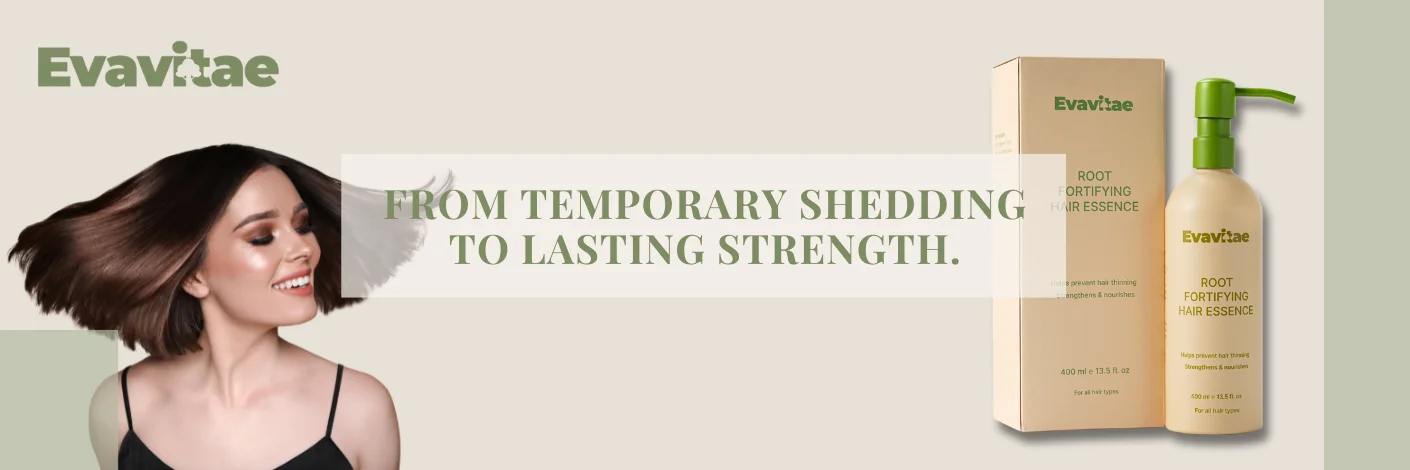
The Evavitae Root Fortifying Hair Essence combines biotin, peptides, and natural oils in a lightweight formula that supports both strengthening and soothing—ideal for transitioning from shedding to regrowth.
To understand gentle formulation design, see Choosing the Best Shampoo for Postpartum Hair Loss: Ingredients That Matter.
Mindful Recovery: Body, Mind, and Scalp
Postpartum care goes beyond products. Emotional and physical balance fuels recovery.
Here’s how to nurture all three layers of healing:
Focus | What Helps | Why It Matters |
Body | Eat balanced meals with protein, iron, and zinc | Feeds keratin synthesis |
Mind | Manage stress through rest & mindfulness | Reduces cortisol-driven shedding |
Scalp | Use gentle massage and mild products | Encourages circulation & follicle activity |
As the British Journal of Dermatology (2024) notes, emotional well-being correlates strongly with hair recovery speed in postpartum women. When your nervous system is calm, your follicles thrive.
What Recovery Looks Like
Timeline | What to Expect | Suggested Focus |
0–3 months | Active shedding, thinner ponytail | Gentle cleansing, hydration |
3–6 months | Regrowth begins (fine baby hairs) | Add peptide or oil-based serum |
6–12 months | Density improves | Maintain consistent, stress-free care |
Every stage is progress—even shedding is part of regrowth.
Your Takeaway
Postpartum hair loss isn’t a setback—it’s your body’s way of resetting after extraordinary change.
By maintaining consistent care, nourishing the scalp, and trusting the process, you transform temporary shedding into lasting strength and confidence.
See how natural care supports real results → explore more recovery insights in our Hair Growth category.
See how to rebuild confidence after childbirth with our Postpartum Hair Recovery Hub.
References (APA Style)
- Cleveland Clinic. (2024). Telogen effluvium and postpartum regrowth patterns. Retrieved from https://my.clevelandclinic.org
- Harvard Health Publishing. (2023). Postpartum recovery and long-term hair cycle support. Retrieved from https://www.health.harvard.edu
- Johns Hopkins Medicine. (2024). Botanical compounds and follicle microcirculation improvement. Retrieved from https://www.hopkinsmedicine.org
- British Journal of Dermatology. (2024). Psychological well-being and postpartum hair recovery outcomes. Retrieved from https://academic.oup.com/bjd
Evavitae products are now available exclusively at www.evavitae.com.


Add comment
You must be logged in to post a comment.