

When you lose hair after giving birth, it’s easy to feel like you’ve lost a part of yourself too. Each strand that falls can feel symbolic—of change, exhaustion, or the chaos of early motherhood. But what’s really happening isn’t loss; it’s renewal.
Postpartum hair recovery is a slow return to balance. It’s your body finding its rhythm again, your hormones calming, your roots growing stronger day by day. This journey isn’t only about restoring your hair—it’s about regaining confidence, self-connection, and compassion for your evolving self.
Emotional Aspects of Hair Recovery
Many new mothers describe hair loss as one of the most visible reminders that their bodies have changed. It’s not vanity—it’s identity.
Hair often symbolizes control and vitality, and when it starts shedding, it can trigger anxiety or sadness.
According to Psychology Today (2024), visible postpartum changes often affect self-esteem, especially when paired with social pressure to “bounce back.” Acknowledging these feelings is the first step toward healing.
1. Redefine beauty during recovery.
Your body has accomplished something extraordinary. Instead of chasing “back to normal,” embrace forward to new. Self-care during this time isn’t indulgence—it’s recovery.
2. Focus on care, not perfection.
Each gentle step—massaging your scalp, washing mindfully, eating well—is an act of self-compassion. Recovery takes time because healing takes love.
3. Find comfort in connection.
Sharing your experience with other mothers can make the process feel lighter. Many discover that what feels isolating is actually universal—and temporary.
For inspiration, read When Will Postpartum Hair Loss Stop? Real Recovery Stories and see how other women moved from shedding to strength.
Sustainable Hair Growth Practices
The most effective recovery routines are sustainable—not extreme. They’re built on consistency, nourishment, and respect for your body’s pace.
1. Gentle scalp care over quick fixes.
Avoid aggressive “growth” serums or heavy oils that overload the scalp. Instead, choose lightweight, peptide- or biotin-based care.
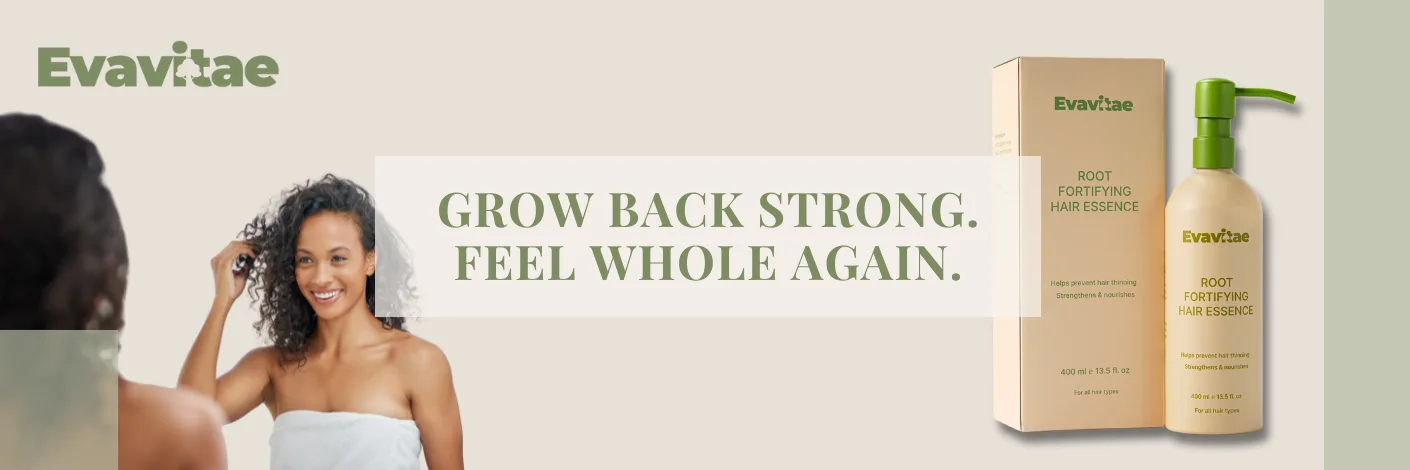
Products like the Evavitae Root Fortifying Hair Essence are formulated for postpartum sensitivity—free from fragrance, silicones, and sulfates, yet rich in strengthening nutrients.
2. Balance from within.
Combine topical care with nutrient-dense foods—lean protein, leafy greens, omega-3s, and adequate hydration. A Harvard Health Publishing (2024) review shows that balanced diets significantly improve follicle recovery and shorten the telogen phase.
3. Integrate relaxation into your day.
Stress hormones like cortisol can delay regrowth. Incorporating short breathing exercises or scalp massages into your routine helps calm the nervous system while improving microcirculation.
To reinforce your routine, revisit Gentle Ways to Help Your Hair Recover After Childbirth and From Temporary Shedding to Lasting Strength: Treating Postpartum Hair Loss.
4. Track small progress.
Regrowth often starts as baby-fine strands around the hairline. Photograph your hair once a month—it helps you see how far you’ve come.
5. Keep your expectations kind.
As Cleveland Clinic (2023) notes, most women experience visible recovery between 6–12 months postpartum. The key isn’t speed—it’s consistency and gentleness.
Supporting Women Beyond Beauty (ESG Angle)
Evavitae believes that true recovery extends beyond the mirror. Every bottle, every formula, and every story contributes to something larger: a movement to support women’s wellness globally.
1. Empowering through education
Evavitae’s platform isn’t just about products—it’s about knowledge. Every article, from The Science Behind Postpartum Hair Loss: Hormones, Stress, and More to Daily Habits to Prevent Postpartum Hair Loss Before It Starts, empowers women with facts rather than fear.
2. Ethical and sustainable production
Our formulas are vegan, cruelty-free, and dermatologically tested. Bottles are 100% recyclable, and packaging materials are responsibly sourced.
3. Giving back to women’s health programs
Through Evavitae’s “Beyond Hair — Supporting Women in Recovery” initiative, a portion of proceeds contributes to global postpartum wellness programs and community education for maternal care.
4. Building emotional connection
As Women’s Health Magazine (2024) highlights, emotional support and social connection can improve both mental health and physical recovery outcomes after childbirth. Evavitae’s mission includes creating safe, positive spaces for these conversations—because confidence grows stronger when shared.
The Journey Forward
Hair recovery isn’t a straight path. There will be days you see progress—and days you see strands in your brush. Both are normal. The difference lies in how you respond: with patience instead of panic, compassion instead of comparison.
Stage | Focus | Supportive Habit |
Early months (0–3) | Stabilize scalp health | Mild cleanser, scalp massage |
Mid recovery (4–6) | Nourish and reinforce roots | Use peptide-rich serum, eat iron & protein |
Long-term (6–12) | Maintain consistency | Gentle washing, rest, mindfulness |
Every step, no matter how small, builds toward long-term strength and confidence.
Your Takeaway
Your hair’s journey mirrors your own—resilient, adaptable, and ever-renewing.
Recovery is not about going back; it’s about growing forward—stronger, wiser, and more compassionate toward yourself.
Every mother deserves to feel beautiful in her becoming.
Explore more stories of renewal and empowerment → visit our Hair Growth category.
See how to rebuild confidence after childbirth with our Postpartum Hair Recovery Hub.
References (APA Style)
- Psychology Today. (2024). Postpartum identity and emotional adjustment: Self-image through change. Retrieved from https://www.psychologytoday.com
- Harvard Health Publishing. (2024). Nutrition and hair growth: The link between diet and follicle health. Retrieved from https://www.health.harvard.edu
- Cleveland Clinic. (2023). Postpartum hair regrowth timeline and recovery process. Retrieved from https://my.clevelandclinic.org
- Women’s Health Magazine. (2024). Social support and recovery after childbirth: The science of emotional healing. Retrieved from https://www.womenshealthmag.com
Evavitae products are now available exclusively at www.evavitae.com.

Add comment
You must be logged in to post a comment.