
Every new mother hopes to keep her thick pregnancy hair forever. When strands begin falling out after childbirth, it’s natural to ask: Can I stop this completely?
Science has a clear answer—and some good news. While complete prevention isn’t possible, you can significantly reduce shedding and accelerate recovery with gentle, consistent care.
Why Complete Prevention Isn’t Always Possible
Postpartum hair loss isn’t an illness—it’s a biological reset. During pregnancy, high estrogen and progesterone levels prolong your hair’s growth phase. After childbirth, these hormones plummet, signaling up to 50% of follicles to enter a resting (telogen) phase.
This temporary condition, called postpartum telogen effluvium, is the body’s way of returning to balance. According to the American Academy of Dermatology (2024), nearly all mothers experience some degree of shedding, regardless of how well they care for their hair.
So while you can’t completely stop postpartum hair loss, you can influence how severe it becomes and how quickly it resolves. Factors like stress, nutrition, and scalp health all play major roles.
For a deeper understanding of this process, revisit our overview Effective Ways to Stop Postpartum Hair Loss Fast—Without Harsh Chemicals.
Managing Expectations and Mental Health
Hair loss after childbirth can affect more than appearance—it can impact self-esteem and emotional wellbeing. Many mothers describe feeling frustrated or self-conscious during this phase, especially when hair seems to fall out in handfuls.
It helps to reframe the experience: this is not permanent hair loss, but a temporary shedding period tied to hormone recovery. New growth often begins within months, even if you can’t see it yet.
If the anxiety feels overwhelming, small daily routines—like gentle scalp massages or mindful breathing—can restore a sense of control. Dermatologists and postpartum counselors alike emphasize the importance of managing expectations: healing takes time, and your hair will recover gradually, not suddenly.
Sharing your experience with friends or support groups can also reduce isolation. Many mothers find comfort in comparing recovery stories—knowing others have walked the same path makes the journey less daunting.
Reducing Shedding with Consistency
While full prevention isn’t realistic, steady, nurturing care can dramatically reduce shedding and strengthen regrowth. Think of it as training your scalp to thrive through balance, not pressure.
- Support your body internally
- Eat protein-rich meals and include foods high in iron, zinc, and biotin.
- Stay hydrated and prioritize sleep whenever possible—rest directly impacts hormone balance.
- Care for your scalp externally
- Use gentle, pH-balanced shampoos and conditioners.
- Massage the scalp regularly to boost circulation and reduce tension.
- Avoid extremes
- Skip harsh dyes, chemical straighteners, and tight hairstyles that pull on roots.
These habits won’t “stop” hair loss overnight, but they help minimize damage and encourage healthier regrowth.
For simple, science-backed habit changes that make a real difference, explore Simple Changes That Can Reduce Postpartum Hair Loss.
Consistency, not perfection, drives recovery.
The Importance of Gentle Products
When your scalp is adjusting after childbirth, sensitivity increases. Using harsh shampoos or styling products can strip away natural oils, weaken follicles, and delay regrowth.
Avoid:
- Sulfates (e.g., SLS, SLES)
- Silicones that block follicles
- Synthetic fragrances and dyes
Instead, look for sulfate-free, fragrance-free, and dermatologically tested formulations that protect rather than strip the scalp.
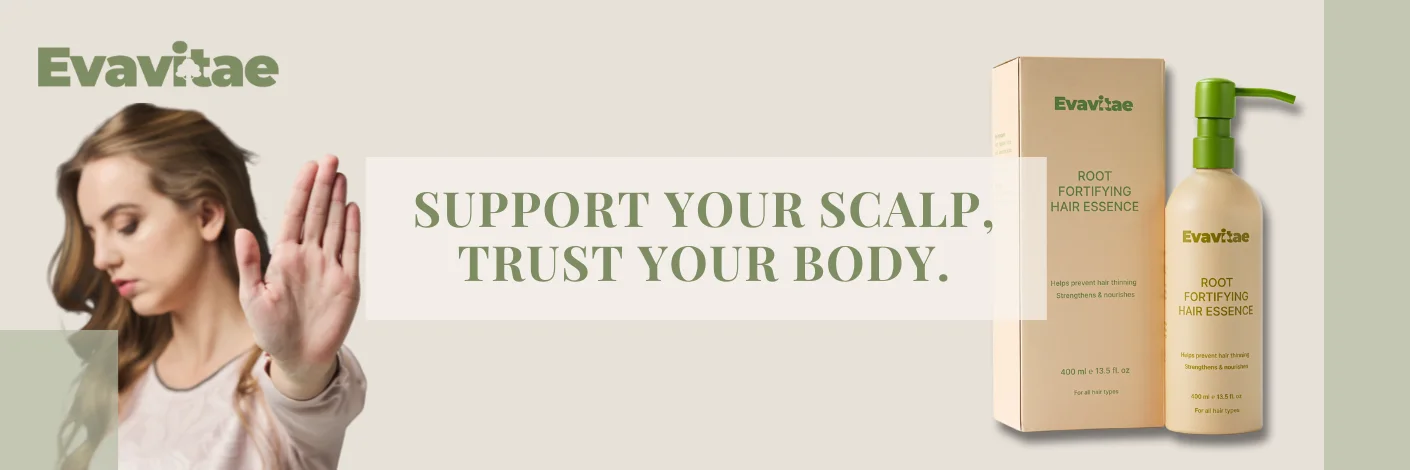
The Evavitae Root Fortifying Hair Essence exemplifies this approach—combining natural plant oils, biotin, and vitamin E to strengthen roots while maintaining moisture balance. It’s designed for mothers seeking gentle, non-hormonal support during recovery.
To better understand what makes a formula safe and effective, see Choosing the Best Shampoo for Postpartum Hair Loss: Ingredients That Matter.
Gentle care doesn’t just protect your scalp—it sets the foundation for lasting resilience.
When to Seek Professional Guidance
If shedding continues beyond a year, or if you notice patchy bald spots, consult a dermatologist. Persistent shedding could signal thyroid imbalance, iron deficiency, or androgenic alopecia—all treatable conditions.
A doctor can perform simple blood tests to identify nutritional or hormonal deficiencies and recommend appropriate supplements or topical treatments.
Remember: postpartum recovery is multifaceted. Professional advice, combined with at-home care, creates the most balanced path to healthy regrowth.
The Takeaway
You may not be able to stop postpartum hair loss completely, but you can absolutely take control of how you experience and recover from it.
Gentle products, nutrient support, and emotional patience work better than any quick fix. With consistent care, most mothers see shedding fade within six months and noticeable fullness return within a year.
Discover routines that support lasting regrowth → small, steady choices are what bring visible results.
For additional science-based insights, explore the Hair Loss 101 category, your guide to understanding, preventing, and gently reversing postpartum shedding.
For expert-backed postpartum hair care routines, see the Complete Recovery Hub.
References (APA Style)
- American Academy of Dermatology. (2024). Postpartum hair loss: What to expect and how to manage it. Retrieved from https://www.aad.org
- Cleveland Clinic. (2023). Managing postpartum hair loss: Why consistency matters. Retrieved from https://my.clevelandclinic.org
- National Institutes of Health. (2023). Postpartum hormonal changes and hair follicle cycle research. Retrieved from https://pubmed.ncbi.nlm.nih.gov
Evavitae products are now available exclusively at www.evavitae.com.


Add comment
You must be logged in to post a comment.