
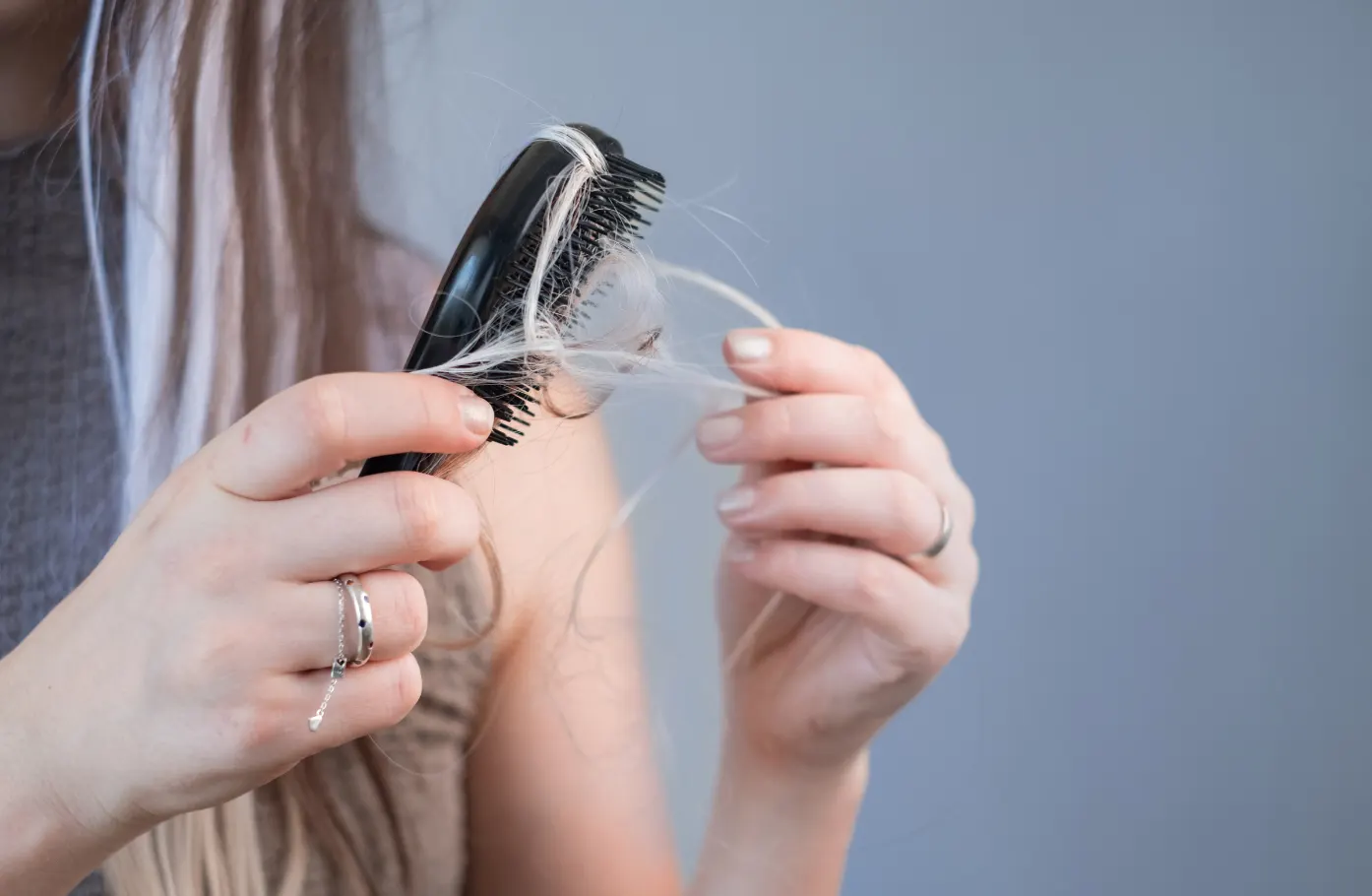
Postpartum hair loss is one of the most anxiety-inducing issues for many new moms.
Handfuls of hair falling during washing, a receding hairline, thinning at the temples — sometimes it even makes you “question life.”
But what you really want to know is:
- How long will this last?
- When will it recover?
- Will it keep falling forever?
The good news: postpartum hair loss is almost always temporary (telogen) shedding — Postpartum Telogen Effluvium (PTE). The hair follicles are not damaged, and the vast majority of women naturally recover within 6–12 months.
This article systematically explains:
- The standard timeline of postpartum hair loss
- Why shedding appears with a delay
- Hair changes at different stages
- Who may recover more slowly
- How to tell if shedding is prolonged
- When to see a doctor
For an overview of the typical signs and how to recognize the PTE pattern, you may also explore: 👉 Typical Signs of Postpartum Hair Loss
I. How Long Does Postpartum Hair Loss Usually Last? (Scientific Answer)
Based on dermatological research and clinical data:
📌 Most women: noticeable improvement within 6 months
📌 9–12 months: hair becomes denser, hairline restored
📌 A small portion of women: 12–18 months (if accompanied by nutritional or thyroid issues)
This means postpartum hair loss does not continue indefinitely. It reaches a peak within a certain period and gradually improves.
Below, we break down what happens month by month.
II. The “Real Timeline” of Postpartum Hair Loss
📌 0–2 Months Postpartum: “Calm Period” (Minimal Shedding)
Why no shedding immediately after birth?
During pregnancy, hair follicles are “protected” by estrogen, and most remain in the growth phase (Anagen).
At this stage:
- Hair appears normal
- Some even feel their hair is thicker than during pregnancy
- No obvious shedding
📌 2–4 Months Postpartum: Shedding Peak Begins (Delayed Shedding)
This is the most typical period.
Causes:
- Sharp drop in estrogen and progesterone
- Hair follicles shift from growth → resting phase
- After ~90–120 days in resting phase, shedding occurs
Typical symptoms:
“Handfuls of hair fall while washing”
“Shedding seems endless”
Hairline and temples become sparse
If your shedding peaks in this timeframe, it almost always fits the PTE pattern.
For clarity on how postpartum shedding differs from hereditary hair loss, see: 👉 Postpartum Hair Loss vs Genetic Hair Loss
📌 4–6 Months Postpartum: Shedding Reduces, Hairline Still Sparse
During this phase:
- Shedding starts to decline
- No longer “handfuls at a time”
- Many short “baby hairs” appear along the hairline
New growth characteristics:
- Very short
- Fine
- Soft
- Like “lanugo hair”
This is normal, showing follicles are re-entering the growth phase.
📌 6–9 Months Postpartum: Recovery Phase (Rapid New Hair Growth)
Most women in this stage experience:
- Significant reduction in shedding
- Sparse areas begin filling in
- Hairline gradually restored
- Hair density steadily increases
New hair progresses from fine → strong → thick gradually.
📌 9–12 Months Postpartum: Hair Restored (Majority)
During this period:
- Hair follicle cycles stabilize
- Hair returns to pre-pregnancy levels
- Hairline approaches its original position
If severe shedding occurred, very noticeable improvement appears during this stage.
📌 12–18 Months Postpartum: Recovery Slower for a Small Portion (5–7%)
Some moms take longer to recover, often due to:
- Low ferritin (<30)
- Vitamin D deficiency
- Insufficient nutrition during breastfeeding
- Postpartum thyroiditis
- High stress, lack of sleep
- Cesarean delivery recovery slow
- Genetic predisposition to hair loss
For insight into why some mothers shed more severely, see: 👉 Why Some Women Experience More Severe Postpartum Hair Loss
III. Why Do Some People Take Longer to Recover? (Causes of Slow Recovery)
Factors that amplify shedding and extend duration:
✔ Iron deficiency (most common)
Blood loss + breastfeeding decreases ferritin, affecting keratin synthesis
✔ Low Vitamin D, Zinc, B vitamins
Affects follicle energy and immune environment
✔ Sleep deprivation, high stress
Cortisol elevation inhibits follicle growth phase
✔ Postpartum thyroiditis
Affects 5–10% of women; common signs: hair loss, palpitations, fatigue
✔ Hormone-sensitive follicles (genetic tendency)
Recovery is slower
✔ Cesarean / prolonged blood loss
Iron stores drop significantly
✔ Long-term dieting or metabolic slowdown
Follicles lack nutrients
IV. When Is Postpartum Hair Loss “Too Long”?
Attention is needed if:
❗ Shedding continues beyond 12 months → may not be simple PTE
❗ Thinning on top, widening part → possible added androgenetic alopecia (AGA)
❗ Accompanied by:
- Fatigue
- Palpitations
- Cold hands/feet
- Pale complexion
- Mood swings
- Thyroid dysfunction
→ Signs of iron deficiency or thyroid issues
At this point, testing is recommended:
- Ferritin
- Vitamin D
- TSH / T3 / T4
V. Can Postpartum Hair Fully Recover?
Yes.
The vast majority of women can restore hair to pre-pregnancy or even healthier levels.
Postpartum hair loss is Non-scarring Alopecia:
- Hair follicle structure intact
- Full regeneration possible
As long as:
- Nutrition is sufficient
- Sleep is relatively regular
- Scalp environment is gentle and stable
- Stress is reduced
For a deeper biological explanation of why postpartum shedding is temporary and reversible, see: 👉 Postpartum Hair Loss Is Not a Disease — It’s a Physiological Reset
VI. Supportive Care During Recovery (Gentle, Non-Promotional)
✔ Use gentle, non-irritating hair products
Avoid:
- Harsh sulfates
- Synthetic fragrances
- Heavy silicones blocking follicles
- Excessive oil-stripping
✔ Support follicle nutrition
Iron, zinc, vitamin D, B vitamins are crucial
✔ Reduce psychological stress
Stress prolongs resting phase
✔ Avoid pulling scalp or tight hairstyles
Prevents strain on fragile new hair
✔ Gentle cleansing + healthy scalp barrier
Stable scalp environment helps follicles re-enter growth phase faster
For a scientific breakdown of the underlying biological mechanisms behind postpartum shedding, visit: 👉 Postpartum Mechanisms Hub
Summary: Postpartum Hair Loss Has a Timeline — It’s Not Indefinite
📌 2–4 months: shedding peak
📌 4–6 months: shedding eases, new hairs emerge
📌 6–9 months: hair gradually recovers
📌 9–12 months: most return to pre-pregnancy state
📌 12–18 months: minority recover more slowly (often due to nutrition/thyroid issues)
Postpartum hair loss is not a disease, not permanent, but a natural process of the body returning from pregnancy state to normal.
Give your follicles some time and yourself some patience — your hair will gradually come back.
You can learn more about common causes, timelines, and recovery tips in our complete Postpartum Hair Loss resource.
If you prefer a shampoo that avoids harsh surfactants, the Evavitae Root Fortifying Hair Essence is designed with a gentle cleansing base.

Add comment
You must be logged in to post a comment.