

After giving birth, your body goes through extraordinary change—and so does your hair. The shedding that follows childbirth is normal, temporary, and most importantly, reversible.
Recovery isn’t about fighting your body’s rhythm; it’s about helping it restore balance naturally. With gentle care, the right products, and a mindful approach, your hair can return to strength and fullness—slowly, but beautifully.
Restoring Strength Gradually
Postpartum hair recovery doesn’t happen overnight. It’s a cycle of renewal that mirrors your body’s healing process.
According to Mount Sinai Health System (2024), most mothers experience visible shedding between three and six months postpartum, followed by gradual regrowth that continues for up to a year. This stage isn’t about stopping loss—it’s about supporting new growth through steady habits.
1. Be patient with the process.
Hair follicles operate in long cycles. Shedding indicates that your follicles are resetting, not dying. Even when hair looks thinner, new strands are already forming beneath the surface.
2. Avoid “quick fixes.”
Products that promise instant regrowth often contain aggressive ingredients unsuited for sensitive scalps. Gentle, consistent care works better long-term.
3. Rebuild from the inside out.
Ensure your diet includes protein, iron, zinc, and vitamins D and B-complex. These nutrients fuel the keratin synthesis that forms strong, healthy hair.
For additional guidance on preventive care routines, visit Daily Habits to Prevent Postpartum Hair Loss Before It Starts.
How to Massage the Scalp Effectively
A daily scalp massage is one of the simplest, most effective ways to encourage blood flow and strengthen follicles naturally. The key is gentleness and consistency, not pressure.
Step-by-step routine
- Warm your fingertips. Rub your hands together before starting to improve circulation.
- Apply a few drops of natural oil — such as rosemary, jojoba, or batana — to add slip and nourishment.
- Use circular motions starting from the crown, gradually moving toward the hairline and nape.
- Massage for 3–5 minutes daily or every other day.
- Finish with deep breathing. This relaxes the nervous system, reducing cortisol (stress hormone) that contributes to shedding.
A WebMD (2024) feature highlights that scalp massage can increase follicular blood flow by up to 20%, promoting faster recovery when paired with proper nutrition.
Tip: If your scalp feels tender, use only fingertips (not nails) or a soft silicone brush designed for sensitive scalps.
Choosing Mild, Nourishing Formulas
The right haircare products act as supportive allies in postpartum recovery. The goal is to cleanse gently, restore hydration, and protect new growth.
1. Look for sulfate-free cleansers.
Harsh surfactants like SLS strip away protective oils, leaving follicles exposed. Sulfate-free shampoos preserve natural moisture while keeping the scalp clean.
2. Prioritize scalp-safe ingredients.
Peptides, biotin, and plant oils (such as babassu or argan) strengthen the scalp barrier and stimulate new growth. According to NIH Healthline (2023), peptide-based formulas enhance follicle cell activity and improve elasticity in postpartum hair.
3. Avoid synthetic fragrance and heavy silicone.
Postpartum scalps are sensitive; artificial scents and buildup-forming silicones can worsen irritation. Choose products that are fragrance-free or use natural, hypoallergenic botanical extracts instead.
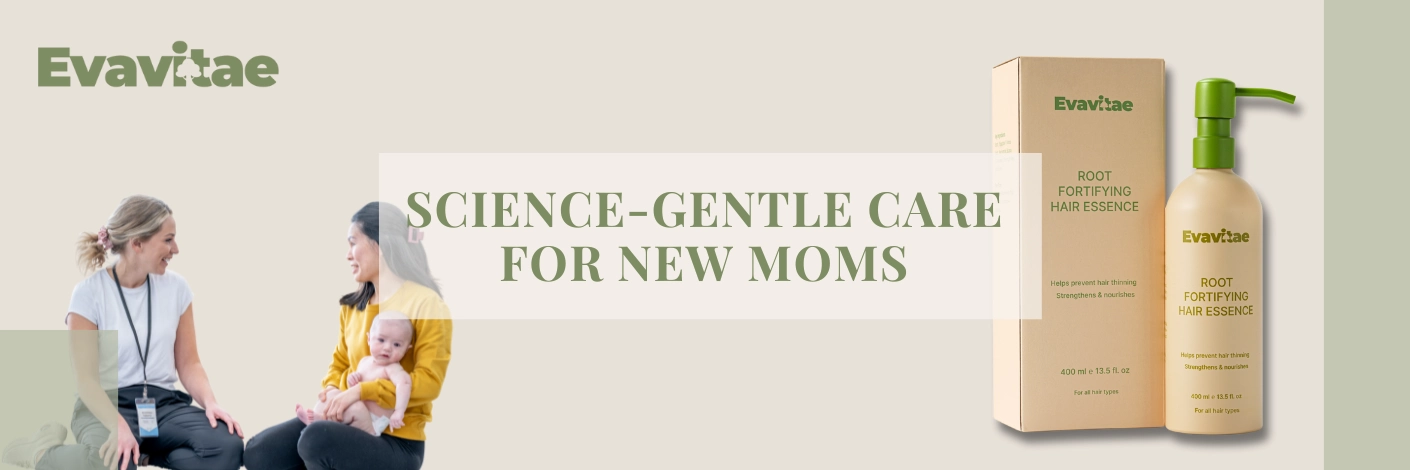
The Evavitae Root Fortifying Hair Essence is designed for this phase—combining biotin, peptides, and gentle oils to restore strength without overwhelming delicate roots.
To learn how to choose the safest cleansers and conditioners, read Choosing the Best Shampoo for Postpartum Hair Loss: Ingredients That Matter.
Holistic Care: More Than Just Products
Postpartum recovery goes beyond the shower. Your hair reflects your inner balance—nutrition, rest, and emotional wellness all play a part.
1. Sleep when you can.
Rest regulates cortisol and allows your body to direct energy toward healing.
2. Stay hydrated.
Water supports nutrient transport to hair follicles and helps maintain scalp elasticity.
3. Be kind to yourself.
Postpartum changes are temporary, but self-compassion makes the journey easier. Stress reduction directly supports hormonal harmony, improving conditions for regrowth.
For gentle reinforcement and daily maintenance advice, explore Simple Changes That Can Reduce Postpartum Hair Loss.
When to Expect Visible Improvement
Hair recovery follows its own timeline, but most mothers notice early regrowth between months 6–9.
|
Timeframe |
What Happens |
What to Do |
|
Months 1–3 |
Shedding peaks |
Focus on nourishment & gentle washing |
|
Months 4–6 |
Shedding stabilizes |
Add scalp massage & peptide serums |
|
Months 7–12 |
New growth visible |
Maintain consistent, non-harsh care |
Consistency is key—steady habits support long-lasting results far better than intermittent treatments.
Your Takeaway
Helping your hair recover after childbirth isn’t about force—it’s about care and patience.
Feed your body, nurture your scalp, and give your follicles time to do their work.
Every gentle action—each massage, balanced meal, and soft wash—builds toward stronger, fuller hair.
See how recovery and care connect → explore more insights in our Hair Growth category.
Learn more about safe and effective ways to manage shedding in our Postpartum Hair Loss Treatment Guide.
References (APA Style)
- Mount Sinai Health System. (2024). Hair cycle restoration and postpartum regrowth patterns. Retrieved from https://www.mountsinai.org
- WebMD. (2024). Scalp massage and circulation: The science of stimulating hair growth. Retrieved from https://www.webmd.com
Evavitae products are now available exclusively at www.evavitae.com.


Add comment
You must be logged in to post a comment.