

The first few months after childbirth bring countless changes—some joyful, others unexpected. Among them, postpartum hair loss often catches new mothers by surprise. Understanding when it starts and how it unfolds can help you approach it with patience and care instead of alarm.
Understanding the Shedding Timeline
Most women begin to notice increased hair shedding around two to four months after delivery. This timing coincides with the body’s hormonal shift, as estrogen and progesterone levels drop sharply after pregnancy.
During pregnancy, these hormones keep more hair follicles in the growth (anagen) phase, which is why many mothers experience thicker, fuller hair. After birth, as hormone levels normalize, a large number of follicles transition into the resting (telogen) phase, leading to temporary shedding known as telogen effluvium.
According to the American Academy of Dermatology (2024), postpartum shedding typically begins between 8 and 12 weeks postpartum, peaks around month four, and gradually subsides by month nine to twelve.
You can visualize this process as a cycle:
- Month 1–3: Hormone drop → resting phase begins
- Month 3–6: Shedding increases and peaks
- Month 7–12: Regrowth and recovery phase
For a detailed view of how this timeline unfolds, explore our article Timeline of Postpartum Hair Loss: When Recovery Begins.
Common Early Signs You Might Notice
Postpartum hair loss doesn’t usually happen overnight—it creeps in subtly. In the early stages, you might begin noticing:
- More strands on your pillow or shower drain
- Widening part line or visible scalp near the temples
- Frizzier or finer hair around your hairline
- Increased tangling and breakage
These signs can be unsettling, especially for mothers who had thick, lustrous hair during pregnancy. But it’s important to remember that this is not permanent hair loss—it’s your body rebalancing its growth cycle.
Mild shedding (up to 100–150 strands per day) is normal, but if you notice patchy hair loss or thinning eyebrows, consult a dermatologist to rule out thyroid imbalance or iron deficiency.
For reassurance, read real recovery experiences from other mothers in When Will Postpartum Hair Loss Stop? Real Recovery Stories.
Triggers That Can Worsen Hair Fall
While postpartum shedding is natural, certain factors can intensify it or prolong the recovery process. Recognizing these triggers helps you make supportive choices early on.
1. Hormonal stress and sleep deprivation
Chronic stress elevates cortisol levels, which can delay follicle regeneration. Inadequate rest also slows scalp healing and increases inflammation.
2. Nutrient deficiencies
Low iron, zinc, or vitamin D can make hair weaker and more brittle. Research from the National Institutes of Health (2023) highlights that postpartum women often experience transient deficiencies that impact follicle health.
3. Harsh haircare routines
Frequent coloring, tight hairstyles, or sulfate-heavy shampoos can irritate the scalp and lead to mechanical breakage.
To understand the biological and chemical processes behind these triggers, explore The Science Behind Postpartum Hair Loss: Hormones, Stress, and More. It breaks down how hormones, nutrition, and stress interact in the shedding cycle.
How to Prepare Your Scalp for Recovery
Preparing your scalp early can make a noticeable difference in how quickly your hair bounces back. Focus on gentle stimulation, nourishment, and protection.
1.Adopt a scalp massage routine
A few minutes of light massage each night can improve circulation and nutrient delivery. Use fingertips—not nails—to gently move in circular motions.
2.Switch to sulfate- and silicone-free cleansers
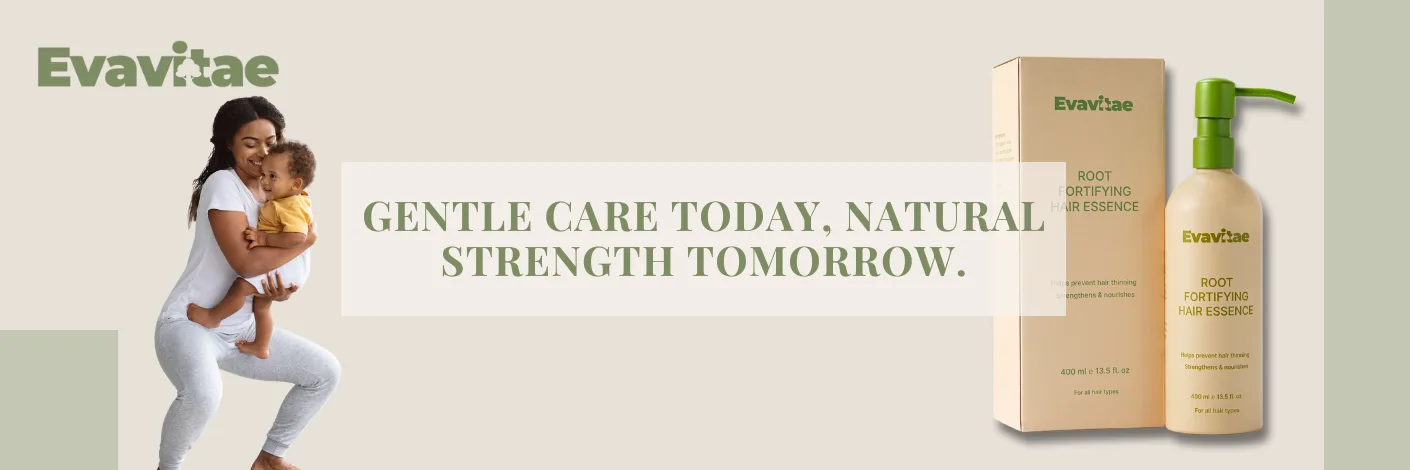
Mild shampoos protect your scalp’s natural oils and reduce irritation. The Evavitae Root Fortifying Hair Essence offers a gentle, clinically tested formula rich in natural oils and biotin—ideal for sensitive postpartum scalps.
3.Focus on nutrient-rich meals
Incorporate leafy greens, eggs, salmon, and nuts to supply key vitamins like biotin, iron, and omega-3 fatty acids that promote regrowth.
4.Protect against stress and over-styling
Avoid high heat, chemical treatments, or tight ponytails during this delicate stage.
For an actionable checklist on early scalp care, visit Daily Habits to Prevent Postpartum Hair Loss Before It Starts. This guide covers simple daily routines that build long-term scalp resilience.
What to Expect Next
Once shedding begins, it usually takes several months for new growth to appear. Patience and consistency are key—your hair will recover naturally as hormones stabilize and follicles restart their cycle.
Around six months postpartum, you may notice short “baby hairs” sprouting around the temples or hairline—a positive sign of regrowth. By the end of the first year, most mothers regain normal volume.
If you’re curious about the emotional and physical side of recovery, see Regrowing Confidence: Your Postpartum Hair Recovery Journey.
Discover what really helps after childbirth in our Postpartum Hair Recovery Guide.
References (APA Style)
- American Academy of Dermatology. (2024). Postpartum hair loss: What to expect and how to manage it. Retrieved from https://www.aad.org
- National Institutes of Health. (2023). Postpartum nutrient deficiencies and hair health correlations. Retrieved from https://www.ncbi.nlm.nih.gov
- Mayo Clinic. (2024). Hair loss (alopecia): Diagnosis and treatment for women. Retrieved from https://www.mayoclinic.org
Evavitae products are now available exclusively at www.evavitae.com.


Add comment
You must be logged in to post a comment.